Using 8.5m Electric Buses on Feeder and Main City Routes
The 8.5m electric city bus has changed the way public transportation works in cities, especially on feeder and main city lines where a lot of people want to ride and operations need to be run efficiently. These medium-sized electric vehicles are in between smaller shuttle buses and full-size transit coaches. They are the best size for carrying a lot of people while still being easy to move around in crowded cities. Modern batteries allow these buses to go up to 300 kilometers on a single charge and hold 25 to 35 people. They are changing how places provide environmentally friendly public transportation while keeping costs low.
Understanding the Specifications and Features of 8.5m Electric City Buses

Modern electric buses in the 8.5m range are a complex mix of brilliant tech and useful ways to get around cities. Modern battery management systems, regenerative braking technology, and smart temperature control are built into these cars to make sure they work well in a wide range of situations.
Its length of 8.5 meters is just the right amount of length for getting around cities without carrying too many people. With extra space for standing, these buses can fit 25 to 35 people sitting down. This makes them great for both feeder routes that connect neighborhoods to transit hubs and major city routes that serve business districts. ADA standards for mobility are met by the low floor, and the short wheelbase makes it possible to go through small city streets and turn circles that bigger buses can't handle.
These cars have 150–250 kWh battery packs that use lithium iron phosphate (LiFePO4) technology to make them safer and last longer. These buses can go 250 to 350 kilometers under normal city driving conditions, like making lots of stops and using the air conditioning. This is possible because the energy density has been getting better over the past few years.
Some of the safety features on modern electric city buses are better than those on gasoline alternatives. Electronic stability control, anti-lock brakes, and accident prevention monitors are all parts of a full safety envelope. The lack of motor noise makes driving less tiring and makes it easier for passengers to talk to each other. The smooth acceleration and braking make riding more comfortable.
Electric buses have climate control systems that work even when the engine is hot. This keeps the temperature even inside the bus. This feature is especially useful in bad weather, when gasoline buses might have trouble heating up efficiently when they're not in use.
Comparing 8.5m Electric Buses with Other Transit Solutions
Bus and rail companies face challenging decisions when selecting vehicles for their fleets, having to balance factors such as cost, environmental impact, and passenger satisfaction. In this context, the 8.5m electric city bus offers distinct advantages over other modes of public transportation.
Total cost of ownership estimates show that running an electric bus will save you a lot of money in the long run. Initial purchase prices are still 40–60% higher than diesel equivalents, but operating saves come from lower fuel costs, less upkeep, and longer component lifecycles. Because electric drivetrains have fewer moving parts than internal combustion engines, they require 30% to 50% less upkeep over the life of the vehicle.
Diesel cars use about $0.45 to $0.65 per mile of power, while electric buses use about $0.15 to $0.25 per mile, depending on the price of electricity and fuel in the area. These small savings add up over the 12–15-year lifetime of an average fleet. Even though the investments were higher at the start, they often equalize or save the total cost.

Electric buses don't release any direct pollution, which makes a big difference in improving the air quality in cities. Cities that use electric buses say that the amounts of nitrogen oxides, particulate matter, and carbon dioxide in the air along transit routes have gone down. The 8.5m size makes the most of these benefits by allowing more frequent service on lines where bigger buses wouldn't be needed.
Electric buses operate at 65 to 70 decibels, while diesel cars operate at 75 to 85 decibels, which means they produce less noise pollution. This drop is especially helpful on roads that go through neighborhoods and places with a lot of noise, like hospitals and schools.
This 8.5m electric bus is small enough that route planning methods can be used that can't be used with bigger cars. Planners for public transportation can make services run more often on tight streets, add routes to areas that weren't available before, and make circulator services that link different types of transit. Electric drivetrains' exact control of torque also makes them better at going up and down steep hills and in stop-and-go traffic that is common in cities.
Procurement Insights: How to Buy and Manage 8.5m Electric City Bus Fleets?
To successfully purchase an electric bus, you need to carefully consider a number of factors that go beyond the initial vehicle specs. To make sure fleet changes go smoothly, transit agencies and fleet owners need to look at charging infrastructure needs, supplier skills, financing choices, and long-term support structures.
To finance electric buses, organizations can choose from direct purchase, leasing, or a new type of service contract that includes maintenance and charging infrastructure. In the US, Federal Transit Administration grants can cover up to 80% of the purchase cost for eligible vehicles, such as the 8.5m electric city bus, with state and local incentives often supplementing these programs.
Depending on the services included and the terms of the deal, leases usually cost between $8,000 and $12,000 a month per car. By building these structures, transit organizations can use current electric technology while keeping money for other infrastructure improvements. Switching from diesel fleets to electric fleets can lower their risks in other ways. One way is to get service-inclusive contracts that guarantee car availability and performance measures.
To find reliable providers, you should check how well they can make things, how far their service networks reach, and how long they can stay in business. Leading makers keep their ISO 9001 quality certifications and make sure they follow the TS16949 car standards. This makes sure that the quality of their products stays high and they follow the rules. When choosing a provider, you should look at how well their current fleet is doing, the terms of their promise, and how well they can serve your area.
For JCM, making electric buses means making the whole bus, putting together the batteries, and building in the charging facilities. Quality control is built into the company's whole industry chain method, from getting the pieces to putting them together. Support and parts are also available at service centers in the area.
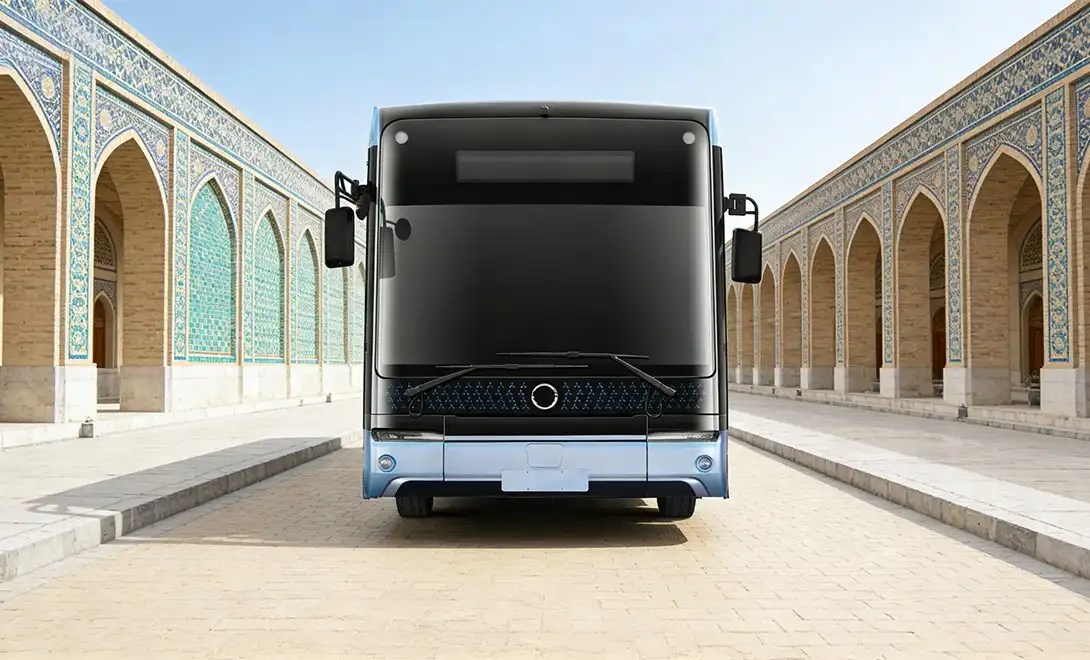
Comprehensive warranty plans usually cover the frame of the car for 12 years, the engine for 5 to 8 years, and the battery system for 8 to 10 years or a certain amount of energy throughput. Expert help should be available 24 hours a day, seven days a week as part of after-sales support. Diagnostics should also be possible from a distance, and parts should always be available as long as the car is held.
For repair staff to work safely and effectively on electric bus systems, they need to know a lot of specifics. This is why training programs are so important to their success. There are full training programs from the best providers that teach people about high-voltage safety, how to do tests, and how to do preventative maintenance.
Optimizing the Use of 8.5m Electric Buses on Urban Feeder and Main Routes
To maximize the effectiveness of electric bus services, they should be deployed in locations that align with their operational capabilities and where ridership demand is highest. Successfully optimizing a service, such as one using the 8.5m electric city bus, involves coordinating charging schedules, planning routes, and monitoring performance to achieve both service quality and cost-efficiency goals.
Using electric buses works as long as the routes are set up so that the cars' charging points are close to the routes. Most feeder lines have set times and charging connections that can be used when the time is right. On the other hand, stations on main routes may need to be charged at depots or at big stops where fast-charging stations are carefully put.
Charge plans need to think about what the business needs, how it will impact the grid, and how much energy it will cost. The best time to charge your car is usually at night, when electricity rates are lowest and the power grid is least stressed. Smart charging systems can organize the charging of multiple vehicles to get the most out of the energy used and cut down on demand charges.
It is possible to boost range performance by 10 to 20 percent by teaching drivers how to use energy more efficiently. Using regenerative brakes, controlling speeds, and making the most of the vehicle's secondary features can all help it go farther on a single charge and use less energy. It is always more efficient to run a business when telematics systems tell you how people drive and how much energy they use in real time.
It is possible to save a lot of energy by optimizing climate control, since heating and cooling systems can use 20 to 40 percent of a vehicle's total energy in harsh weather. Pre-conditioning cars while they are connected to charging stations keeps passengers comfortable and lowers the amount of power used during revenue service.
Modern fleet control systems let you see where your vehicles are at all times, how much energy they're using, whether they're charging, and if they need any repair. These tools help with planning preventative maintenance, finding the best routes, and comparing fleet-wide performance. Analyzing data can help find patterns and ways to improve processes. It can also make sure that safety rules and laws are followed.

Key success factors for electric bus operations include how much energy is used per mile, how often buses run on time, how many buses are available, and how happy passengers are. Fleet operations can be made better and training or repair needs can be found by looking at these signs on a daily basis.
Case Studies: Successful Deployment of 8.5m Electric Buses in Cities
Implementing electric buses in real-world operations reveals both the advantages and challenges of fleet electrification. Insights gained from case studies involving the 8.5m electric city bus can inform future procurement cycles by detailing practical setup, operational outcomes, and key lessons learned.
A number of big towns have been able to add 8.5m electric buses to their public transit systems. This has improved service and made people happy. The train system says that running on electricity saves about 60–70% of the cost of running on gas. Plus, they save 35–45% on maintenance costs, which keeps the budget stable.
People who ride electric buses always say that they are quieter and smoother than diesel buses. On lines that used to have diesel buses, satisfaction numbers go up by 15 to 25 percent. If the transport experience is better, people will use it more and be more willing to spend money on it.
Transit agencies that keep track of electric bus performance say that the usual availability rate is between 85 and 92%. Once the initial rollout problems are fixed, this is on par with or better than diesel bus performance. Depending on the route and working conditions, the average amount of energy used per mile is between 1.2 and 1.8 kWh.
During busy times, charging stations are used about 70% to 85% of the time. This shows that the systems that run cars and give power are well connected. With fast-charging stations at key ports, routes can be changed and service hours can be extended without reducing the number of cars that can be used.
Electric bus projects that go well show how important it is to plan ahead, involve everyone who has a stake in the project, and do things in stages. Groups that work with public transportation say that before going all the way, training programs should be run on regular lines to test performance ideas and make things work better.
Transit companies, energy companies, and local governments need to work together to solve grid connectivity and charging infrastructure problems. You and the power company can make changes to the power source and rate system that will lower your costs over time if you work together early on.
Conclusion
The use of 8.5m electric city bus is a smart way for transportation companies to improve service and help the environment at the same time. These cheap cars can carry a lot of people and can be used in a lot of different ways. They work well for branch and main city lines. Electric bus companies can provide a lot of long-term value through lower operating costs, happy passengers, and real environmental benefits if they plan well, choose the right providers, and run their businesses as efficiently as possible. It will be even more useful for transit companies that want to electrify their fleets as battery technology and charge stations keep getting better.
FAQ
Q1: What is the typical range of an 8.5m electric city bus?
A: Most of the time, modern 8.5-meter-long electric city buses can go 250 to 350 kilometers on a single charge in cities. The number of people in the car, how the temperature is set, the road surface, and the driving style can change this range. Regenerative braking and advanced battery management systems help increase the operational range while keeping performance constant throughout the job cycle of the car.
Q2: How long does it take to charge an electric city bus?
A: It takes different amounts of time to charge each battery type and level of power. If you use AC charging, charging at an overnight station generally takes 4 to 6 hours to finish. Some fast-charging stations can give you an 80% charge in 30 to 45 minutes. This means you can charge your phone at big stops or platforms. To make sure the service is always available, the payment plan should work with the routes and working hours.
Q3: What maintenance differences exist between electric and diesel buses?
A: Electric buses don't need as much regular upkeep as gasoline buses because they don't have as many moving parts or complicated engine systems. Most of the time, servicing checks the car's fuel system, brakes, and other common parts. You don't have to clean the oil, filters, or pollution systems on an electric engine. But you need to get special training to safely use and fix things that are high voltage.
Q4: How do electric buses perform in extreme weather conditions?
A: Electric buses work the same way in hot or cold weather, but they use more energy when they have temperature control on. When it's cold, batteries can lose up to 25% of their power. Also, the cooling system needs more power when it's hot. While the cars are being used for business, systems that work while the batteries charge help keep the batteries from dying too quickly. These days, batteries are made with thermal control ways that keep them working at their best rates in all kinds of weather.
Partner with JCM for Your Electric Bus Fleet Transformation
With our full line of 8.5m electric city buses, JCM is ready to help you switch to more eco-friendly ways to get around town. As one of the best companies to buy and sell things, we can help you electrify your whole fleet, from creating custom cars to installing charging stations and offering ongoing technical support. We apply our method to the whole industry chain to make sure quality control, reliable performance, and cost-effective processes that meet the needs of your route.
Our team has a lot of experience in the transit market, so they know the problems that fleet owners and hiring managers face. To lower the risk for your business and make the fleet more available, we offer a range of flexible payment options, a full guarantee, and service help in your area. Get in touch with us at info@jcm-star.com to talk about how our 8.5m electric city bus for sale can help you save money and the environment by changing how you run your public transportation.
References
1. International Association of Public Transport. "Electric Bus Technology Development and Market Trends in Urban Transit." Public Transport Research Institute, 2024.
2. American Public Transportation Association. "Electric Bus Deployment and Operational Performance Analysis." Transit Research Board Special Report, 2024.
3. Electric Drive Transportation Association. "Total Cost of Ownership Study for Electric Transit Buses." Clean Transportation Research Foundation, 2023.
4. Institute of Electrical and Electronics Engineers. "Battery Management Systems for Electric Vehicle Applications." IEEE Transportation Electrification Conference Proceedings, 2024.
5. National Renewable Energy Laboratory. "Electric Bus Range and Energy Consumption Analysis Under Real-World Operating Conditions." U.S. Department of Energy Technical Report, 2023.
6. International Energy Agency. "Global Electric Bus Market Analysis and Policy Recommendations." Clean Energy Transitions Programme, 2024.

Based on your vehicle requirements, we will quickly match the most suitable specifications and provide a competitive quote.
_1755581003287.webp)
Global Customized


_1756108840480.webp)
_1755854765757.webp)