Urban Electric Bus Chassis Solutions Explained
The backbone of eco-friendly public transportation is urban electric bus chassis, which combine the latest technology with a commitment to the environment. An electric bus chassis is the structure that holds together battery systems, electric motors, and complicated control units to provide a single platform for city transit. These cutting-edge chassis solutions work better than regular diesel alternatives because they have low floors for easier access, lightweight materials for better efficiency, and modular construction that lets you customize them for different transit needs in different countries.
Introducing Electric Bus Chassis: Core Concepts and Components
Defining Electric Bus Chassis Technology
The electric bus chassis is an important step in moving away from diesel-powered systems and toward renewable energy transportation infrastructure. These chassis, unlike regular bus platforms, smoothly connect power supply and vehicle operation by incorporating electrical parts into the frame. The chassis holds battery packs, supports electric drivetrains, and keeps the structure strong while also allowing for passenger comfort systems.

Modern electric bus chassis designs put weight distribution first to find the best spot for the battery while keeping the vehicle stable. By adding thermal management technologies, the battery will work better in all kinds of weather, which will increase its range and lower the need for maintenance. These technical developments make electric bus chassis especially good for cities where they need to be dependable since they make a lot of stops, have different passenger loads, and have to follow environmental rules.
Core Components and Integration Systems
The electric bus chassis is made up of many important sections that work together to make traveling easier. The structural frame is made of high-strength steel or aluminum alloys to keep the weight down while yet meeting the safety standards needed for commercial vehicles. Battery mounting methods protect energy storage devices from harm from impacts and road vibrations, making them reliable for a long time.
The motor controllers, inverters, and regenerative braking systems in the electric powertrain work together to make the most of energy efficiency. Advanced suspension systems are specifically designed for electric cars, taking into account their different weight distributions. This is different from diesel engines. Cooling systems keep electrical parts and passenger comfort systems at the right temperatures for operation, so they work well in a wide range of climates.
Low-Floor Design Advantages
Low-floor electric bus chassis make it more easier for people to go about in cities. This design makes it feasible for wheelchairs to get on and off quickly by doing rid of traditional step barriers. It also speeds up the boarding procedure for visitors who are older or have trouble moving. The flat floor construction makes the most use of interior space and allows for flexible seating arrangements and smoother passenger flow when there is a lot of transit demand.
The low-floor design reduces the vehicle's center of gravity, which makes it more stable and safer while turning and making emergency maneuvers. This setup makes it feasible to add bigger battery packs without losing ground clearance. This gives the vehicle a longer range, which is important for operational efficiency and designing urban routes.
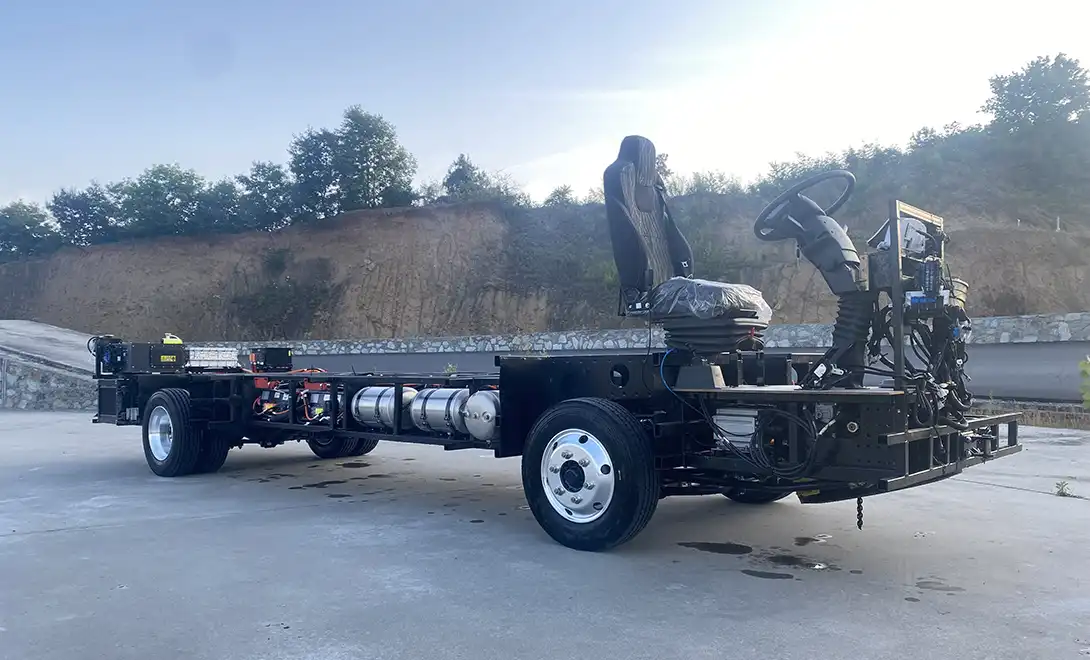
Comparative Insights: Choosing the Best Electric Bus Chassis for Urban Fleets
Electric versus Diesel Chassis Performance
Electric bus chassis outperform diesel bus chassis in a number of performance criteria. Electric systems generate torque instantly, so there is no lag as with diesel engines. This means that acceleration from stops is smooth. This responsiveness makes driving lengthy city routes with a lot of stops less tiring for the driver and more comfortable for the passengers.
Another big advantage is that electric chassis are more energy-efficient. They can turn approximately 90% of stored energy into motion, whereas diesel systems can only do so at roughly 30% efficiency. This efficiency helps cities meet their goals for sustainability and follow the rules by lowering the cost of running a business per mile and having less of an impact on the environment.
Total Cost of Ownership Analysis
The cost savings of an electric bus chassis go beyond the cost of buying it. When you include together the expenses of fuel, maintenance, and longevity, electric systems usually cost 60–70% less to run than diesel systems. Electric motors have fewer moving parts than diesel engines, which means less scheduled maintenance and less downtime that messes with transportation schedules.
Battery technology improvements are lowering the cost of replacing batteries in cities while also making them last longer than 12 years. Government incentives and subsidies that lower the cost of the first investment make electric bus chassis a good choice for fleet renewal projects. These financial advantages help with long-term budget planning and let transportation authorities use the money for service development instead of maintenance expenditures.
Lightweight Materials and Efficiency Benefits
Manufacturers of electric bus chassis may decrease vehicle weight without sacrificing structural integrity or passenger safety thanks to advances in materials science. When compared to conventional designs, aluminum alloys and high-strength steel composites lower chassis weight by 15–20%, immediately increasing energy efficiency and expanding operating range.
Additionally, lightweight design lessens the effect on the road surface and tire wear, which lowers maintenance expenses for both municipal infrastructure and automobiles. For transit operators looking to maximize service delivery, the lighter weight allows for more passenger capacity without going above gross vehicle weight ratings, increasing route efficiency and revenue possibilities.
Procurement Guide: How to Source and Buy Electric Bus Chassis?
Evaluating Supplier Capabilities
To successfully buy electric bus chassis, you need to carefully look at the technical skills, manufacturing capacity, and service support infrastructure of the providers. Purchasing managers should check supplier certifications like ISO 9001, TS 16949, and relevant safety standards to make sure the products are of good quality and meet all rules. Audits of factories provide information on how much they can make, how they check the quality of their work, and if they can meet large fleet orders on time.
International vendors frequently provide low pricing while still meeting quality requirements. However, procurement teams need to think about the availability of after-sales services, customs rules, and shipping costs. When working with a supplier for a long time, their financial stability is quite important, particularly when you think about warranty commitments and the availability of parts during the 15 to 20 year lifecycles of vehicles.

Customization and OEM Partnership Benefits
By altering the chassis of electric buses, fleet managers may make the vehicles work better for certain routes and operational conditions. Custom wheelbase lengths are made to match different passenger capacity needs, while individual suspension tuning takes into consideration distinct road conditions or weather needs. By choosing the right battery architecture, operators may measure the cost and weight of a vehicle against its range demands.
OEM partnerships often provide other benefits, such as training programs, technical support, and savings for buying in volume. These linkages frequently lead to opportunities for collaborative development, which gives transportation authorities the ability to control product development and make sure that chassis solutions meet evolving operational demands.
Pricing Structures and Lead Time Management
Pricing for electric bus chassis varies greatly depending on order quantities, delivery schedules, and customisation needs. Orders above 20–50 units usually qualify for volume discounts, while bespoke requirements might raise base prices by 10%–15%. To guarantee complete cost transparency, procurement managers should bargain for comprehensive pricing that includes warranty extensions, spare parts packages, and training.
Depending on supplier manufacturing schedules and customisation needs, lead times for electric bus chassis vary from six to twelve months. Better production planning and perhaps shorter delivery windows are made possible by early supplier involvement. To maximize cash flow while maintaining production obligations, milestone timing and payment conditions should be in line with manufacturing procedures.
Technology and Maintenance: Ensuring Longevity and Performance
Advanced Technology Integration
Modern electric bus chassis have advanced technological features that improve operating efficiency, predictive maintenance, and performance monitoring. Fleet managers may optimize routing and charging plans with the use of telematics systems, which provide real-time data on battery performance, energy usage, and vehicle position. Modern driving assistance technologies lower insurance premiums and driver training requirements while increasing safety.
By enabling communication between chassis systems and charging infrastructure, smart charging integration optimizes charging schedules according to grid demand and power pricing. Buses with vehicle-to-grid capability may provide energy storage services during off-peak hours, giving transit operators more ways to make money.
Maintenance Best Practices and Protocols
The maintenance needs for electric bus chassis are quite different from those for diesel vehicles; instead of engine oil changes and exhaust system maintenance, the emphasis is on electrical system inspections, battery health monitoring, and software upgrades. To guarantee optimum performance and safety compliance, preventive maintenance procedures place a strong emphasis on connection integrity, cooling system performance, and braking system examination.
Specialized diagnostic tools and skilled personnel who can service high-voltage systems are needed for battery management systems. To handle electric car systems safely and effectively, maintenance facilities need updated equipment and safety procedures. Although these criteria result in higher vehicle availability and reduced ongoing maintenance costs, they still reflect upfront investment expenditures.
Certification and Compliance Standards
Numerous performance and safety requirements must be met by electric bus chassis for a variety of markets and uses. While additional certifications could be needed for certain purposes or funding programs, the Federal Motor Vehicle Safety Standards (FMVSS) provide baseline safety criteria. International standards like the UN ECE norms provide producers access to worldwide markets and give international procurement operations trust.
Consistent production procedures and ongoing improvement initiatives are guaranteed by quality management certifications, such as ISO/TS 16949 automotive quality standards. Access to environmental incentive programs is made possible by environmental certifications like CARB compliance, which show emissions performance.
Brand and Supplier Overview: Building Trust with Leading Electric Bus Chassis Providers
Global Market Leaders and Innovation
There are a number of well-known producers with a track record of producing commercial vehicles and integrating electric systems in the electric bus chassis industry. European automakers like Volvo and Mercedes-Benz combine cutting-edge electric technology research with decades of bus manufacturing expertise. These businesses assist international operations by providing extensive service networks and well-established routes for the shipment of parts.
Rather of modifying current diesel platforms, emerging Asian manufacturers frequently specialize on electric vehicle systems from the company's founding, offering competitive price and cutting-edge technological solutions. For specialized applications, these providers usually provide faster development periods and more customization freedom.
Supplier Evaluation Criteria
Evaluating suppliers effectively necessitates taking into account more than just initial price considerations. Financial stability, manufacturing quality certifications, and technical know-how in electric vehicle systems are essential prerequisites for long-term collaborations. When it comes to international procurement, service network coverage and parts availability become crucial considerations, especially in markets that are far from production plants.
Case studies and customer references provide insightful information on how suppliers operate in actual operating environments. Before making significant purchases, procurement teams may assess product quality and service capabilities via site visits and pilot initiatives.
Local versus International Sourcing Considerations
While overseas suppliers could provide better price and more cutting-edge technological possibilities, local sourcing has benefits in terms of faster service, lower shipping costs, and easier warranty processes. Buy America regulations, which mandate domestic content standards that impact supplier selection and cost, have an impact on sourcing choices for US procurement for federally financed transportation projects.
International sourcing necessitates a thorough assessment of customs processes, currency exchange risks, and logistical expenses, all of which may affect the overall project budget. Global vendors, however, often provide competitive pricing and cutting-edge technological solutions that counteract these difficulties for large-scale procurement operations.
Company Introduction and Our Electric Bus Chassis Solutions
With a focus on developing electric bus chassis to satisfy the changing needs of urban transportation worldwide, JCM is a trailblazer in the field of customized automotive solutions. Our all-encompassing strategy blends state-of-the-art engineering with real-world manufacturing know-how, allowing us to provide fleet operators throughout the globe with chassis solutions that surpass performance standards while being reasonably priced.
With specialized teams creating electric bus chassis technologies that tackle practical operating issues, our R&D centers in Shiyan and Xiamen concentrate on commercial vehicle innovation. We link worldwide talent and supplier networks with our "Surfing" automotive industry chain platform to speed up product development and guarantee prompt delivery of tailored solutions. We are able to provide comprehensive chassis solutions from original design to production implementation and continuing support services because to this cooperative approach.

Comprehensive Product Portfolio
From small minibus platforms to full-size city bus chassis that can accommodate more than 80 people, JCM's electric bus chassis options cover the whole range of urban transportation applications. Extensive customisation is made possible by our modular design approach, which also preserves production efficiency and consistency in quality. Low-floor layouts optimize internal space usage for improved passenger comfort and operational efficiency while maximizing accessibility compliance.
Our chassis solutions combine regenerative braking technologies, temperature controls, and sophisticated battery management systems to reduce total cost of ownership and increase operating range. Every chassis is subjected to stringent testing procedures to guarantee adherence to global safety regulations and performance criteria required by expert fleet managers.
Global Support Infrastructure
Through our Original Centers in Southeast Asia, the Middle East, and Europe, JCM provides localized support services including technical assistance, parts distribution, and maintenance training programs. This global presence ensures responsive service delivery regardless of operational location, supporting international procurement initiatives with confidence in long-term partnership sustainability.
Our comprehensive service offering extends beyond chassis delivery to include production line setup, technical training, and ongoing operational support. This complete solution approach enables customers to implement electric bus programs efficiently while building internal capabilities for long-term success.
Conclusion
Electric bus chassis solutions represent a transformative opportunity for urban transportation modernization, offering superior performance, environmental benefits, and economic advantages over traditional diesel alternatives. The integration of advanced materials, sophisticated control systems, and proven reliability creates compelling value propositions for transit operators seeking sustainable fleet solutions.
Successful implementation requires careful supplier evaluation, thorough understanding of customization options, and comprehensive planning for maintenance and support requirements. The global market offers diverse supplier options with varying strengths in technology, pricing, and service capabilities, enabling procurement teams to identify optimal solutions for specific operational requirements and budget constraints.
FAQ
Q1: What factors should I consider when selecting an electric bus chassis for urban transit applications?
A: Key considerations include passenger capacity requirements, operational range needs, charging infrastructure compatibility, and local climate conditions. Route characteristics such as grade levels, stop frequency, and average speeds significantly impact chassis specifications and battery requirements. Additionally, accessibility compliance, maintenance facility capabilities, and driver training requirements influence chassis selection decisions.
Q2: How do maintenance requirements differ between electric and traditional diesel bus chassis?
A: Electric bus chassis require significantly less routine maintenance, eliminating oil changes, filter replacements, and exhaust system service while focusing on electrical connections, battery health monitoring, and software updates. However, maintenance facilities need specialized equipment and trained technicians capable of high-voltage system service. Overall maintenance costs typically decrease by 40-60% compared to diesel systems.
Q3: What are typical lead times and warranty coverage for electric bus chassis orders?
A: Standard lead times range from 6-12 months depending on customization requirements and order quantities, while custom engineering projects may require 12-18 months for delivery. Warranty coverage typically includes 5-8 years for chassis components and 8-12 years for battery systems, though specific terms vary by supplier and application requirements.
Partner with JCM for Advanced Electric Bus Chassis Solutions
Ready to transform your fleet with cutting-edge electric bus chassis technology? JCM offers comprehensive solutions from initial consultation through production implementation, ensuring your transit modernization project succeeds. Our experienced engineering team provides customized chassis designs that meet specific operational requirements while optimizing performance and cost-effectiveness.
Contact our technical specialists at info@jcm-star.com to discuss your electric bus chassis requirements and explore how our innovative solutions can support your sustainability goals. As a trusted electric bus chassis supplier, we provide complete project support including technical specifications, delivery scheduling, and ongoing service commitments.
References
1. International Association of Public Transport, "Electric Bus Technology Guidelines and Best Practices for Urban Transit Applications," Public Transport Research Journal, 2023.
2. Smith, Robert and Chen, Michael, "Comparative Analysis of Electric versus Diesel Bus Chassis Performance in Urban Environments," Transportation Engineering Quarterly, Vol. 45, 2023.
3. European Committee for Standardization, "Electric Vehicle Safety Standards and Certification Requirements for Commercial Applications," EN 50272-3 Technical Specification, 2023.
4. Johnson, Sarah et al., "Total Cost of Ownership Analysis for Electric Bus Fleet Implementation," Fleet Management Review, Issue 3, 2023.
5. Global Transit Research Institute, "Electric Bus Market Analysis: Technology Trends and Procurement Strategies," Commercial Vehicle Technology Report, 2023.
6. Williams, David and Kumar, Priya, "Maintenance Protocols and Best Practices for Electric Commercial Vehicle Chassis Systems," Automotive Service Excellence Quarterly, Vol. 18, 2023.

Based on your vehicle requirements, we will quickly match the most suitable specifications and provide a competitive quote.
_1755581003287.webp)
Global Customized


_1756108840480.webp)
_1755854765757.webp)