How to Choose an Electric Bus Chassis for City Transit
When choosing an electric bus chassis for city transportation, performance, durability, and integration capabilities must be carefully considered. In urban settings, an electric bus chassis is the fundamental component that establishes the vehicle's dependability, passenger capacity, and operating effectiveness. In order to ensure a smooth integration with the current infrastructure, modern transportation authorities must strike a compromise between financial concerns and environmental regulations. The selection of various chassis configurations, such as high-capacity models for peak-hour operations or low-floor designs for accessibility, has a direct influence on long-term operational performance and service quality.
Defining the Electric Bus Chassis and Its Importance in City Transit
Procurement experts must comprehend the basic design of electric bus platforms in order to successfully navigate the shift from traditional diesel fleets to environmentally friendly transportation options.

Core Components and Architecture
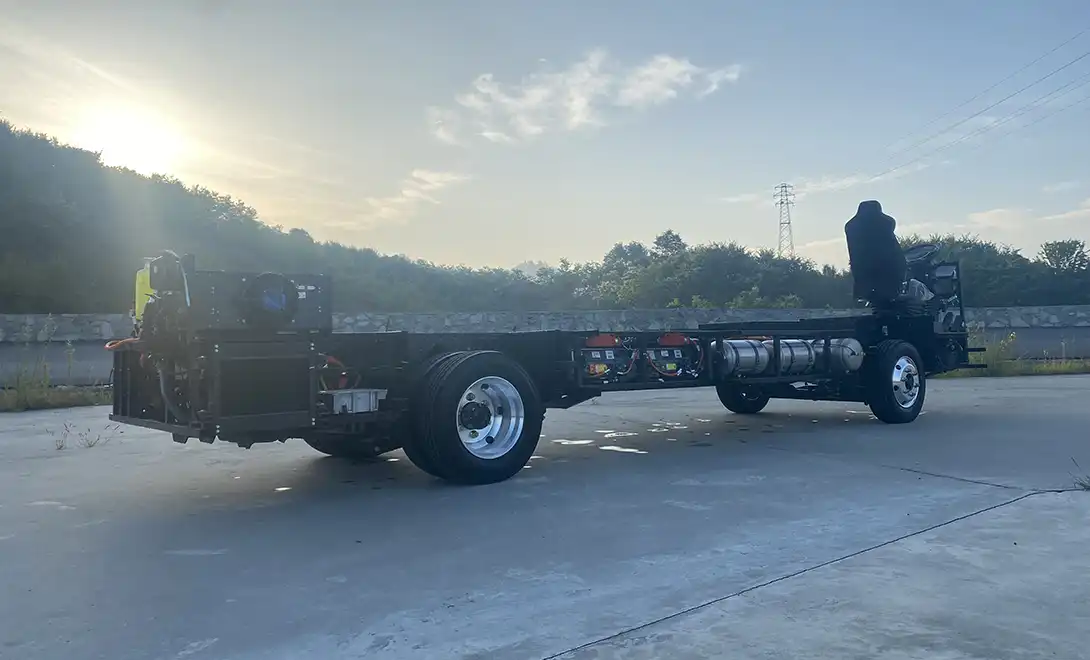
Advanced powertrain technologies and structural engineering are expertly integrated in an electric bus chassis. These chassis include specialized battery mounting systems, electric motor housings, and thermal management infrastructure created especially for zero-emission operation, in contrast to conventional diesel platforms. Regenerative braking systems, cooling circuits, and high-voltage wire harnesses must all be supported by the chassis structure while retaining structural integrity under various load scenarios.
Passenger comfort and weight distribution are significantly influenced by the underbody layout. Step-free boarding is made possible by low-floor electric bus chassis designs, which is especially advantageous for passengers with mobility issues. For these platforms to support the concentrated weight of battery packs while maintaining ride quality throughout the course of the vehicle's operating life, certain suspension geometries and strengthened mounting locations are needed.
Environmental and Operational Advantages
Beyond only complying with regulations, electric chassis technology offers quantifiable advantages. Particularly in residential neighborhoods and commercial districts where conventional diesel buses add to the ambient noise levels, reduced noise pollution improves urban livability. Because there are no exhaust emissions, there are no local air quality issues, which helps cities with their sustainability projects and public health goals.
Improved energy conversion rates and less complicated maintenance needs lead to increases in operational efficiency. Compared to internal combustion engines, electric powertrains have fewer moving parts, which lowers the need for planned maintenance and the related expenses of downtime. By capturing kinetic energy during deceleration, regenerative braking systems increase operating range while lowering brake wear and replacement frequency.
Core Criteria for Selecting an Electric Bus Chassis for City Transit
A methodical assessment of performance metrics that correspond with particular route features and operational requirements is necessary for strategic chassis selection.
Performance Metrics and Capacity Planning
Passenger accommodations during peak-hour operations are determined by weight capacity standards. Depending on the layout and local safety restrictions, a standard electric bus chassis may accommodate 70–100 people. Gross vehicle weight ratings must be compared to projected passenger loads by procurement managers, taking seasonal changes and route-specific ridership trends into account.
Calculating driving range involves more factors than just battery capacity. Climate, stop frequency, and urban geography all have a big impact on how much energy is used. While steady speeds and mild temperatures maximize battery efficiency, hills and frequent acceleration cycles increase power needs. The longest projected routes plus sufficient reserve capacity for unforeseen deviations or service interruptions should be the basis for transit authorities' range requirements.
Battery Technology and Integration
Current electric bus applications are dominated by lithium-ion battery packs, which provide better energy density and charging flexibility than other chemistries. Vehicle stability and interior space usage are impacted by battery placement options. While floor-mounted systems retain stability but may have fewer seats, roof-mounted designs increase the center of gravity while preserving passenger spaces.
Route planning capabilities and operational flexibility are impacted by charging infrastructure compatibility. While opportunity charging at route endpoints facilitates longer service hours, depot charging systems provide overnight replenishment at off-peak power prices. Compatibility with fast charging enables quick energy replacement during driver breaks, increasing daily operating capacity without increasing fleet size.
Durability and Maintenance Considerations
Vehicles in urban transit settings are subjected to frequent door operations, intense stop-and-go cycles, and constant fluctuations in passenger load. These operating pressures should be addressed by chassis durability criteria using corrosion-resistant materials, strengthened mounting points, and tested suspension systems intended for commercial use.
Operational uptime and service costs are directly impacted by maintenance accessibility. Critical systems may be quickly replaced using modular component designs, avoiding prolonged vehicle downtime. Predictive maintenance warnings from diagnostic features included into chassis management systems enable proactive component replacement before breakdowns happen.
Comparing Electric Bus Chassis Options: Market Leaders and Technical Differences
Market research shows that various manufacturers prioritize different operating needs and performance attributes when designing electric bus chassis.
Technology Platforms and Design Philosophy
Prominent producers have created unique methods for designing electric bus chassis. While some emphasize integrated platforms specialized for certain uses, others place a higher priority on modular designs that support different body combinations. These design approaches have an impact on long-term maintenance infrastructure, spare part availability, and customization options.
Manufacturers' approaches to battery integration differ greatly. Distributed arrangements disperse loads across many mounting points, while central mounting systems concentrate weight for maximum stability. Depending on the needs for passenger capacity and the features of the route, each strategy has unique benefits.
Cost Analysis and Total Ownership Considerations
Purchasing an electric chassis has greater upfront costs than diesel equivalents, but these are compensated for by lower fuel and maintenance costs over the course of the vehicle's life. Because of the simpler engine design, maintenance costs may be reduced by 20–35%, while energy expenditures can be reduced by 30–40% when compared to diesel fuel.
When it comes to lease agreements and fleet replacement planning, residual value becomes crucial. For transit agencies worried about technological obsolescence, flexible procurement arrangements are beneficial since the pace of growth of electric bus technology may have an impact on long-term asset values.

Environmental Compliance and Regulatory Alignment
Guidelines from the Federal Transit Administration are progressively favoring zero-emission systems for qualifying for grant money. In order to ensure compliance for the duration of the vehicle's operation, electric chassis selection should take into account both present and future environmental standards. Complying with the strictest regulations is a wise long-term plan since California Air Resources Board rules often act as models for other jurisdictions.
Procurement Considerations for Electric Bus Chassis
Throughout the purchase process, effective procurement strategies take into account risk minimization, finance arrangements, and supplier capabilities.
Supplier Evaluation and Due Diligence
Production capacity, quality certifications, and infrastructure for after-sales assistance should all be included in the criteria used to evaluate suppliers. While production volume capabilities influence the viability of delivery timelines for big fleet orders, ISO 9001 and TS16949 certifications show established quality control systems.
The availability of parts and response times for technical help are influenced by the support facilities' geographic closeness. Suppliers with well-established distribution networks in North America provide benefits for performing warranty services and continuing maintenance support.
Financing and Leasing Structures
Electric bus fleets sometimes demand more capital expenditures than conventional diesel buys, thus finance agreements are essential to the viability of the project. For eligible projects, federal and state grant programs provide partial financing that usually covers 50–80% of the additional expenses above traditional options.
Leasing agreements move technology obsolescence risks to finance partners while providing cash flow benefits. Maintenance coverage is an option for full-service leasing agreements, which simplify fleet management duties and provide predictable operating expenses.
Warranty Coverage and Risk Management
Given the intricacy of electric vehicle systems and the lack of field experience with long-term durability, comprehensive warranty coverage becomes crucial. While chassis components may have different coverage lengths, battery warranties often last 8 to 12 years. Unexpected repair expenses during the coverage term may be avoided by being aware of the warranty's restrictions and exclusions.
Range and energy consumption performance guarantees provide recourse in the event that cars don't achieve predetermined operating standards. For transportation organizations that operate in difficult weather circumstances or with demanding route profiles, these measures become especially crucial.
Maintenance Tips and Long-Term Management of Electric Bus Chassis
Throughout the fleet's service life, proactive maintenance techniques minimize operational interruptions while maintaining vehicle performance.
Preventive Maintenance Programs
Compared to traditional vehicles, electric bus chassis need different maintenance techniques. Telematics systems that monitor battery health provide early warning signs for problems with thermal management or capacity deterioration. High-voltage connections should be inspected often to maintain the integrity of the electrical system and avoid safety risks.
Steering systems, suspension parts, and structural integrity evaluations are the core topics of chassis-specific maintenance. Certain components may have accelerated wear patterns due to weight distribution changes brought on by battery location, necessitating modified inspection intervals and replacement schedules.
Technology Upgrades and Modernization
Vehicle controllers and battery management systems benefit from software upgrades that improve performance and increase operating capabilities. While guaranteeing that cars get manufacturer enhancements and bug fixes, over-the-air update capabilities minimize service interruptions.
Opportunities for hardware modernization may arise as technology develops, especially in the areas of improved battery chemistry and charging technologies. It is easier to incorporate future enhancements without requiring significant infrastructure changes when upgrade integration is planned for during original purchase.
JCM's Comprehensive Electric Bus Chassis Solutions
JCM stands as a pioneering manufacturer specializing in customized electric vehicle platforms designed specifically for urban transit applications, combining advanced engineering capabilities with flexible production methodologies.
Engineering Expertise and Customization Capabilities
Our Xiamen bus development facility houses specialized engineering teams focused on electric chassis optimization for diverse operational requirements. Through whole industry chain thinking, we integrate powertrain design, battery management systems, and structural engineering to deliver cohesive solutions that exceed performance expectations while maintaining cost competitiveness.
Customization capabilities extend beyond standard configurations to address specific route requirements, climate considerations, and accessibility mandates. Our low-floor electric bus chassis designs incorporate step-free boarding systems while maintaining optimal weight distribution and structural integrity throughout the vehicle's operational lifespan.
Production Infrastructure and Quality Assurance
JCM's comprehensive manufacturing ecosystem encompasses complete production line solutions, from SKD body kits to final assembly operations. Our standardized production processes maintain consistent quality while accommodating customization requirements for specific market applications.
Quality management systems align with international standards including ISO certifications, ensuring consistent product delivery and performance reliability. Battery manufacture capabilities spanning cell-level through complete pack assembly provide integrated solutions that optimize system compatibility and performance characteristics.
Conclusion
Selecting an appropriate electric bus chassis for city transit requires balancing performance requirements, operational constraints, and long-term sustainability objectives. Key considerations include battery technology compatibility, maintenance accessibility, and supplier support infrastructure throughout the vehicle's operational lifespan. Transit authorities benefit from comprehensive evaluation processes that address both immediate operational needs and future expansion capabilities. The transition to electric platforms represents a significant investment in sustainable transportation infrastructure, requiring careful planning and strategic supplier partnerships to ensure successful implementation and long-term operational success.
FAQ
Q1: What factors most significantly impact electric bus driving range?
A: Battery capacity represents the primary determinant of operational range, typically measured in kilowatt-hours (kWh). However, real-world performance depends heavily on route characteristics including topography, stop frequency, and climate conditions. Cold weather can reduce battery efficiency by 20-30%, while hilly terrain increases energy consumption through frequent acceleration cycles. Vehicle loading also affects range, with fully loaded buses consuming more energy than lightly loaded operations.
Q2: How do electric chassis costs compare to diesel alternatives over their lifecycle?
A: Electric bus chassis require higher initial capital investment, typically 40-60% more than comparable diesel platforms. However, operational cost savings through reduced fuel and maintenance expenses often offset this premium over 12-15 years of service. Electricity costs average 30-40% less than diesel fuel per mile, while maintenance savings of 20-35% result from simplified powertrain architecture and reduced component complexity.
Q3: What customization options are available for electric bus chassis?
A: Modern electric chassis platforms accommodate extensive customization including battery capacity configuration, motor placement, charging system compatibility, and accessibility features. Low-floor designs enable wheelchair accessibility, while high-capacity configurations maximize passenger accommodation. Thermal management systems can be optimized for specific climate conditions, and charging infrastructure can be tailored to depot capabilities or opportunity charging requirements.
Partner with JCM for Your Electric Bus Chassis Needs
JCM delivers cutting-edge electric bus chassis solutions tailored specifically for North American transit applications. Our comprehensive approach combines advanced engineering capabilities with flexible manufacturing processes, ensuring optimal performance for your specific operational requirements. Contact our expert team at info@jcm-star.com to explore customized electric bus chassis supplier opportunities that enhance your fleet's efficiency and sustainability. Experience the advantages of working with a trusted electric bus chassis manufacturer committed to innovation and long-term partnership success.
References
1. Federal Transit Administration. "Zero Emission Bus Technology and Testing." Transit Bus Technology and Testing Report, 2023.
2. American Public Transportation Association. "Electric Bus Procurement Guidelines for Transit Agencies." APTA Standards Development Program, 2023.
3. National Renewable Energy Laboratory. "Electric Bus Life Cycle Cost Analysis and Technology Assessment." NREL Technical Report, 2022.
4. Transportation Research Board. "Battery Electric Bus Infrastructure and Operations." Transit Cooperative Research Program Report 205, 2023.
5. International Association of Public Transport. "Electric Bus Systems: Technologies and Applications in Urban Transit." UITP Global Report, 2023.
6. Clean Transportation Program. "Electric Bus Deployment and Performance Analysis in North American Cities." Advanced Transportation Technology Institute, 2022.

Based on your vehicle requirements, we will quickly match the most suitable specifications and provide a competitive quote.
_1755581003287.webp)
Global Customized


_1756108840480.webp)
_1755854765757.webp)