Comprehensive Testing Protocols for 8x8 Truck Chassis
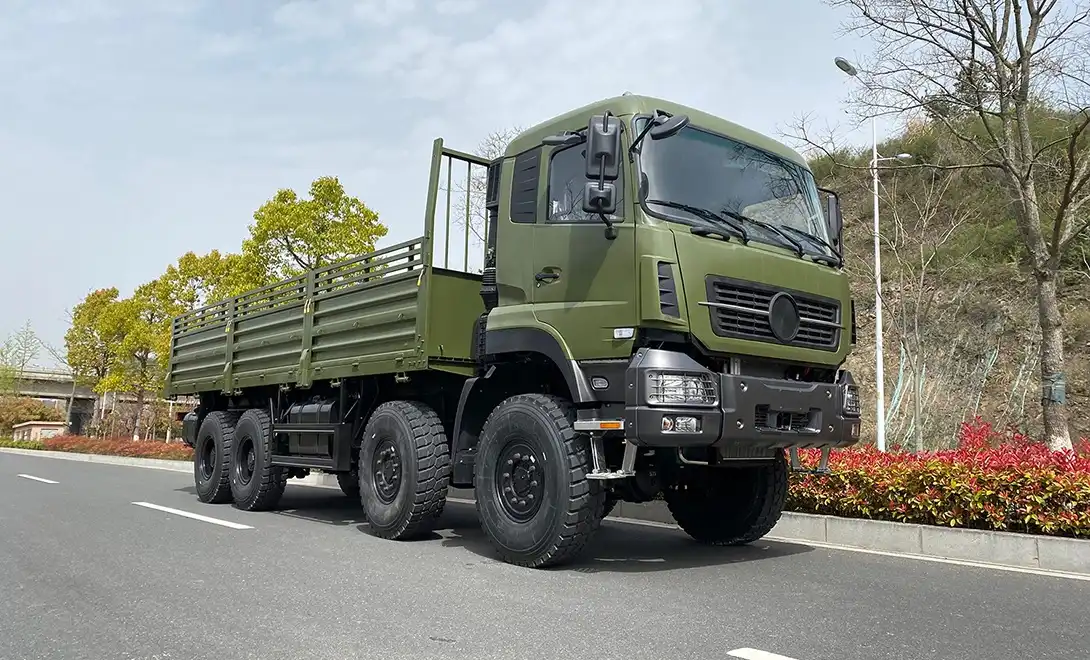
The testing protocols for 8x8 truck chassis are designed to push these vehicles to their limits, ensuring they can perform in the most demanding environments. These tests are crucial in validating the design, engineering, and manufacturing quality of the chassis.
Structural Integrity and Durability Tests
One of the primary concerns in 8x8 truck chassis testing is structural integrity. These vehicles are expected to carry heavy loads and operate in harsh conditions, making durability a key factor. Engineers conduct rigorous stress and fatigue tests to ensure that the chassis can withstand extreme forces, including uneven terrain, sharp turns, and sudden impacts.
Material selection, welding quality, and joint reinforcement are carefully evaluated. Additionally, real-world trials under diverse environmental conditions help confirm that the chassis maintains performance and safety over extended operational lifespans. Testing procedures often include:
- Static load testing to assess the chassis's ability to support maximum payload
- Dynamic stress testing to evaluate performance under varying load conditions
- Fatigue testing to ensure long-term reliability
- Torsional rigidity tests to assess chassis flexibility and strength
These tests help manufacturers identify potential weak points and optimize the chassis design for maximum durability and performance. By simulating real-world conditions such as heavy payloads, rough terrain, sharp turns, and prolonged operation, engineers can pinpoint areas susceptible to stress, fatigue, or deformation.
Data gathered from these evaluations informs improvements in materials, reinforcement techniques, welding quality, and structural geometry. This iterative process ensures that the final chassis not only meets regulatory and safety standards but also delivers consistent reliability, enhanced load-bearing capacity, and long-term operational efficiency under demanding conditions.
Off-Road Performance Evaluation
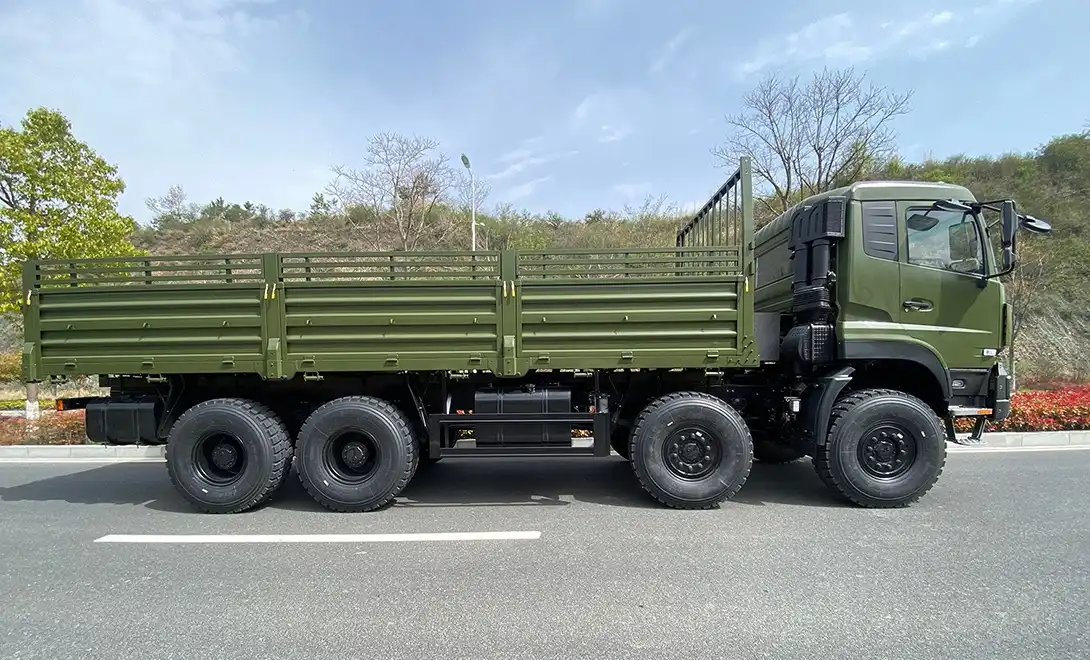
The off-road capabilities of an 8x8 truck chassis are paramount. Testing in this area typically involves:
- Obstacle course navigation to assess maneuverability
- Steep grade climbing tests to evaluate traction and power distribution
- Water fording trials to ensure waterproofing and electrical system integrity
- Mud and sand testing to assess traction control systems
These evaluations ensure that the 8x8 truck chassis can maintain mobility and functionality in diverse and challenging terrains. By rigorously testing the vehicle under conditions such as steep inclines, uneven surfaces, mud, sand, and rocky paths, engineers can verify the effectiveness of the suspension, drivetrain, and steering systems.
The results guide adjustments to weight distribution, torque management, and chassis reinforcement, ensuring that the truck remains stable, responsive, and reliable. This comprehensive testing process guarantees operational performance and safety even in the most demanding off-road environments.
Environmental Resilience Testing
8x8 truck chassis must be able to operate in extreme environmental conditions. Testing in this area includes:
- Extreme temperature testing (both hot and cold)
- Salt spray tests to evaluate corrosion resistance
- Dust and particle ingress testing
- Humidity and moisture exposure trials
"These tests ensure that the chassis can withstand various environmental challenges without compromising performance or safety. By exposing the vehicle to extreme temperatures, heavy rainfall, snow, dust, and corrosive conditions, engineers can assess how materials and structural components respond over time.
The evaluation also examines the durability of critical systems such as the suspension, braking, and drivetrain under repeated stress. Insights gained from these tests allow manufacturers to make design improvements, reinforce vulnerable areas, and implement protective measures, ensuring reliable operation and long-term safety in demanding environments.

Safety Standards and Compliance for 8x8 Off-Road Chassis
Safety is a critical aspect of 8x8 off-road chassis design and testing. Manufacturers must adhere to stringent safety standards to ensure the well-being of operators and other road users.
Crash Safety and Occupant Protection
While off-road vehicles may not be subject to the same crash test requirements as passenger vehicles, safety remains a priority. Key areas of focus include:
- Rollover protection systems (ROPS) testing
- Cab structural integrity assessments
- Seat belt and restraint system evaluations
- Impact absorption capabilities
These safety features are crucial in protecting occupants in the event of an accident, especially given the challenging environments in which these vehicles operate. Advanced structural reinforcements, roll-over protection systems, and energy-absorbing materials work together to minimize the risk of injury during collisions or tip-overs.
Additionally, integrated safety mechanisms such as airbags, seat restraints, and stability control systems enhance occupant protection. Regular testing under extreme conditions ensures that these features remain effective, providing reliable safety and peace of mind for drivers and passengers in off-road or high-stress operational scenarios.
Braking System Performance
The braking system of an 8x8 truck chassis must be capable of handling the vehicle's weight and stopping power requirements. Testing in this area includes:
- Emergency braking performance on various surfaces
- Anti-lock braking system (ABS) effectiveness
- Brake fade resistance under repeated heavy use
- Parking brake hold capability on steep grades
These tests ensure that the braking system can provide reliable stopping power in all conditions, contributing to overall vehicle safety. Engineers evaluate performance under heavy loads, wet or icy surfaces, steep gradients, and prolonged use to confirm responsiveness and durability. The results help optimize brake components, fluid dynamics, and control systems for consistent, dependable operation.
Stability Control and Handling
Given the high center of gravity and potential for uneven load distribution in 8x8 trucks, stability control is crucial. Testing focuses on:
- Electronic stability control (ESC) system performance
- Cornering and lane change maneuvers
- Crosswind stability
- Load shift response
These evaluations help ensure that the 8x8 truck chassis remains stable and controllable in various driving scenarios. By testing the vehicle under conditions such as sharp turns, uneven terrain, sudden maneuvers, and varying load distributions, engineers can assess handling, suspension response, and weight balance. The insights gained allow for adjustments that enhance overall stability, steering precision, and driver confidence in demanding environments.
Regulatory Compliance and Certification for 8x8 Truck Chassis
Ensuring compliance with relevant regulations and obtaining necessary certifications is a critical aspect of 8x8 truck chassis development and testing.
International Standards and Regulations
8x8 truck chassis must often comply with various international standards, which may include:
- ISO standards for vehicle dynamics and durability
- European ECE regulations for commercial vehicles
- STANAG requirements for military vehicles (where applicable)
- Country-specific road safety regulations
Adherence to these standards ensures that the 8x8 truck chassis meets global quality and safety benchmarks. Compliance with international regulations, rigorous testing protocols, and material specifications guarantees consistent manufacturing quality, operational reliability, and protection for both drivers and cargo across diverse markets and demanding conditions.
Emissions and Environmental Compliance
With increasing focus on environmental protection, 8x8 truck chassis must also meet stringent emissions standards. This includes:
- Engine emissions testing to meet Euro VI or equivalent standards
- Noise level compliance testing
- Fuel efficiency evaluations
- Assessment of environmental impact during manufacturing and disposal
These tests ensure that 8x8 truck chassis meet modern environmental standards and contribute to sustainable transportation solutions. By evaluating emissions, fuel efficiency, and energy consumption under various operational conditions, engineers can implement design improvements that reduce the vehicle’s environmental impact. These measures support cleaner, more efficient performance while promoting long-term sustainability in both urban and off-road transport applications.
Certification Processes
Obtaining necessary certifications involves rigorous testing and documentation. Key steps in this process include:
- Type approval testing for road legal vehicles
- Military certification for defense applications
- Quality management system audits (e.g., ISO 9001)
- Third-party verification of test results
These certification processes provide assurance to customers and regulatory bodies that the 8x8 truck chassis meets all required standards and specifications. Through comprehensive testing, documentation, and independent verification, manufacturers demonstrate compliance with safety, performance, and quality requirements, instilling confidence in the vehicle’s reliability, durability, and suitability for demanding operational environments worldwide.
Conclusion
The standards and testing requirements for 8x8 off-road chassis are comprehensive and demanding, reflecting the critical nature of these vehicles in various applications. From structural integrity and off-road performance to safety features and regulatory compliance, every aspect of the chassis undergoes rigorous evaluation. These stringent standards ensure that 8x8 truck chassis can withstand extreme conditions, provide reliable performance, and maintain safety in challenging environments. As technology advances and regulations evolve, these standards will continue to adapt, driving innovation and improvement in 8x8 truck chassis design and manufacturing.
FAQ
What is the typical payload capacity of an 8x8 truck chassis?
Payload capacity varies depending on the specific model and design, but it can range from 20 to 40 tons for most 8x8 truck chassis.
How often should an 8x8 truck chassis undergo maintenance inspections?
Regular maintenance intervals depend on usage, but generally, comprehensive inspections are recommended every 10,000 to 15,000 kilometers or annually, whichever comes first.
Can 8x8 truck chassis be customized for specific applications?
Yes, many manufacturers offer customization options to tailor the chassis for specific needs, such as military, firefighting, or specialized cargo transport.
Custom 8x8 Off-Road Chassis Solutions - JCM
At JCM, we specialize in designing and manufacturing custom 8x8 off-road chassis that meet and exceed international standards. Our state-of-the-art facilities and experienced team ensure that every chassis undergoes rigorous testing and quality control. Whether you need a robust solution for military applications, heavy-duty logistics, or specialized industrial use, our 8x8 truck chassis factory can deliver tailored solutions to meet your specific requirements. Contact us at info@jcm-star.com to discover how our expertise in custom automotive solutions can drive your project forward.
References
1. Johnson, M. (2022). "Off-Road Vehicle Chassis Design: Principles and Practices." Automotive Engineering International.
2. Smith, R. et al. (2021). "Testing Methodologies for Heavy-Duty Off-Road Vehicles." Journal of Terramechanics.
3. European Commission. (2023). "Regulation (EU) 2019/2144 on type-approval requirements for motor vehicles." Official Journal of the European Union.
4. Miller, J. (2020). "Military Vehicle Standards: STANAG 4569 and Beyond." Defense Technology Review.
5. Thompson, L. (2023). "Environmental Impact Assessment of Heavy-Duty Vehicles." International Journal of Sustainable Transportation.

_1755581003287.webp)


_1756108840480.webp)
_1755854765757.webp)