Commercial Vehicle Manufacturing Trends in Coaster Buses
The business vehicle industry's coaster bus niche is still changing quickly, thanks to new technologies and shifting market needs. A commercial passenger bus, which is usually big enough for 15 to 30 people, is an important part of today's transportation system. They are mostly used for regional and group travel. Electrification, automation, flexible design, and environmental efforts are transforming the way these vehicles are made, making them safer, more efficient, and better able to adapt to different operating needs in global markets.
Understanding Commercial Coaster Buses and Their Market Landscape

Defining Coaster Buses and Their Core Functions
In the larger field of public transportation, coaster buses are a specialized type. These medium-sized vehicles are in between regular shuttle cars and full-sized charter buses. They have the perfect amount of space and movement. They can hold anywhere from 15 to 30 people, which makes them perfect for shuttles to and from the airport, transfers between hotels, business travel, and tourist trips. The design focuses on ease of entry, passenger comfort, and operating flexibility. This lets fleet owners respond quickly to changing demand trends without the extra costs that come with bigger vehicles.
Historical Evolution and Technological Milestones
The history of coaster buses shows how the car business as a whole has changed over time. The first models were only meant to meet basic transportation needs and didn't have many comfort features. In the late 1990s and early 2000s, automakers started adding better safety features, temperature control, and handling systems.
The biggest change happened in the last ten years, when advanced driver-assistance systems (ADAS), data integration, and different powertrains came out. These big steps forward in technology have completely changed how makers make things. They now need to come up with new ways to put things together and find parts, which affects their purchasing decisions.
Safety Standards and Certification Requirements
Safety compliance is still the most important thing when making coaster buses. The Federal Motor Vehicle Safety Standards (FMVSS) set strict rules for structure stability, lighting, braking systems, and protecting people inside of vehicles sold in North America. The markets in Europe follow the rules set by Euro NCAP, which tests how safe cars are in crashes and their active safety features.
Modern coaster buses have stronger passenger areas, electronic stability control, anti-lock braking systems, and more and more technologies that help the buses avoid accidents. Managers in charge of buying things must make sure that sellers keep their ISO 9001 and TS16949 certifications up to date. This makes sure that everyone in the supply chain is following the rules.
Current Market Dynamics and Demand Drivers
Trends in urbanization and laws that promote sustainable transportation are changing how people use coaster buses. Cities all over North America and Europe are starting fleet replacement programs that give priority to low-emission cars. This gives electric and hybrid models a lot of chances to sell. As tourists and business travel pick up again after the pandemic, the need for safe, quick group transportation has grown.
Fleet managers are looking for cars with lower total costs of ownership. This can be done by making the vehicles use less gas, need less upkeep, and go longer between service intervals. Due to the current state of the market, procurement workers need to quickly find production partners who can provide new, legal solutions at prices that are competitive.
Key Manufacturing Trends Shaping Commercial Coaster Buses
Industry 4.0 Integration and Smart Manufacturing
Industry 4.0 technologies are transforming the factories that make coaster buses into digital factories. Automation has made the processes of welding, painting, and putting things together much more consistent and cut down on production time. Real-time data analytics are used by smart workplace systems to improve quality control, speed up production, and reduce errors.
Because of these improvements, producers can offer lower prices while still meeting high quality standards. These savings help procurement workers by making delivery times more regular and improving the reliability of products. When manufacturers use these technologies, they can reply more quickly to calls for customization, which is very helpful when making cars for specific operational or regulatory settings.

Electrification Versus Traditional Powertrains
When it comes to making, the biggest change in coaster bus output is the move toward electric powertrains. When compared to gasoline models, electric models need very different ways to be put together, parts to be sourced, and quality control procedures. Integration of batteries, installation of electric motors, and heat control systems all need specific knowledge and tools. Companies that make batteries need to spend money on new testing equipment to make sure the batteries are safe, work well, and have a good range.
The change affects the supply chain because buying teams need to find dependable providers for things like batteries, power electronics, and electric drive systems. When choosing between electric and diesel powertrains, you need to look at the total cost of ownership, the operating range needs, the availability of charging facilities, and any regional reward programs that can help cover the higher initial costs.
Modular Design and Customization Capabilities
Using modular manufacturing methods lets companies that make roller coasters give a lot of customization choices without slowing down production. Using standard subassemblies, platform-based designs let automakers make cars with different seating arrangements, door placements, accessibility features, and internal finishes. This flexibility is especially helpful for fleet owners who serve a wide range of customers or have different business needs.
Modular design can be used in procurement strategies by laying out the basic needs while leaving room for future changes. Manufacturers who offer SKD (semi-knocked-down) or CKD (completely-knocked-down) kits allow local assembly operations. This lowers the costs of import taxes and shipping while creating jobs in the area. This strategy has worked well in places that want to build up their own car manufacturing skills, particularly when applied to Commercial Passenger Bus fleets.
Sustainability in Manufacturing Processes
Every step of the process of making a coaster bus is now affected by environmental concerns. Manufacturers are switching to paints that are based on water, setting up closed-loop recycling systems, and getting parts from sources whose environmental records have been checked. More and more, design choices are based on lifecycle emission estimates, which look at not only operational emissions but also manufacturing footprint and how easily the product can be recycled at the end of its life.
These efforts to protect the environment are in response to rules and promises from big fleet owners to be more socially responsible. Procurement pros can tell suppliers apart by looking at their environmental certifications, how much trash they've cut down, and how much green energy they use in their factories. Choosing makers with strong sustainability programs can help a company's image and may make it easier to get government contracts that have environmental performance requirements.
Navigating Global Supply Chain Complexities
Supply chain stability has become an important thing to think about when making things. Recent problems have shown that widely distributed component networks are not as safe as they seem. As a result, makers are changing how they get their parts and keeping more of them in stock. Teams in charge of buying things must judge sellers not only on price and quality, but also on how open their supply chains are and how well they handle risks.
Single-point failures are less likely to happen when you have strategic ties with makers who keep regional component sourcing and multiple supplier relationships up to date. When parts are in short supply, bulk buying agreements can help get you the parts you need quickly and at a good price. If you know how a company handles risks in their supply chain and how they plan to keep their promises, you can tell if they can keep their shipping promises when the market is unstable.
Comparing Types of Commercial Passenger Buses: Coaster vs Alternatives
Operational Efficiency and Use Case Alignment
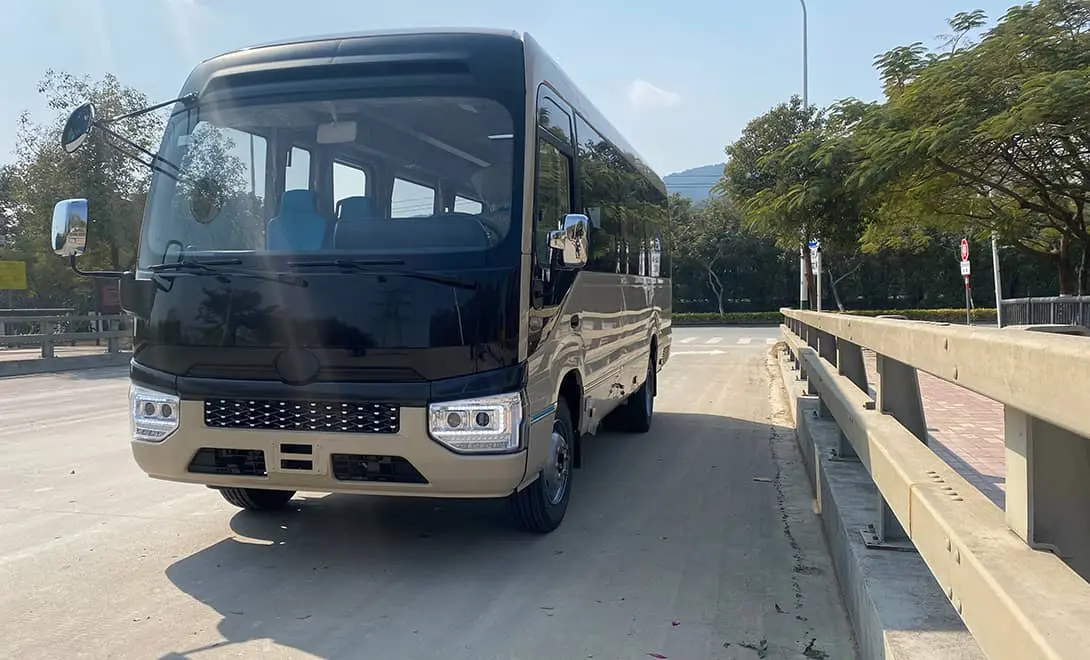
When it comes to how they work, coaster buses are different from shuttle cars and full-sized private buses. Their 15–30-passenger capacity is good for lines with a middle number of people, where full-sized buses would not work well but demand is higher than van capacity. The small size makes it easier to move around in cities and gets you into places where other vehicles can't go. The amount of fuel used per person mile is usually somewhere between smaller vans and bigger buses. This makes them most efficient when they're close to full.
When deciding what vehicles to buy, the specs should match how they will be used in real life, taking into account things like normal passenger loads, route characteristics, and frequency needs. When it comes to airport shuttle services, hotel chains, business campuses, and regional tourism operations with regular group sizes, coaster buses are the best choice over more variable but less efficient shuttle van fleets.
Fuel Type Comparisons: Total Cost Analysis
Diesel coaster buses are known to be reliable, have large repair networks, and cost less to buy at first. Their working range is good for long-distance tasks without needing to invest in charging facilities. When operating in cities, electric models have clear benefits because their routes are regular and charging stations are easy to find. Even though they are more expensive to buy, electric cars have much lower costs for fuel and upkeep. Regenerative stopping means that brake systems wear out less quickly, and compared to diesel engines, electric powertrains need less regular upkeep.
Hybrid setups are a good way to get started because they combine the efficiency of electric power in cities with the range of gas power for longer trips. Estimates of fuel prices, upkeep costs, estimated usage rates, available rewards, and residual values must all be taken into account when figuring out the total cost of ownership. Procurement teams should ask makers for thorough lifetime cost studies that include reasonable assumptions about how the products will be used and how much upkeep they will need for the specific uses they are meant for, especially when evaluating Commercial Passenger Bus options.
Leading Global Manufacturers and Model Differentiation
There are a few well-known companies that make coaster buses, and each one has its own benefits. Toyota's Coaster type is popular with owners who want to keep downtime to a minimum because it is reliable and has a wide range of parts available on global markets. ISUZU works on making vehicles that last a long time and use little gas. Their manufacturing methods are designed to make a lot of vehicles quickly. Mercedes-Benz markets its Sprinter-based roller coaster types as high-end choices with improved safety features and more comfortable seats. Hyundai's affordable prices and extensive warranty programs make it appealing to fleet owners who want to save money.
Volvo puts a lot of emphasis on new safety features and making the driving experience easier, which is typical of Scandinavian design. When making decisions about what to buy, procurement officials should compare these manufacturer traits to practical goals, the availability of service networks in deployment areas, and how well the manufacturer's skills match up with the needs for customization. Long-term partnership success can be judged by a manufacturer's financial security, commitment to product support, and investment in next-generation technologies.
Insurance and Maintenance Cost Considerations
Insurance fees and upkeep costs have a big effect on the economics of a coaster bus's lifetime. Insurance rates are often lower for cars that have high-tech safety features like lane departure warning, electronic stability control, and accident avoidance. Documented repair plans and telematic tracking systems give insurers information that shows they are managing risks proactively, which could lead to even lower premiums. Maintenance costs depend a lot on the type of engine you choose, the quality of the parts, and how easy it is to get replacement parts. Diesel engines need to have their oil changed, filters replaced, and injectors serviced on a frequent basis.
Electric powertrains don't need as much regular care, but the batteries may need to be replaced more often, every 8 to 10 years, based on how they are used. Maintenance cost estimates should be part of procurement plans. These should be based on accurate repair intervals and the prices of parts from authorized suppliers. Getting in touch with makers that offer full service agreements can help keep maintenance costs stable and make sure that key parts are always available.

Manufacturing Innovations Driving Performance and Safety Optimization
Addressing Production Bottlenecks Through Advanced Solutions
In the old way of making coaster buses, there were problems with the body welding, quality control, and final assembly steps. In modern factories, automatic welding units make sure that the quality of the joints is always the same while cutting down on cycle time. Vision-based inspection systems find differences in size and surface flaws earlier in the production process, which lowers the cost of repairs. Final assembly lines now have platforms that can be adjusted in height and comfortable tool delivery systems that make work easier and less likely to go wrong.
These changes directly help procurement workers by making shipping times more reliable and product quality more regular. Manufacturers who have fixed past production problems can promise fast turnaround times for custom orders, which is very helpful when fleet refresh projects have to be completed by a certain date. Requesting building tours or paperwork of the production process helps procurement teams figure out how mature a manufacturer's operations are and how well they can handle big orders.
Safety Technology Integration and Fleet Risk Reduction
Today's coaster buses come with advanced driver-assistance systems as stock equipment, down from being extras in older buses. Collision avoidance systems use radar and camera arrays to see when an accident is about to happen and apply the brakes automatically if the driver doesn't react quickly enough. When cars move out of marked lanes without signaling, lane departure warning devices let drivers know. Blind-spot tracking fixes the problems with vision that come with the way commercial vehicles are built. It is clear that these technologies lower the number of accidents, which has a direct effect on insurance prices and risk exposure.
Telematics systems let fleet managers see where vehicles are, how drivers are behaving, and the state of repair in real time. This information lets us step in before drivers do something dangerous, and it also lets us plan maintenance better by looking at how the car is actually used instead of setting times for it to be done. These safety technologies should be required by procurement specs, and makers should be judged on how well they integrate with other systems and how advanced the fleet management software they offer, especially for Commercial Passenger Bus fleets.
Aerodynamic Design and Weight Reduction Strategies
Optimizing aerodynamics and using lightweight materials are leading to better fuel economy more and more. Manufacturers can improve body forms using computational fluid dynamics modeling to lower drag coefficients without affecting the room inside or the strength of the structure. In non-structural uses, aluminum alloy parts can be used instead of standard steel ones. This makes vehicles lighter while still being durable. Advanced composite materials are used in the walls on the inside and on non-essential parts on the outside, which further reduces the mass.
When compared to older models, these design methods usually cut running costs by 8–12% and lead to measurable improvements in fuel consumption. Getting rid of extra weight also makes brakes and tires last longer, which saves even more money on upkeep. Instead of depending on what the maker says, procurement teams should ask for verified fuel usage data from standard testing methods when comparing different models. Lifecycle cost estimates are based on more accurate data from independent tests.
Predictive Maintenance and Lifecycle Extension
Modern roller coasters have Internet of Things sensors built into them that constantly check on important systems and send data to cloud-based analytics tools. Vibration sensors find worn bearings before they break. Temperature tracking finds inefficient cooling systems. Electric cars have tools that keep track of how well each cell is working and can tell when the capacity will start to drop. This predictive method changes maintenance from being reactive to being proactive by planning solutions for planned breaks instead of waiting for fails to happen.
Companies that sell complete IoT packages with predictive maintenance add a lot of value to their products that goes beyond the car itself. These methods cut down on unplanned downtime, increase the life of parts, and make the best use of repair workers. When companies are bidding on contracts, they should look at how advanced the tracking options are, who owns the data, and how well they can work with other fleet management systems.

Procurement Strategies for Commercial Passenger Coaster Buses
New Versus Used Vehicle Acquisition
A new car comes with the most up-to-date safety features, an insurance that covers them, and agreement with the most recent emission standards. Manufacturers offer financing plans with low rates, and government benefits are often only good for buying a new car. Used cars are cheaper at first, but you need to carefully check the past of upkeep, the remaining life of the parts, and compliance with regulations. There are different used coaster bus markets in different parts of the country. In major markets where fleets change over often, there are more choices.
When financing a used car, interest rates are usually higher and terms are shorter. Leasing offers different options, turning capital expenditures into routine costs and making sure that the fleet is regularly updated. This method works well for owners who want stable monthly prices and little risk with the residual value. Decisions about what to buy should be in line with the organization's financial plans, tax issues, and fleet replacement ideas.
Supplier Selection and Partnership Development
Finding reputable manufacturers means looking at more than just the price and specs of the products. There is a direct link between service network coverage in deployment areas and repair costs and car uptime. When manufacturers have approved service centers, trained technicians, and parts delivery networks in the right areas, they can keep operations running smoothly. Repair times and stocking needs are affected by the supply of parts, especially for proprietary parts.
A supplier's ability to fulfill guarantees and provide product support throughout a vehicle's lifecycle is shown by how stable their finances are. Asking current customers for examples can give you information about how responsive the maker is, how consistent the quality is, and how well they solve problems. Long-term agreements with manufacturers who are dedicated to ongoing growth and working together to solve problems are more valuable than short-term supplier relationships. Strategies for buying things should give preference to companies that are willing to put in the time and money to understand specific business situations and change their solutions to fit them.
Leveraging Bulk Orders and Customization Opportunities
The ability to buy in bulk gives you the power to negotiate better prices, faster production, and longer guarantee terms. Custom features' tooling costs can be spread out over bigger orders, which lets manufacturers make specialized designs economically viable. Bulk sales also make operations easier by lowering the cost of shipping each item and the cost of clearing customs when buying things from other countries. When planning big purchases, procurement teams should talk to makers early in the budget cycle.
This gives enough time for validating the design, trying prototypes, and planning production. Phased delivery plans can make sure that vehicles are available at the right time for practical deployments while still taking advantage of big price benefits. Custom specs could include specific sitting arrangements, features for people with disabilities, branding elements, or the ability to connect to a company's own fleet management system. Manufacturers will understand what is needed if there are clear technical specs and performance criteria. This cuts down on revision rounds and speeds up delivery, especially for a Commercial Passenger Bus fleet.
Conclusion
The industry that makes roller coasters is still changing quickly. Initiatives for electricity, automation, and sustainability are basically changing how products are made and what they can do. To deal with these changes, people who work in procurement must rate producers based on how advanced their technology is, how reliable their supply chains are, how flexible their customization options are, and how strong their service networks are.
Strategic relationships with innovative makers offer benefits that go beyond the cost of the original purchase. These benefits include the ability to predict upkeep needs, lifetime support, and solutions that can be changed to meet changing market needs. When companies match their purchasing strategies with these industrial trends, they can get fleets that are reliable, cost-effective, and meet current needs while also being flexible enough to adapt to changes in mobility in the future.
FAQ
What capacity range defines coaster buses compared to other commercial vehicles?
Coaster buses can hold between 15 and 30 people, which puts them in the middle of shuttle cars (8 to 15 people) and full-sized charter buses (35 to 60 people). This capacity works well in situations where more room is needed than a car can provide but where full-sized buses would not be as efficient because there are fewer people.
How do electric coaster buses compare to diesel models in total cost of ownership?
Even though electric cars cost more to buy at first, they are much cheaper to run because they use less fuel and need less regular upkeep. For high-use fleets with access to cheap energy and charging stations, break-even usually happens within 4 to 6 years. This makes them a good investment for urban businesses with predictable routes.
What safety standards should purchasing managers look for in providers of coaster buses?
Check to see if the car meets FMVSS standards in North America or Euro NCAP methods in Europe. Companies that make things should keep their ISO 9001 quality management certification and TS16949 quality systems for cars up to date. Ask for proof that certain models meet regional safety standards and that production sites are regularly checked for compliance.
How can buying in bulk make the process of buying a table bus better?
When you place a lot of orders, you can negotiate better terms, like lower prices per unit, faster production, and longer warranties. Custom features can be added by manufacturers more affordably when tooling costs are spread out over bigger orders. This makes it possible for manufacturers to make unique configurations that would be too expensive for small orders.
Partner With a Manufacturing Innovator in Coaster Bus Solutions
JCM specializes in making custom coaster bus solutions that meet the complex needs of today's commercial passenger bus lines. Our method to integrating the whole industry chain puts purchasing managers in direct contact with design, engineering, and production tools. This lets us do things like rapid prototyping and flexible customization that other providers can't do. With research and development facilities in Xiamen that are just for making buses and a world network that goes through Southeast Asia, the Middle East, and Europe, we know the rules and regulations in each area.We offer business passenger buses with diesel, hybrid, and electric powertrains that are made to ISO and TS16949 standards, which guarantees quality and compliance.
In addition to supplying vehicles, JCM also offers full solutions for setting up a local production line. These include body welding systems, assembly fixtures, and the entire industrial equipment needed to make up to 3,000 units per year. This skill is especially useful for businesses that want to make things in their own area or find commercial passenger bus suppliers who can support long-term growth.We want buying managers, people in charge of product development, and fleet workers to talk to us about how our customized methods can help them solve specific operational problems. Get in touch with us at info@jcm-star.com to find out how JCM's cutting-edge production skills can help your fleet run more smoothly and your supply chain work more efficiently.
References
1. Smith, J. and Thompson, R. (2023). "Electric Powertrain Integration in Mid-Sized Commercial Vehicles: Manufacturing Challenges and Solutions." Journal of Automotive Engineering and Technology, Volume 15, Issue 3, pp. 127-145.
2. European Automobile Manufacturers Association (2024). "Commercial Vehicle Production Trends and Regional Market Analysis 2023-2024." ACEA Annual Report on Commercial Vehicle Sector.
3. National Highway Traffic Safety Administration (2023). "Federal Motor Vehicle Safety Standards: Compliance Requirements for Passenger Carrying Vehicles." NHTSA Technical Report Series, Document NHTSA-2023-0042.
4. Martinez, L., Chen, W., and Petersen, K. (2024). "Modular Manufacturing Systems in Commercial Bus Production: Cost Efficiency and Customization Flexibility." International Journal of Production Research, Volume 62, Issue 8, pp. 2341-2359.
5. Global Fleet Management Association (2023). "Total Cost of Ownership Analysis for Commercial Passenger Vehicles: Comparative Study of Powertrain Options." GFMA Research Publication Series, Report No. 2023-17.
6. Williams, D. and Yamamoto, T. (2024). "Predictive Maintenance Technologies in Commercial Vehicle Fleets: Implementation Strategies and ROI Analysis." Transportation Technology Review, Volume 29, Issue 2, pp. 89-108.

Based on your vehicle requirements, we will quickly match the most suitable specifications and provide a competitive quote.
_1755581003287.webp)
Global Customized


_1756108840480.webp)
_1755854765757.webp)