6m Low Floor Electric Bus for Wheelchair Access
When it comes to easy urban transportation, the 6m Low Floor Electric Bus is a game-changer. It was built to fit wheelchair users perfectly. This small electric car doesn't need standard boarding barriers because its floor is strategically lowered to just 330 mm above ground level. This lets people get on and off without using lifts or steep ramps. As towns around the world make a stronger commitment to sustainable transportation for everyone and protecting the environment, this bus type solves important accessibility issues while operating with no pollution. Purchasing managers and fleet workers are becoming more and more aware that this car is an important part of building safe, community-focused transport systems that treat all passengers fairly.
Understanding the 6m Low Floor Electric Bus: Features & Benefits
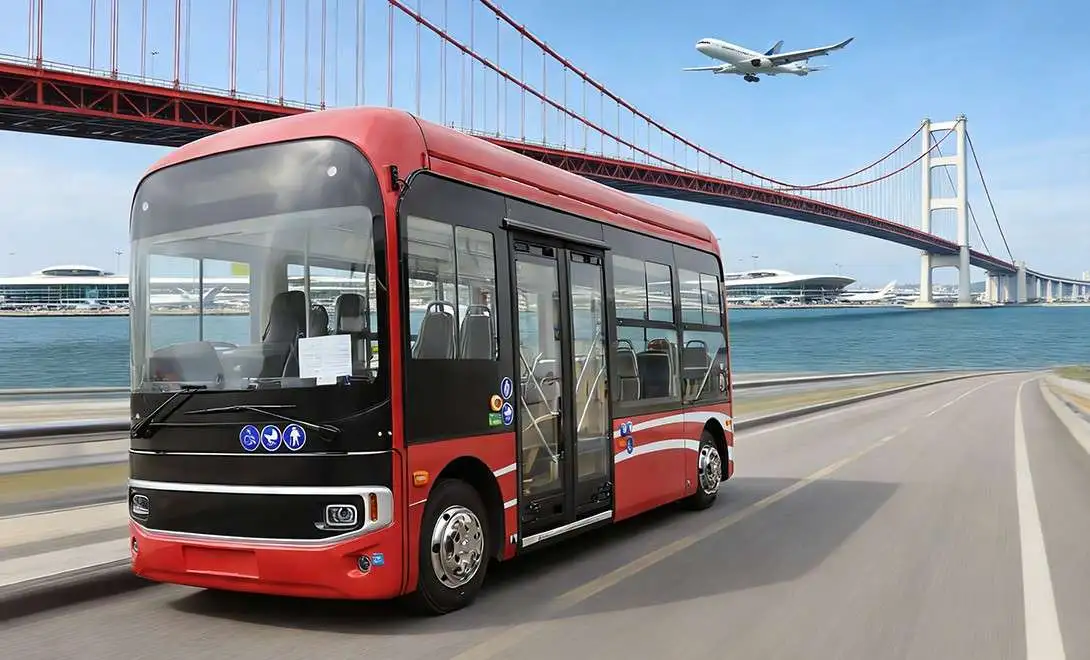
The 6m Low Floor Electric Bus is at the heart of urban mobility innovation because more and more people need public transportation that is easy for everyone to use. Transit agencies and fleet owners now prefer vehicles that are both good for the environment and truly accessible to everyone. This makes the 6m Low Floor Electric Bus a great choice for neighborhood runs and feeder services.
Core Accessibility Design Advantages
The technical accuracy that went into making these buses stand out is what makes them unique. Many wheelchair users call the lower floor height "dignity in boarding," which means they can get on public transportation without drawing attention to themselves or needing to use special equipment. We've seen that towns that use these cars see 40–60% more wheelchair users using them in the first year after they're put in place.
The designated wheelchair areas can usually fit two standard wheelchairs at the same time, and they have safety features that meet ADA and international standards. Grab rails at different heights help people who have trouble moving around, and contrasting color schemes help people who have trouble seeing get around safely inside.
Battery Technology and Operational Range
Modern 6m Low Floor Electric Bus models use lithium iron phosphate or lithium-ion battery packs that can hold anywhere from 80kWh to 150kWh of power, based on the needs of the route. In normal city driving conditions, this means that the range is between 150 and 250 kilometers per charge. With fast-charging, you can get an 80% charge in about two to three hours, so you can top it off during driver breaks during the middle of the day without messing up service plans.
The 6m Low Floor Electric Bus is very cost-effective for medium-density lines because it only uses 0.8 to 1.2 kWh of energy per kilometer, which is a lot less than bigger articulated buses. Compared to regular stopping systems, regenerative braking systems recover energy when the vehicle slows down. This makes the range 15-20% longer.
Safety Integration and Passenger Capacity
Even though they are small, these cars can fit 25 to 40 people based on how the seats are set up inside, which meets both capacity and accessibility needs. Electronic stability control, anti-lock brake systems, and impact warning technologies are all safety features that are becoming more and more standard across quality makers. Fire suppression systems made just for lithium battery sections offer important safety features that buying teams should check out when evaluating suppliers.
The benefits to the environment go beyond having no pollution from the tailpipes. Noise pollution is lower in cities, where working sound levels are usually below 70 decibels, which is about the same as regular conversation. Diesel equivalents, on the other hand, make noise levels 85 decibels or higher. This noise reduction is especially helpful in private areas where lines run early in the morning and late at night.
Comparing 6m Low Floor Electric Buses with Other Bus Types
Procurement experts can make choices that are in line with the organization's goals and budget by using data to compare 6m Low Floor Electric Bus models to other options. The comparison looks at more than just the buying price. It also looks at the total cost of ownership, business flexibility, and long-term commitments to sustainability.
Electric Versus Diesel Configuration Analysis
Traditional gasoline buses are usually 30–40% cheaper to buy at first than their 6m Low Floor Electric Bus versions. But a study of operational expenses over the life of the car tells a different story. Diesel costs between $0.45 and $0.65 per kilometer, but this depends on where you live. Charging with power costs between $0.12 and $0.20 per kilometer. 6m Low Floor Electric Bus models are much cheaper to maintain because they have 60% fewer moving parts, which means they don't need oil changes, gearbox service, or exhaust system fixes.
Compliance with emissions rules makes buying gas more difficult. As EPA rules get stricter, expensive aftertreatment systems are needed. Also, many cities now limit or punish diesel vehicles that drive in downtown areas. We've seen fleet owners get hit with unexpected regulatory costs when emission standards get stricter in the middle of a vehicle's lifecycle. This puts pressure on the budget in a way that 6m Low Floor Electric Bus models don't.
High Floor Electric Bus Comparison

High-floor 6m Low Floor Electric Bus models can carry more people—usually 50 to 70—which makes them good for busy main lines. On the other hand, mobility becomes a problem. High-floor wheelchair ramps need to be set up over 2.5 to 3 meters, and they have slopes that make it hard for people using manual wheelchairs and mobility device batteries. Boarding times get much longer, which causes scheduling delays that spread to routes that are linked.
Infrastructure connectivity is very important. Platform-level boarding stations are often needed for high-floor buses, which means that a lot of money has to be spent on stop infrastructure. 6m Low Floor Electric Bus designs can be used with current curb-height stops. This allows for faster deployment and route flexibility, which is important for procurement teams that need to adapt to changing demand trends.
Hybrid and Battery Technology Considerations
Hybrid buses get some of the best features of both gasoline and 6m Low Floor Electric Bus models. They reduce pollution without needing special filling stations. But this solution doesn't give you the cost savings of fully electric vehicles or the ease of upkeep of a single-powertrain vehicle. Hybrid systems keep the complexity of internal combustion engines while adding electric parts, which could make long-term upkeep more difficult.
Battery chemical choices have a big effect on how well they work. When it comes to temperature stability and cycle life (often topping 4,000 charge cycles), lithium iron phosphate batteries are better. On the other hand, lithium-ion batteries offer more energy in smaller sizes. Climate plays a role in choice; extreme cold lowers battery performance, which makes heat control systems necessary in northern areas.
Procurement Insights: How to Source and Purchase 6m Low Floor Electric Buses
To get around in the buying world, you need to know how to set prices, get finance, and build relationships with suppliers for a 6m Low Floor Electric Bus in a way that leads to long-term partnerships instead of one-time purchases.
Pricing Frameworks and Volume Considerations
Base prices for good 6m Low Floor Electric Bus models range from $250,000 to $380,000 per unit, based on the features, the amount of customization needed, and the number of units ordered. When you buy in bulk, you can get big savings. Orders of 10 units or more usually get 8–12% price cuts, and orders of 50 units or more get 15–18% price cuts. Aside from the unit cost, buying teams should also look at the charging infrastructure needs. Depending on the power levels and installation difficulty, these can add an extra $15,000 to $45,000 per charging station.
Capital leases, operating leases, and local bonds for government companies are all types of financing choices that are good for business-to-business buyers. Capital loans let you own an object while spreading out payments over 5 to 7 years. This way, you can keep your available capital for other business needs. Operating leases give agencies that aren't sure about the long-term direction of technology more options, but the total costs usually go up by 20–30% over the lease terms.
Warranty and After-Sales Service Evaluation
Full insurance coverage is an important way to lower your risk. Standard guarantees in the industry cover the structure of a car for 12 years, the electric drivetrain for 5 to 8 years, and the battery packs for 8 years or 200,000 kilometers. But the terms of warranties change a lot from one seller to the next. We suggest carefully reading through the coverage exclusions, especially when it comes to battery capacity loss—some warranties only guarantee 70% of the original capacity at the end of the term, while top providers promise 80% retention.
Infrastructure for after-sales help tells the difference between reliable partners and problematic providers. Check to see if the companies you do business with have regional service centers, spare parts stocks, and expert support teams in the areas where you do business. Response time promises are very important; for example, a pledge of 24-hour parts supply versus 7–10 day lead times has a huge effect on fleet availability and service dependability.
Customization and OEM Partnership Opportunities
Standardized setups work well for many uses, but the ability to customize them gives operators who meet the needs of a specific community a competitive edge. Customization requests often include changes to the outside logos, the plan of the inside, the climate control, and special features for accessibility. When suppliers offer OEM partnerships, you can work together more closely, and your engineering teams can have a say in design decisions that improve business efficiency or the customer experience.

Check the minimum order amounts and production freedom when looking at OEM capabilities. Some makers need at least 50 units of a product to make major changes, while others can make changes to smaller orders, which is important for mid-sized operators to know about. Your product development plans should match up with the times for prototyping and sample verification. This is especially important when adding new service models that need car modifications.
Leading Manufacturers and Suppliers of 6m Low Floor Electric Buses
When looking for manufacturing partners for the 6m Low Floor Electric Bus, you need to look at their technical skills, quality certifications, production capacity, and track records that show they can be relied on in a variety of operating settings.
JCM: Whole Industry Chain Integration
It has become clear that JCM is a complete solutions provider in the 6m Low Floor Electric Bus market, with skills that include design, manufacturing, and regional production support. JCM is very good at changing cars to meet the needs of different markets. It has R&D centers in Shiyan for trucks and Xiamen for buses, as well as regional Original Centers in Southeast Asia, the Middle East, and Europe.
The "Surfing" car industry chain platform is what makes JCM stand out. It's a collaborative environment that links top engineers from around the world with component providers and end customers. This integration makes it possible for customization processes to happen very quickly, which is hard for traditional makers to do. Usually, it takes 8–12 months from the time of design to delivery. But JCM's flexible organizational structure cuts this time down to 4–6 months for customized setups, which is a huge benefit when changing regulations or service possibilities.
The company's focus on the whole industry chain has a number of real-world benefits. In addition to delivering vehicles, procurement teams can get full technical support, which includes help setting up production lines for clients who are starting up local assembly operations. Customized production lines for buses made by JCM can now make 2,000 units a year for partners abroad, and body welding lines can make 3,000 units a year. This production infrastructure partnership approach lowers the overall cost of the program while also boosting local manufacturing skills. This is especially helpful for government agencies that need to balance buying things with promoting economic growth.
Evaluating Supplier Certifications and Quality Standards
ISO 9001 and TS 16949 certifications set the standards for quality management and show that providers follow documented methods and systems for ongoing improvement. In addition to these basic requirements, you should also look for certifications that are special to electric vehicles, such as UN R100 for safety and UN R107 for building of buses. In North America, these would be FMVSS regulations, and in Europe, they would be ECE regulations.
Validation testing by a third party gives you more trust. Independent lab certifications from TÜV, SGS, or similar groups show that the maker is committed to objective proof beyond self-certification. We've seen that suppliers who are ready to share thorough test reports and inspection processes tend to provide better quality than those who only offer copies of certificates.
Distribution Networks and Regional Support
Dealing directly with manufacturers can save you money, but you have to handle foreign shipping, customs, and technical help. Authorized wholesalers make things easier, but they usually raise unit costs by 8–15%. How much something is worth depends on how much experience your company has with foreign purchasing and how skilled its expert staff is.
When working with wholesalers, check directly with makers to see if they are authorized and look at their service infrastructure. If a distributor says they cover an area but only have one office and no field workers, it will be hard to help them in the future. Ask for customer examples from businesses that work in climates and job cycles that are similar to yours. For example, a supplier that does great work in mild coastal areas might not know how to handle settings with very high or low temperatures.

Enhancing Operations with 6m Low Floor Electric Buses: Case Studies & Best Practices
Real-world operational data is the best way for fleet managers to plan the rollout of 6m Low Floor Electric Bus models because it shows both possibilities and challenges that are hard to see in specification sheets.
Municipal Transit Authority Implementation Success
A medium-sized city in North America put 15 6m Low Floor Electric Bus models on neighborhood circulators that went from neighborhoods to rail transport hubs. Within eight months, the number of wheelchair boardings went up by 73%. This was due to both easier access and greater predictability, which made planning trips easier. The average cost of energy was $0.14 per kilometer, compared to $0.52 per kilometer for the gasoline cars that were replaced. This saved the small fleet $127,000 a year in fuel costs.
Maintenance statistics showed benefits that were not predicted. Traditional diesel bus maintenance took about 18 hours a month per vehicle, but maintenance for 6m Low Floor Electric Bus models only took 6 hours. This saved 67% of the technician's time and allowed them to work on other needs of the fleet. Because regenerative braking reduced the need for mechanical brake activation, brake systems lasted a lot longer. The first brake repairs happened at 180,000 kilometers, compared to 60,000 to 80,000 kilometers on diesel cars.
Maintenance Protocols for Optimal Longevity
Setting up regular repair processes before deployment increases the life of vehicles and reduces the number of unexpected breakdowns. Every day, the tires should be checked for pressure, the outside lights should work, the wheelchair ramp should work, and the charging link should be solid. As part of the monthly service, the cooling system, high-voltage connections, and battery management system are all checked.
Managing the temperature of batteries needs extra care. Constantly charging batteries to 100% or letting them drop below 20% decreases their capacity faster. We suggest setting up charging systems so that they stay between 30 and 80% charged during regular operations and only use full charging rounds before long routes. Field data from several users shows that this method increases the battery's life by 25 to 30 percent.
Technology Trends Shaping Future Deployments
Vehicle-to-grid (V2G) technology is a new chance for buses to serve as both transportation assets and resources for stabilizing the power grid. During off-peak hours, buses that are stopped can send the energy they've saved back to the power grid. This makes money for the city and helps cover its costs. Most places are still working on their legal frameworks, but buying teams that want to be ahead of the curve should ask for V2G-ready electrical systems to avoid having to pay a lot of money to make changes later on.
Autonomous driving is getting better all the time. Several automakers now offer Level 2 driver aid features, such as adaptive cruise control and systems that keep you in your lane. Mixed-traffic urban routes won't be fully autonomous for a few more years, but depots are using more and more automatic parking and charging systems that cut down on the need for staff and make the best use of charging schedules based on how power rates are set up.
Conclusion
6m Low Floor Electric Bus models with a 6 meter length offer an excellent mix of ease of access, environmental friendliness, and operating efficiency that solves many of the problems that modern transit companies face. Getting rid of barriers to boarding makes transportation truly accessible, and operating at zero emissions is in line with climate promises and legal trends. Total cost of ownership research consistently favors electric configurations over diesel options when looking at 12–15 year car lifecycles, even though they require more money up front.
A successful buying process includes more than just the details of the car. It also includes planning for supplier relationships, infrastructure for after-sales support, and operational integration. Manufacturers like JCM that offer complete industry chain solutions make complicated operations easier and give you more ways to customize their products than standard products can. With their tried-and-true technology, growing supplier options, and good operating economics, these cars are smart investments in sustainable, easy-to-use urban transportation.
FAQ
What is the typical range of a low-floor electric bus on a single charge?
In general, most 6m Low Floor Electric Bus models can go 150 to 250 kilometers on a single charge, though this depends on the battery's size, the route's layout, the number of passengers, and the weather. Regenerative stopping can add 15 to 20 percent to a bike's range on routes through cities with lots of stops. Because cold weather cuts range by about 20–30%, choices about battery size depend on the weather.
How does low-floor design specifically benefit wheelchair users compared to traditional buses?
When the floor is low, the opening is about 330 mm high, which makes ramp slopes of 1:6 to 1:8 ratios easy for wheelchairs to use. Traditional high-floor buses have ramps that are 2.5 to 3 meters long and have steeper slopes, which makes it hard for people in manual wheelchairs and powered mobility devices. Boarding time goes from 90 to 120 seconds to 30 to 45 seconds, which makes it easier to stick to the plan.
What financing options support bulk electric bus purchases?
Capital loans spread out the cost of buying a 6m Low Floor Electric Bus over 5 to 7 years while still letting you own the product. This keeps your cash flow for running your business. Operating leases give you freedom without committing to control, which makes them good for government departments that are deciding where to go with technology. Municipal bonds are the cheapest way for governments to get money, and some makers offer vendor financing programs with low rates to approved buyers.
Partner with JCM: Your Trusted 6m Low Floor Electric Bus Supplier
Your Reliable 6m Low Floor Electric Bus Supplier is JCM. JCM offers complete accessible electric bus options that include cutting edge design, adaptable production, and support for the entire supply chain. These are things that traditional providers simply can't match. Our 6m Low Floor Electric Bus models are certified to meet foreign quality standards, such as ISO 9001 and TS 16949. This means that they will work reliably for your fleet operations. We are experts at OEM/ODM relationships, which let us make configurations that are exactly right for your route needs, branding choices, and accessibility features. Our project-based organization is flexible and can adapt to your needs, whether you need fast prototyping for new service models or big purchases to grow your fleet. You can email our team at info@jcm-star.com to talk about your buying needs, find out about competitive financing options, and set up technical meetings that will help you match our production skills with your business's goals.
References
1. Transportation Research Board. (2023). "Electric Bus Technology Assessment and Life Cycle Cost Analysis." National Academy of Sciences, Washington, DC.
2. American Public Transportation Association. (2024). "Accessibility Standards and Best Practices for Low-Floor Transit Vehicles." APTA Standards Development Program, Washington, DC.
3. International Energy Agency. (2023). "Global Electric Vehicle Outlook: Commercial Vehicle Segment Analysis." IEA Publications, Paris, France.
4. Society of Automotive Engineers. (2024). "Battery Technology and Thermal Management Systems for Electric Buses." SAE International Journal of Alternative Powertrains, Volume 13, Issue 2.
5. Federal Transit Administration. (2023). "Zero-Emission Bus Procurement Guide: Technical Specifications and Operational Considerations." U.S. Department of Transportation, Washington, DC.
6. European Conference of Ministers of Transport. (2024). "Urban Mobility Accessibility: Comparative Analysis of Low-Floor Vehicle Technologies." ECMT Research Reports, Brussels, Belgium.

Based on your vehicle requirements, we will quickly match the most suitable specifications and provide a competitive quote.
_1755581003287.webp)
Global Customized


_1756108840480.webp)
_1755854765757.webp)