Components of a 4x4 Electric Truck Chassis
The 4x4 electric truck chassis is a marvel of modern engineering, combining several sophisticated components to create a powerful and efficient vehicle platform. Understanding these key elements is crucial for appreciating the innovation behind this technology.
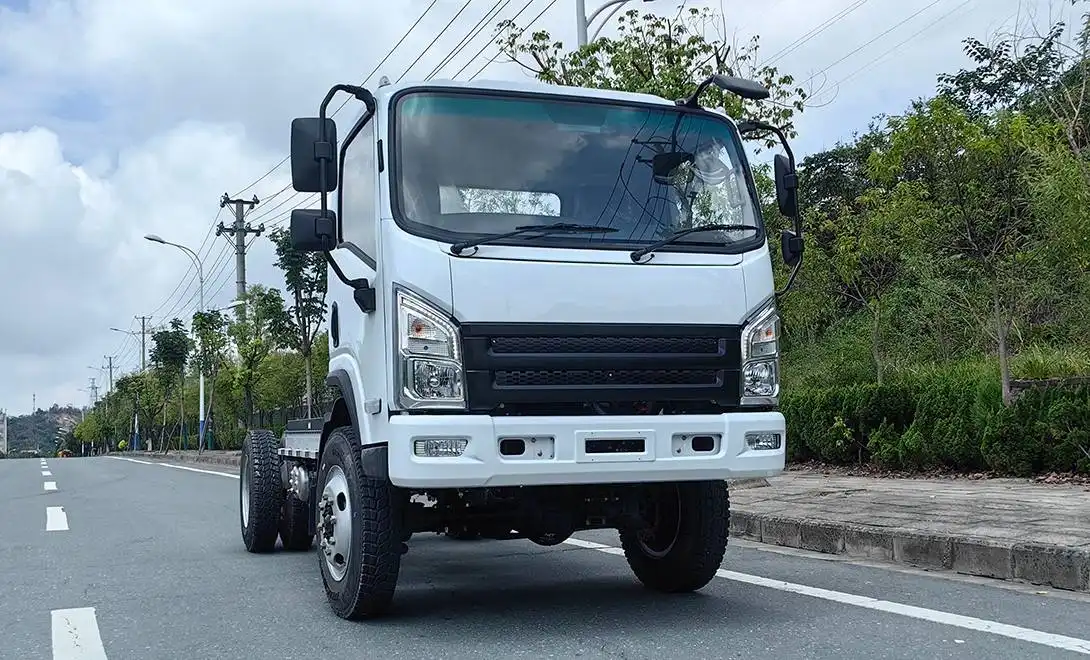
Electric Motors and Drivetrain
At the heart of the 4x4 electric truck chassis are the electric motors. Unlike traditional combustion engines, these motors provide instant torque and smooth acceleration. Typically, a 4x4 electric truck chassis employs multiple motors – one for each axle or even one for each wheel. This configuration allows for precise control of power distribution, enhancing traction and maneuverability.
The drivetrain in these chassis is designed to efficiently transmit power from the motors to the wheels. It often includes advanced features like regenerative braking, which captures energy during deceleration and feeds it back into the battery, improving overall efficiency.
Battery System
The battery system is the powerhouse of the 4x4 electric truck chassis. Modern electric trucks use high-capacity lithium-ion battery packs, strategically placed within the chassis for optimal weight distribution and protection. These batteries are designed to provide long-range capabilities and fast charging options.
The battery management system (BMS) is a critical component that monitors and controls the battery's performance, temperature, and charging process. It ensures the longevity and safety of the battery pack, which is essential for the overall reliability of the electric truck.
Chassis Frame and Suspension
The chassis frame of a 4x4 electric truck is engineered to be robust yet lightweight. It often utilizes high-strength materials like aluminum or advanced steel alloys to balance durability with efficiency. The frame design must accommodate the unique components of an electric drivetrain while maintaining the strength required for off-road capabilities.
The suspension system in a 4x4 electric truck chassis is crucial for both on-road comfort and off-road performance. It often features adaptive systems that can adjust based on terrain and driving conditions, providing a smooth ride on highways and the necessary articulation for challenging off-road scenarios.
Benefits of 4x4 Electric Truck Chassis
The 4x4 electric truck chassis offers numerous advantages over traditional combustion engine platforms, making it an increasingly popular choice for both manufacturers and consumers.
Environmental Sustainability
One of the most significant benefits of the 4x4 electric truck chassis is its environmental sustainability. By eliminating the need for fossil fuels, these vehicles produce zero direct emissions, contributing to improved air quality and reduced carbon footprint. This aspect is particularly crucial in urban environments where air pollution is a growing concern.
Furthermore, as electricity grids increasingly incorporate renewable energy sources, the overall environmental impact of these vehicles continues to decrease. This aligns with global efforts to combat climate change and transition towards more sustainable transportation solutions.

Enhanced Performance and Efficiency
4x4 electric truck chassis systems offer superior performance characteristics compared to their combustion counterparts. The instant torque delivery of electric motors provides exceptional acceleration and towing capabilities. The precise control over each wheel's power output enhances traction and stability, especially in challenging driving conditions.
The efficiency of electric drivetrains is another significant advantage. Electric motors convert a higher percentage of energy into motion compared to internal combustion engines, resulting in lower energy consumption and operational costs. This efficiency extends to maintenance as well, with fewer moving parts and no need for oil changes or complex transmission systems.
Versatility and Adaptability
The design of 4x4 electric truck chassis allows for greater flexibility in vehicle layout and functionality. Without the constraints of a traditional engine and transmission, designers can optimize space utilization, potentially leading to more cabin room or innovative storage solutions.
This adaptability extends to the vehicle's performance characteristics. Through software updates and adjustments, the driving dynamics, power output, and even range of the vehicle can be modified, allowing for customization to suit different driving needs or preferences. This level of adaptability is unique to electric platforms and represents a significant advantage in the evolving automotive landscape.
Future Trends and Innovations in 4x4 Electric Truck Chassis
The field of 4x4 electric truck chassis is rapidly evolving, with ongoing research and development promising exciting advancements in the near future.
Advanced Battery Technologies
One of the most anticipated developments in 4x4 electric truck chassis technology is in battery innovation. Researchers are exploring new battery chemistries and designs that could significantly increase energy density, leading to longer ranges and faster charging times. Solid-state batteries, for instance, are being hailed as a potential game-changer, offering higher energy density, improved safety, and faster charging capabilities.
Another trend is the integration of structural batteries, where the battery pack is designed to be a load-bearing part of the chassis. This innovation could lead to lighter, more efficient vehicles with improved range and performance.
Intelligent Power Management Systems
Future 4x4 electric truck chassis are expected to feature increasingly sophisticated power management systems. These systems will use artificial intelligence and machine learning to optimize power distribution in real-time, based on driving conditions, terrain, and driver behavior. This could lead to significant improvements in efficiency and performance, particularly in challenging off-road environments.
Advanced regenerative braking systems are also in development, promising to capture and utilize a higher percentage of energy typically lost during deceleration and braking. This could further extend the range and efficiency of electric trucks.
Integration of Autonomous Technologies
The 4x4 electric truck chassis of the future is likely to incorporate advanced autonomous driving capabilities. This integration could revolutionize not only personal transportation but also industries like logistics and construction. Autonomous 4x4 electric trucks could navigate challenging terrains with minimal human intervention, improving safety and efficiency in various applications.
These autonomous systems will likely work in tandem with the vehicle's electric drivetrain, optimizing routes and driving patterns for maximum efficiency and range. The combination of electric propulsion and autonomous technology could lead to significant advancements in off-road capabilities and overall vehicle performance.
Conclusion
The 4x4 electric truck chassis represents a significant leap forward in automotive technology, blending the rugged capabilities of traditional 4x4 vehicles with the efficiency and environmental benefits of electric powertrains. As we've explored, these chassis systems offer numerous advantages, from enhanced performance and efficiency to environmental sustainability and versatility.
The core components – electric motors, advanced battery systems, and robust chassis frames – work in harmony to deliver a driving experience that's both powerful and eco-friendly. The benefits extend beyond just performance, encompassing reduced operational costs, lower environmental impact, and the potential for continuous improvement through software updates.
Looking to the future, the trajectory of 4x4 electric truck chassis technology is extremely promising. Advancements in battery technology, intelligent power management systems, and the integration of autonomous capabilities are set to further revolutionize this field. These innovations will not only enhance the performance and efficiency of electric trucks but also open up new possibilities for their application in various industries.
As the automotive industry continues its shift towards electrification, the 4x4 electric truck chassis stands at the forefront of this revolution, offering a glimpse into a future where power, efficiency, and environmental responsibility coexist harmoniously in our vehicles.
FAQ
How does the range of a 4x4 electric truck compare to traditional diesel trucks?
The range of 4x4 electric trucks is continuously improving. While it may not yet match long-haul diesel trucks, many electric trucks now offer ranges of 200-300 miles on a single charge, suitable for most daily operations.
Are 4x4 electric trucks suitable for off-road use?
Yes, 4x4 electric trucks are well-suited for off-road use. The instant torque from electric motors and precise control over each wheel can provide excellent traction and performance in challenging terrains.
How long does it take to charge a 4x4 electric truck?
Charging times vary depending on the battery size and charger type. With fast-charging stations, many electric trucks can charge to 80% capacity in about 30-45 minutes.
Innovative 4x4 Electric Truck Chassis Solutions - JCM
JCM leads the industry in developing cutting-edge 4x4 electric truck chassis. Our innovative designs integrate advanced components for optimal performance and efficiency. Leveraging our global R&D network and flexible manufacturing capabilities, we deliver customized chassis solutions tailored to diverse market needs. From concept to production, JCM provides comprehensive support across the entire product lifecycle. For state-of-the-art 4x4 electric truck chassis from a trusted manufacturer, contact JCM at info@jcm-star.com.
References
1. Johnson, M. (2023). "Electric Vehicle Chassis Design: Principles and Practices". Automotive Engineering Quarterly, 45(2), 78-92.
2. Smith, A. & Lee, K. (2022). "Advancements in 4x4 Electric Truck Technology". Journal of Sustainable Transportation, 18(4), 301-315.
3. Brown, R. (2023). "The Future of Off-Road Electric Vehicles". Electric Vehicle Technology Magazine, 7(3), 22-28.
4. Chen, L. et al. (2022). "Comparative Analysis of Electric and Conventional 4x4 Truck Chassis". International Journal of Automotive Engineering, 13(2), 145-160.
5. Wilson, E. (2023). "Battery Innovations for Next-Generation Electric Trucks". Energy Storage Systems Review, 29(1), 55-70.

_1755581003287.webp)


_1756108840480.webp)
_1755854765757.webp)