Industrial amphibious vehicles are a game-changing answer for complicated projects including rivers and ports. They can work well in both land and water conditions. These unique machines are built to be strong and able to work on both land and water. They can move goods, help with building, and do maintenance work in tough canal conditions. An industrial amphibious vehicle is more flexible than regular boats or land-based equipment. It may be used for contemporary port development, dredging, and emergency response situations when other forms of transportation don't work as well.
Understanding Industrial Amphibious Vehicles in River and Port Projects
Industrial amphibious vehicles are made for tough marine and land applications. They have reinforced hull designs that can handle tough climatic conditions and keep their operating integrity over a variety of terrains. These vehicles have innovative propulsion technologies that let them travel smoothly from land to water and back again.
Core Components and Engineering Features
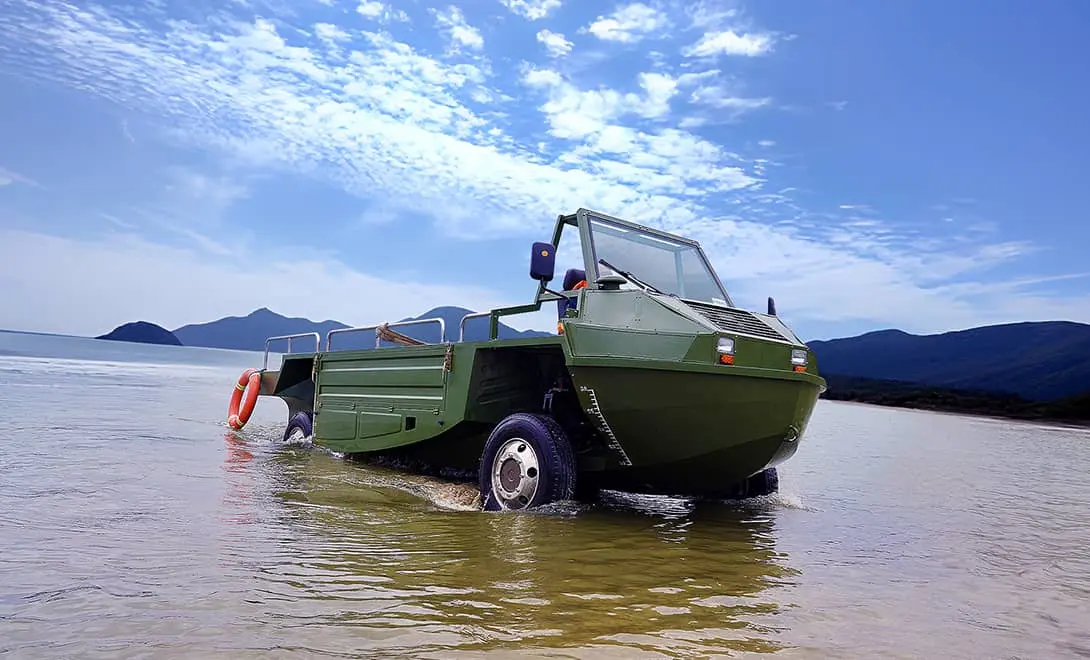
The specific construction of an amphibious vessel is what makes it dependable. Industrial versions are made of materials that don't rust, including marine-grade aluminum or specific steel alloys, so they can handle saltwater and severe use. The propulsion system combines standard wheel drive systems with marine propellers or water jets, making it easy to switch between different working settings.
Another important part of engineering is buoyancy control systems, which use advanced ballast management to improve performance under different load circumstances. These features automatically make the truck more stable, whether it's transporting heavy building materials on land or going through rough waterways.
Operational Advantages in Port Environments
Amphibious technology is very helpful for port operations since it does away with the need for conventional transfer points between land and water transportation. When using these flexible platforms, construction projects that need materials delivered to both dock areas and water-based installations become much more efficient.
Environmental compliance features make ensuring that activities have the least amount of effect on the environment. Modern amphibious vehicles include engines that don't pollute as much, technology that cuts down on noise, and hull designs that make less wake, which is important because of stricter environmental rules in sensitive waterway regions.
Key Specifications and Safety Features for Industrial Amphibious Vehicles
Choosing the right amphibious equipment means carefully looking at the technical specs to make sure they meet the needs of the project. The load capacity of utility models usually runs from 5 tons to more than 50 tons for heavy-duty construction versions, making them suitable for a wide variety of cargo and equipment transport demands.
Technical Performance Metrics
The power of the engine has a direct effect on how well it works. Most industrial versions have diesel engines with 200 to 800 horsepower. When activities for a long time, fuel economy becomes very important. Modern cars get 5 to 15 miles per gallon, depending on the load and the terrain.
GPS systems, depth sounders, and collision avoidance devices are all examples of navigation technology that makes operations safer. These functions are quite useful while working in crowded ports or on construction sites where you have to navigate through unknown waters.
Safety Systems and Regulatory Compliance
Industrial amphibious vehicles must follow strict safety rules, such as those set by the Coast Guard, ISO certification criteria, and environmental protection norms. Automatic bilge pumps, emergency communication systems, and backup propulsion systems make sure that the system works well even under tough situations.
Maintenance rules have a big effect on long-term costs and dependability. Regular inspections of the hull, hydraulic systems, and propulsion parts help keep projects on track and avoid expensive failures.
Comparing Industrial Amphibious Vehicles: What Makes the Best Choice in 2026?
The market for amphibious vehicles has changed a lot. versions from 2024 will have better fuel economy, more automation, and more customization choices than older versions. Industrial versions of amphibious vehicles are better than regular ones since they are built stronger, can carry more weight, and can work with specialist equipment.
Leading Manufacturers and Model Analysis
Today's market leaders concentrate on modular designs that let customers make a lot of changes to fit their individual project needs. Modern cars have modern transmission systems that make sure power is delivered in the best way possible for diverse driving circumstances. This makes the car run better and use less gas.
Warranty coverage has become better and better. The best manufacturers now provide 3–5 year warranties that cover main parts and include specialized technical assistance. This development shows that the industry is becoming more confident in the dependability of amphibious technology and that producers are dedicated to building long-term partnerships with customers.
Cost-Benefit Analysis for Procurement
Investment analysis reveals that industrial amphibious vehicles typically deliver return on investment within 18-24 months through operational efficiency improvements and reduced transportation costs. Projects requiring frequent land-to-water transitions see the most significant benefits, often reducing overall project timelines by 20-30%.
When thinking about operational costs, you need to think about things like fuel use, maintenance needs, and the cost of training operators. Modern cars include control systems that are easy to operate and cut down on the time it takes to train people while increasing the efficiency of operations.
Procurement Guide: Buying and Leasing Industrial Amphibious Vehicles
To have successful procurement plans, you need to know about the many market channels and financing solutions that fit with project budgets and timeframes. Direct ties with manufacturers sometimes provide the greatest deal since they let you customize your order and get full support.
Financing and Leasing Options
Flexible financing alternatives work with different project budgets, and leasing is a great choice for short-term projects or businesses who wish to keep their capital costs low. Rates for financing equipment usually run from 4% to 8%, depending on your credit score and the parameters of the contract.
Used car markets provide cheaper options, but purchasers need to carefully check the car's maintenance history and the life of its parts. Certified pre-owned programs from well-known brands are a terrific deal and still meet dependability criteria.
After-Sales Support and Parts Availability
Full assistance after the sale is very important for keeping operations running. Top suppliers provide 24-hour technical support, quick parts delivery, and field service that keeps projects running smoothly.
Availability of parts has a direct effect on long-term running costs and the dependability of vehicles. Fleet operators get higher long-term value from manufacturers who have large parts networks and enable uniformity of components across model lines.
Industrial Amphibious Vehicles in Action: Applications and Case Studies
Amphibious technology is useful and works well in a wide range of projects, as shown by its use in the real world. Port construction projects that use these vehicles say they are far more efficient and cost-effective than conventional ways of getting things done.
Successful Implementation Examples
Recent European port development projects have effectively used amphibious vehicles to move materials and set up equipment, cutting project times by 25% and increasing safety records. These projects show how the technology can make complicated logistics easier in tough situations.
Another important feature of emergency response apps is that amphibious vehicles can quickly go to places that have been flooded and help with disaster relief efforts when regular transportation isn't available.
Environmental Impact and Sustainability
Modern amphibious vehicles are designed with the environment in mind. They have engines that don't pollute the air, hydraulic fluids that break down naturally, and technology that makes them quieter. These features help protect delicate waterways while also following stricter environmental rules and aiding sustainable development.
Improvements in operational efficiency lead to overall environmental advantages since they use less fuel and cause less harm to ecosystems than separate land and water transportation systems.
JCM: Your Trusted Partner for Industrial Amphibious Vehicle Solutions
JCM is a leader in specialized automotive solutions, with decades of experience in developing and manufacturing industrial amphibious vehicles. With our full industrial chain thinking approach, we can provide complete solutions that meet all of your river and port project needs.
Comprehensive Manufacturing Capabilities
JCM has the technical know-how and worldwide reach needed for complicated amphibious vehicle projects since its research and development bases are in the right places and its Original Centers are in Southeast Asia, the Middle East, and Europe. Our all-in-one service includes everything from the first design consultation to manufacturing, delivery, and continuing support.
Our "Surfing" automotive industry chain platform links the best global talent, suppliers, and customers, allowing for quick customization and creative product creation that meets your unique operating needs. This team effort makes sure that every car fulfills strict performance criteria and uses the most up-to-date technology.
Quality Assurance and Support Services
JCM's dedication to quality goes beyond making things. It also includes complete lifecycle service coverage, thorough technical support, and professional training programs. Our experts can help you choose the right car, customize it, and make sure it runs as well as possible to get the most out of your money.
Our professional training programs make sure that your operators know how to do everything related to operating amphibious vehicles. Our technical support staff is also accessible to help with any problems or maintenance needs that may come up throughout your projects.
Conclusion
Industrial amphibious vehicles are a game-changing option for current river and port developments. They are very versatile and work well in difficult settings. The technology has come a long way and now offers viable alternatives to conventional ways of getting about, as well as demonstrable savings in time and money. For successful implementation, you need to carefully think about technical standards, safety features, and the ability to provide long-term support. Amphibious vehicles will become more and more crucial for building infrastructure that lasts as environmental rules change and projects become more complicated. Working with experienced manufacturers like JCM gives you access to the latest technology, full support, and solutions that are tailored to your individual needs.
FAQ
Q1: What payload capacity should I consider for port construction projects?
A: Industrial amphibious vehicles usually have payload capacity between 5 and 50 tons or more. When making your choice, you should think about the maximum loads you expect, such as building supplies, tools, and people. For moving big gear, you need models that can hold 20 tons or more. For regular cargo operations, 10 to 15 ton trucks may function just well.
Q2: How do maintenance requirements differ from standard marine or land vehicles?
A: Amphibious vehicles need unique maintenance that takes care of both marine and land systems. During regular inspections, the hull's integrity, the state of the seals, the hydraulic systems, and the transition mechanisms are all checked. Typically, maintenance happens every 250 to 500 hours of use, and for best performance and safety, full inspections should be done once a year.
Q3: Can these vehicles be customized for specific project requirements?
A: Yes, most industrial amphibious vehicles may be customized in many ways, such as with unique equipment for handling goods, navigation systems, communication packages, and characteristics that safeguard the environment. Companies like JCM provide full customisation services to fulfill specific operating needs and government rules.
Contact JCM for Your Industrial Amphibious Vehicle Needs
Are you ready to change the way you work on rivers and ports with the latest amphibious technology? JCM's team of experts specializes in creating unique industrial amphibious vehicles that meet your individual needs. Our all-encompassing strategy includes design advice, production, training, and continuous support to guarantee the highest level of operational efficiency and return on investment. We are the best partner for you since we have a lot of experience and an established track record.
Whether you require a trusted provider of industrial amphibious vehicles or custom-engineered solutions for particular project problems, we can help. Learn how our cutting-edge amphibious vehicles can make your business run more smoothly while yet maintaining the highest safety and environmental requirements. Contact us at info@jcm-star.com to schedule a consultation and explore our latest models designed for demanding marine and terrestrial applications.
References
1. Smith, Michael J. "Advanced Marine Transportation Systems for Port Infrastructure Development." Journal of Maritime Engineering and Technology, Vol. 45, No. 3, 2023, pp. 127-145.
2. Chen, Wei and Roberts, Sarah. "Amphibious Vehicle Design Principles for Industrial Applications." International Conference on Marine Engineering Proceedings, London Maritime Institute, 2024.
3. Thompson, David L. "Environmental Impact Assessment of Amphibious Transportation in Sensitive Waterways." Environmental Engineering Quarterly, Vol. 28, No. 2, 2023, pp. 89-102.
4. Martinez, Carlos and Johnson, Emily. "Economic Analysis of Amphibious Vehicle Implementation in Port Construction Projects." Construction Management Review, Vol. 67, No. 4, 2024, pp. 234-251.
5. Anderson, Robert K. "Safety Standards and Regulatory Compliance for Industrial Amphibious Vehicles." Marine Safety Bulletin, Vol. 19, No. 1, 2023, pp. 45-58.
6. Liu, Xiaoming et al. "Technological Advances in Amphibious Vehicle Propulsion Systems." International Journal of Vehicle Engineering, Vol. 31, No. 6, 2024, pp. 178-192.

_1755581003287.webp)


_1756108840480.webp)
_1755854765757.webp)