Comprehending Truck-Mounted Crane Technology
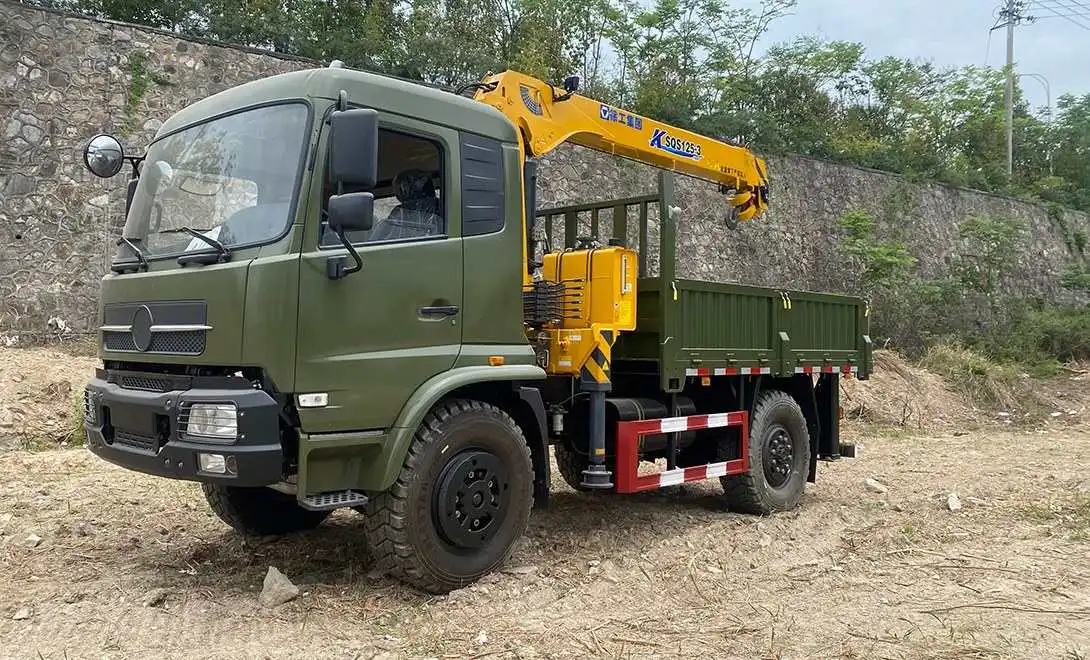
Truck-mounted cranes have revolutionized the construction and logistics industries by combining the mobility of a truck with the lifting capabilities of a crane. These versatile machines are essential for a wide range of applications, from construction sites to disaster relief operations. The integration of crane technology with 4x4 platforms has further enhanced their utility, allowing them to navigate challenging terrains while maintaining their lifting prowess.
The Evolution of Truck-Mounted Cranes
The journey of truck-mounted cranes began with simple mechanical systems that offered basic lifting capabilities but were constrained by limited reach, load capacity, and operational efficiency. Over time, technological advancements introduced hydraulic systems, which provided smoother, more precise movements and significantly increased lifting power. The subsequent development of electric and hybrid configurations further enhanced performance, energy efficiency, and environmental sustainability.
Early models required substantial manual effort and frequent maintenance, whereas modern truck-mounted cranes incorporate advanced control systems, safety features, and automation, allowing operators to handle complex lifting tasks with greater ease and accuracy. This continuous evolution has been driven by the growing demand across construction, logistics, energy, and industrial sectors for more reliable, versatile, and high-performance lifting solutions that meet modern operational and safety standards.
Key Components of Truck-Mounted Cranes
A typical truck-mounted crane consists of several crucial components:
- The boom: The boom is the crane’s extendable arm responsible for performing all lifting tasks. Modern booms are engineered for strength and versatility, allowing operators to reach significant heights and distances while safely handling a wide range of loads, from light materials to heavy equipment.
- The turntable: The turntable is the rotating platform that enables the crane to pivot smoothly in any direction. By allowing 360-degree rotation, it provides flexibility in positioning loads, improving operational efficiency and safety. It is a critical component for precise maneuvering in confined or complex workspaces.
- Outriggers: Outriggers are extendable supports that stabilize the crane during lifting operations. They distribute the vehicle’s weight over a larger area, preventing tipping or imbalance. Proper deployment of outriggers ensures safe operation, especially when lifting heavy loads or working on uneven terrain.
- The power system: The power system drives the crane’s movements and can be either hydraulic or electric. Hydraulic systems offer high lifting force and smooth operation, while electric systems provide energy efficiency and low emissions. The choice of power system affects performance, maintenance, and operational costs.
- Control systems: Control systems manage the crane’s operations with precision, allowing operators to execute lifts safely and efficiently. They include joysticks, remote controls, and automated safety features, ensuring accurate load positioning, monitoring, and protection against overload or operational errors.
Understanding these components is essential for fully appreciating the key differences between hydraulic and electric systems in truck-mounted cranes. By examining how each system operates, including power delivery, control mechanisms, efficiency, and maintenance requirements, operators and decision-makers can better assess which solution aligns with their specific needs.
This knowledge helps in evaluating performance under varying load conditions, energy consumption, and long-term reliability. Ultimately, a thorough understanding of these components enables informed choices that optimize crane performance, safety, and operational cost-effectiveness.
Hydraulic Truck-Mounted Cranes: Power and Versatility

Hydraulic truck-mounted cranes have long been the industry standard, known for their robust performance and reliability. These cranes utilize hydraulic fluid under pressure to generate the force necessary for lifting and moving heavy loads. The hydraulic system's power and responsiveness make it a preferred choice for many operators, especially in demanding environments.
Advantages of Hydraulic Systems
Hydraulic truck-mounted cranes offer several benefits:
- High lifting capacity: Capable of handling extremely heavy loads
- Durability: Well-suited for harsh working conditions
- Precise control: Hydraulic systems allow for smooth and accurate movements
- Versatility: Adaptable to various attachments and tools
- Proven technology: With decades of refinement and reliability
Challenges and Considerations
While hydraulic cranes are powerful and versatile, they do come with some challenges:
- Maintenance requirements: Regular fluid checks and replacements are necessary
- Environmental concerns: Potential for hydraulic fluid leaks
- Energy efficiency: Can be less efficient compared to electric systems
- Noise levels: Hydraulic pumps can be noisy, which may be an issue in urban areas
Electric Truck-Mounted Cranes: The Future of Lifting
Electric truck-mounted cranes represent the cutting edge of crane technology, offering a more environmentally friendly and efficient alternative to hydraulic systems. These cranes use electric motors to power their operations, resulting in a different set of advantages and considerations compared to their hydraulic counterparts.
Benefits of Electric Cranes
Electric truck-mounted cranes are gaining popularity due to several key benefits:
- Eco-friendly operation: Zero emissions during use
- Lower operating costs: Electricity is generally cheaper than diesel fuel
- Reduced maintenance: Fewer moving parts and no hydraulic fluid to manage
- Quieter operation: Ideal for noise-sensitive areas or night work
- Improved energy efficiency: Electric motors can be more efficient than hydraulic systems
- Precise control: Electric systems can offer very fine control over crane movements
Limitations and Considerations
Despite their advantages, electric cranes also have some limitations to consider:
- Initial cost: Electric cranes can be more expensive upfront
- Power source dependency: Reliance on available electrical infrastructure
- Lifting capacity: May be lower compared to hydraulic cranes of similar size
- Battery life: For battery-powered models, operational time can be limited
- Charging time: Downtime for recharging can affect productivity
Choosing the Right Crane for Your 4x4 Platform
Selecting between a hydraulic or electric truck-mounted crane for your 4x4 platform depends on various factors. Consider the following aspects when making your decision:
- Application requirements: The type of work and lifting capacity needed
- Environmental regulations: Local emission and noise restrictions
- Operational environment: Urban vs. rural, on-road vs. off-road usage
- Power availability: Access to electrical charging infrastructure
- Maintenance capabilities: In-house skills and resources for upkeep
- Budget considerations: Initial investment vs. long-term operational costs
- Future-proofing: Anticipating changes in regulations and technology
By carefully evaluating these factors—including load capacity, reach, maneuverability, power requirements, safety features, and maintenance demands—you can make a well-informed decision when selecting a crane system. Taking the time to analyze both your immediate operational needs and your long-term strategic goals ensures that the chosen equipment will not only perform efficiently under current conditions but also adapt to future demands.
By carefully considering all relevant factors, this thoughtful approach not only minimizes equipment downtime and reduces overall operational costs but also enhances workflow efficiency and maximizes productivity across projects. In the long term, it ensures a dependable, cost-effective solution that strengthens operational resilience, promotes sustainable growth, and drives consistent excellence throughout your business operations.
Conclusion
The choice between hydraulic and electric truck-mounted cranes on 4x4 platforms is not a one-size-fits-all decision. Hydraulic cranes continue to offer unmatched power and versatility, making them ideal for heavy-duty applications and challenging environments. Electric cranes, on the other hand, are paving the way for a more sustainable and efficient future in the lifting industry, particularly in urban and environmentally sensitive areas.
As technology advances, we can expect to see further improvements in both hydraulic and electric crane systems. Hybrid solutions combining the strengths of both technologies may also emerge, offering the best of both worlds. Ultimately, the right choice depends on your specific needs, operational context, and long-term objectives.
FAQ
Are electric truck-mounted cranes as powerful as hydraulic ones?
While electric cranes have made significant advancements, hydraulic cranes generally still offer higher lifting capacities for equivalent sizes.
Can electric truck-mounted cranes operate in remote areas?
Electric cranes can operate in remote areas if equipped with sufficient battery capacity or if there's access to a power source for recharging.
Which type of crane is more cost-effective in the long run?
Electric cranes often have lower operating and maintenance costs over time, but the initial investment may be higher than hydraulic cranes.
Customized Truck-Mounted Crane Solutions for Every Need - JCM
At JCM, we understand the unique challenges of choosing the right truck-mounted crane for your 4x4 platform. Our whole industry chain approach allows us to offer customized solutions that meet your specific needs, whether you prefer hydraulic or electric systems. We leverage our global R&D centers and flexible manufacturing capabilities to deliver innovative, high-quality cranes tailored to diverse market requirements. For expert advice on selecting the perfect truck-mounted crane for your operations, contact our team at info@jcm-star.com.
References
1. Smith, J. (2022). "Advancements in Truck-Mounted Crane Technology". Journal of Construction Equipment, 15(3), 78-92.
2. Johnson, R. & Lee, S. (2021). "Comparative Analysis of Hydraulic and Electric Cranes for 4x4 Platforms". International Journal of Heavy Vehicle Systems, 28(4), 355-370.
3. Brown, T. (2023). "Environmental Impact Assessment of Crane Technologies in Urban Construction". Sustainable Cities and Society, 89, 104223.
4. Garcia, M. et al. (2022). "Energy Efficiency in Mobile Lifting Equipment: A Review". Renewable and Sustainable Energy Reviews, 156, 111963.
5. Wilson, K. (2023). "The Future of Truck-Mounted Cranes: Trends and Innovations". Construction Technology Review, 42(2), 112-128.

_1755581003287.webp)


_1756108840480.webp)
_1755854765757.webp)