The defense vehicle supply chain is a complicated web of specialist manufacturers, suppliers, and logistical companies that work together to provide military platforms that are essential to the mission. This complex ecosystem needs accuracy, dependability, and new ideas, from the basic defense vehicle chassis that gives it structural strength to the advanced power systems that make it possible to operate. Vehicles used in modern military operations need to be able to handle harsh circumstances while still performing at their best. This makes it very important to choose and combine the right chassis and power components for the objective.
Understanding the Defense Vehicle Chassis: Foundation of Military Mobility

The chassis is the main structural structure of any defense vehicle. It is what makes it possible for the vehicle to move, last a long time, and carry heavy loads, all of which are important for military operations. This important part is the backbone that links all the other systems in the vehicle and gives it the strength and stability it needs to work in battle. Procurement professionals may make better judgments that directly affect operational efficiency and troop safety if they understand the details of military vehicle chassis design.
What Is a Defense Vehicle Chassis? Definition and Core Functions
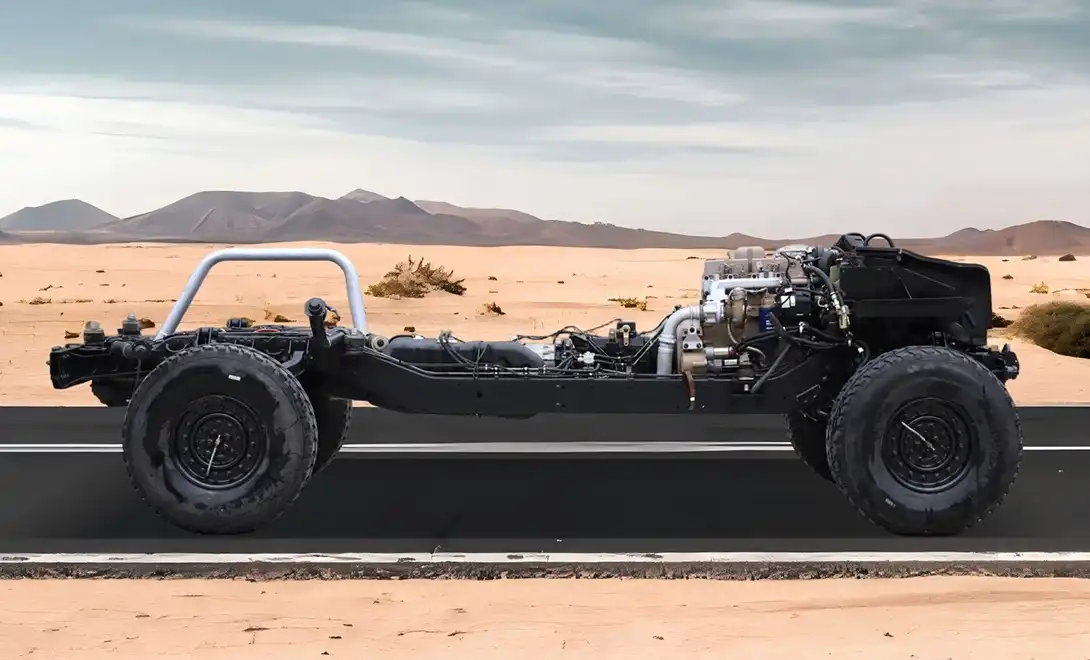
The chassis of a defensive vehicle is the basic structure that holds up the whole vehicle, including the body, engine, gearbox, and all the equipment that is attached to it. Military platforms, on the other hand, must be able to handle ballistic strikes, explosive pressures, and harsh weather while yet being strong enough to hold their shape. The chassis distributes the weight uniformly throughout the vehicle, absorbs shocks from uneven terrain, and offers places to put specialist equipment like communication systems, weapons platforms, and armor protection.
The main jobs of a military chassis go beyond just providing structural support. It must be able to handle different mission-specific changes, guard against mines and improvised explosive devices, and stay functioning in combat situations for a long time. The design of the chassis has a direct effect on how well the vehicle performs, including its ground clearance, approach angles, and cargo capacity.
Key Design Features of Defense Vehicle Chassis
Military chassis have a number of unique design features that set them apart from commercial usage. To make connections that can handle very high stress loads, reinforced frame construction uses high-strength steel alloys and modern welding methods. Modular design concepts make it easy to change things around quickly and fix things in the field, which cuts down on downtime during operations.
For military use, the following design qualities are very important:
- Blast-resistant underbody structure: V-shaped hull designs keep crew compartments safe from explosive forces while yet being strong enough to handle harsh circumstances
- Integrated armor mounting points: Standardized attachment methods make it easy to add and remove different armor setups dependent on the level of danger
- Enhanced suspension integration: Specialized mounting systems can hold high-duty suspension parts that are built for off-road use and carrying big loads
- Modular component architecture: Standardized interfaces make it easy to make changes in the field and update equipment without having to make big changes to the chassis
These advanced design features ensure that defense vehicle chassis can adapt to evolving mission requirements while maintaining the reliability and durability expected in military applications.
Types of Defense Vehicle Chassis and Their Applications
Military operations need a variety of vehicle platforms, each having a unique chassis design that works well for a certain kind of task. For reconnaissance and quick deployment, light tactical vehicle chassis put a premium on mobility and fuel economy. These platforms are usually made of light materials that nonetheless provide enough protection for their intended uses.
For broad military use, medium tactical vehicle chassis balance protection, cargo capacity, and maneuverability. These adaptable platforms are the backbone of military logistical operations, making sure that people and equipment can go about on a variety of types of terrain. Heavy tactical vehicle chassis provide the best protection and cargo capacity in high-threat situations when being alive is more important than moving about.
Materials Used and Their Impact on Performance and Durability
Choosing the right materials has a big impact on the chassis's performance, weight, and cost. Most military uses still choose high-strength steel because it is durable and cost-effective. Advanced high-strength steel alloys provide better strength-to-weight ratios while still being easy to make and fix in the field.
Aluminum alloys may help reduce weight for situations where mobility is important, but they need particular welding procedures and may cost more at first. Composite materials and titanium alloys are new technologies that might save a lot of weight and resist corrosion, but they aren't widely used yet since they are expensive and hard to make.
Maintenance Best Practices for Long-Term Reliability
Proper maintenance procedures keep the chassis reliable for the whole time the vehicle is in use. Regular inspections should concentrate on weld joints, major stress locations, and mounting hardware to find problems before they make the vehicle unsafe. Service intervals, replacement parts specifications, and inspection standards should all be clearly written down in preventive maintenance plans.
To keep the chassis in good shape in the field, it's important to train maintenance workers on how to do things right and provide them access to the right tools and equipment. Setting up strong supply channels for important spare parts makes sure that maintenance can keep going even in hard-to-reach places.
Critical Components and Technologies in the Defense Vehicle Power Systems
The power systems of defense vehicles are made up of many subsystems that work together to provide propulsion, electrical power, and operational capabilities. These advanced systems need to work reliably even under very harsh situations, and they need to be able to handle more and more complicated electronic systems and mission equipment. The way that the defense vehicle chassis is designed and the way that the power system is integrated work together to affect the vehicle's performance, fuel economy, and range of operation.
Overview of Power Systems in Defense Vehicles
Modern military power systems include engines, transmissions, electrical production, and energy storage parts that all operate together to meet mission needs. Diesel engines are still the most popular option for military use since they are fuel-efficient, dependable, and work well with military fuel logistical systems. These power plants need to work dependably in very hot and very cold weather and give out the same amount of electricity no matter how much load they are under.
Transmission systems have changed to incorporate automated manual transmissions and continuously variable transmissions, which improve power delivery and make the operator's job easier. Advanced transmission control systems may automatically change how the gears shift dependent on the terrain and the needs of the operation. This makes the vehicle run better and use less gas.
Integration of Electrical and Suspension Systems on the Chassis
As military vehicles add more advanced electronic equipment, it has proven harder to integrate electrical systems. Power production and distribution systems must deliver clean, steady electrical power for communication devices, sensors, and weapons systems while maintaining electromagnetic compatibility. Advanced chassis designs include special paths for electrical wiring and cooling systems to keep delicate electronics safe from the elements.
Integrating the suspension system influences how well the car rides and how well it performs. Independent suspension systems are better for off-road driving and crew comfort, while solid axle versions are better for ease of use and longevity. The chassis must include suspension mounting locations that can take heavy loads and keep the wheels in the right position at all times.
Advances in Anti-Mine and Armored Technologies Impacting Powertrain Design
Technologies for mine-resistant ambush-protected vehicles have changed the way we construct chassis and powertrains. V-shaped hulls need specific methods for attaching engines and transmissions that can withstand blast forces while still working. These design constraints sometimes call for powertrains that are located far away or unique isolation systems that safeguard important parts from damage caused by explosions.
Powertrains for armored vehicles need to be able to handle a lot greater weight while yet providing good performance. Engine cooling systems need to work well even when there isn't much air flow, and transmission systems need to be able to endure the extra load of driving heavily armored vehicles over rough ground.
Load Distribution and Weight Capacity Considerations for Optimal Performance
The way the load is spread out over the chassis impacts the vehicle's stability, the life of its parts, and how well it works. Calculating weight distribution must take into consideration the crew, equipment, fuel, and ammunition loads while keeping the center of gravity in an appropriate location. The design of the chassis must be able to support the weight of the mission-specific equipment that will be added, with enough safety margin.
When thinking of dynamic loads, you need to think about how accelerating, braking, and maneuvering forces affect the parts of the chassis. Engineers may use advanced modeling methods to improve chassis design so that it can withstand these changing stresses while keeping costs and weight down.
Comparing and Choosing the Right Defense Vehicle Chassis
Choosing the right defense vehicle chassis for military use means carefully considering a number of aspects, such as mission needs, the environment in which it will be used, and the total cost of ownership. Procurement experts need to find a balance between performance and cost while making sure that the platforms they choose can change to meet evolving mission objectives over time.
Key Evaluation Metrics: Durability, Weight, Terrain Adaptability, and Cost
The emphasis of durability testing is on how well the chassis can handle operating stress over long periods of time. This includes being able to withstand fatigue when the load is changed, resist corrosion in hostile settings, and be easy to maintain in the field. Comprehensive testing techniques check how well the chassis works in realistic combat situations to make sure it will work when it counts most.
Weight affects how easily a vehicle can move, how much fuel it uses, and how much space it needs to convey. Lighter chassis designs make cars more fuel-efficient and easier to move strategically, while heavier layouts may be more durable and protective. The best weight balance relies on the mission's needs and the priorities of the operation.
Lightweight vs Heavy Defense Vehicle Chassis: Which Is Best for Your Needs?
Lightweight chassis designs are great for jobs that need a lot of movement, long-range operations, and quick deployment. Most of the time, these platforms are made of aluminum or sophisticated high-strength steel that is light but yet strong enough for the jobs they are meant to do. Lightweight designs are great for reconnaissance, special operations, and situations where you need to respond quickly.
Heavy-duty chassis designs put safety and cargo capacity ahead of mobility. These strong platforms can hold a lot of armor, hefty weapons systems, and vast crew quarters while yet being strong enough to handle harsh circumstances. Heavy chassis designs are necessary for main battle tanks, heavy troop carriers, and support vehicles that are tailored for specific tasks.
Comparing Top Chassis Manufacturers: Tata, Oshkosh, AM General, and More
The best chassis makers each have their own assets and talents that make them stand out in the defense industry. Oshkosh Corporation is well-known for making creative chassis designs that protect while yet allowing for movement, especially in vehicles that need to be resistant to mines. They have shown that they can handle major military contracts by being able to make things and manage their supply chain.
AM General uses decades of expertise making military vehicles to make chassis platforms that are recognized for being tough and easy to service in the field. Tata Motors has been a strong competitor in the market for affordable military chassis solutions, delivering contemporary designs at prices that are reasonable for procurement projects that need to stay under budget.
Customization Options and Lead Time Considerations in Procurement
Military uses typically need particular changes to ordinary chassis designs. Successful manufacturers provide a wide range of modification options, such as adding armor, creating customized mounting places, and installing equipment for particular missions. Being able to change designs fast and easily may have a big effect on the time and money needed for a program.
Managing lead time becomes very important when the military needs something right now. Manufacturers with existing manufacturing lines and supply chain ties can usually deliver quicker. However, bespoke designs may take longer to create and produce.

Navigating the Defense Vehicle Supply Chain: From Sourcing to Delivery
The military vehicle supply chain includes several levels of suppliers, manufacturers, and service providers that all work together to produce whole vehicle systems. To make sure that high-quality goods that fulfill strict military standards are delivered on time, chassis manufacturers, component suppliers, and system integrators must work together carefully.
Defense Vehicle Chassis Suppliers and Manufacturer Overview
There are established original equipment manufacturers, specialist military contractors, and new players in the worldwide defense chassis manufacturing industry. In this competitive market, JCM distinguishes out by providing complete solutions that cover the whole vehicle development lifecycle, from the first design to manufacturing and after-sales service.
Our integrated strategy blends cutting-edge chassis innovation with established production skills at all of our locations throughout the world. This lets us provide tailored solutions that fit the needs of each client while keeping prices and delivery times affordable.
Bulk Purchasing Strategies and Cost Estimation
When it comes to military vehicle projects, buying in bulk may greatly lower the cost per unit. When manufacturers get bulk orders, they may better plan their production schedules, get better prices from component suppliers, and spread development expenses across greater volumes. But procurement teams need to find a balance between saving money and managing inventories and the danger of items becoming outdated.
To get an accurate cost estimate, you need to think about the unit pricing, the expenses of supporting the product during its lifetime, the training needs, and the availability of replacement parts. Total ownership expenses are sometimes much higher than the original purchase price, therefore it's important to do a full cost analysis before making a buying choice.
Logistics and Lead Time: Ensuring Timely Delivery in B2B Procurement
When buying military goods from other countries, such as a defense vehicle chassis, there are a lot of complicated logistical issues to think about, including obtaining export licenses, arranging shipments, and clearing customs. Experienced manufacturers have built logistical networks and regulatory expertise that help them meet these requirements efficiently.
Because JCM has a presence all over the world, we can help with local manufacturing and assembly operations that can save shipping costs and delivery times while also offering support in the nation. Our flexible production method lets us quickly meet urgent needs while still meeting quality standards.
Warranty and After-Sales Support: What Buyers Should Expect
Military vehicle programs need full warranty coverage and help after the sale. Standard warranties should cover faults in the manufacturing process and parts that break too soon. Extended support packages may include training on how to maintain the product, technical help, and assurances of replacement parts supply.
Good support programs span the whole world and can give assistance in any place, so military forces may be ready to go no matter where they are sent. Our support network covers many continents, so we can respond quickly to urgent needs.
Innovation and Future Trends in Defense Vehicle Platforms
The military vehicle business is evolving quickly because of new technologies, changing operating needs, and worries about the environment. Future chassis designs will include smart systems, innovative materials, and modular structures that make it easy to adapt to new threats and mission needs quickly.
Modular Chassis Platforms and Their Impact on Flexibility and Upgrades
Modular chassis designs let you quickly change the configuration of a vehicle for various mission responsibilities while using the same parts in different vehicle models. This method lowers development costs, makes logistics easier, and lets you respond more quickly to changes in operational needs. Standardized interfaces make it easy to add mission-specific equipment packages quickly without having to make big changes to the chassis.
The modular design also makes it easier to add new technologies and improve existing ones during the vehicle's service life. Modular designs enable you change some parts of your car without having to buy a whole new one when new technologies come out.
Emerging Technologies Shaping Future Defense Vehicle Power Systems
Hybrid and electric propulsion systems are starting to be used in the military. They have advantages including using less fuel, being able to run silently, and producing more power for electronic equipment. These technologies need unique chassis designs that can hold batteries, electric motors, and cooling systems.
Advanced power management systems let you use electricity more efficiently and provide key systems a backup option. Smart charging systems and energy recovery technologies may help you work longer and make it easier to get things done.
Sustainability and Lightweight Material Innovations
People are using more environmentally friendly products and production techniques because of environmental concerns. Advanced composite materials may make things more lighter while keeping or even enhancing their strength. These materials also make things less likely to rust and need less upkeep.
Recycling is becoming more and more significant in the design of chassis. Manufacturers are focused on materials and building methods that make it easier to recycle vehicles and recover parts at the end of their lives.
Digitalization and Smart Systems in Defense Vehicle Supply Chains
Digital manufacturing technologies like additive printing and powerful simulation tools are changing the way chassis are made and developed. These technologies make it possible to quickly make prototypes, shorten the time it takes to create anything, and make manufacturing more efficient.
Smart supply chain solutions let you see in real time how manufacturing is going, what the quality metrics are, and when deliveries are due. These technologies let you deal with problems before they happen and make better forecasts about when things will arrive.
Conclusion
The defense vehicle supply chain is an important part of being ready for battle and being able to do your job well. Every part, from the basic defense vehicle chassis that gives the structure strength to the advanced power systems that make the mission possible, must fulfill the highest criteria of dependability and performance. To be successful at procurement, you need to carefully think about technical capabilities, the stability of the supply chain, and support during the life of the product. As the industry changes with new technologies and needs, working with experienced manufacturers like JCM becomes more and more important for making sure that missions are successful and operations are ready.
FAQ
Q1: What factors should I consider when selecting a defense vehicle chassis?
A: Important criteria include mission requirements, cargo capacity, protection levels, mobility demands, maintenance needs, and overall ownership costs. When choosing your choice, think about the operating environment, the number of crew members, the necessity for equipment integration, and the support infrastructure that is already in place.
Q2: How do armored chassis improve vehicle survivability?
A: Armored chassis have designs that can withstand blasts, stronger constructions, and specific mounting mechanisms for armor plates. V-shaped hulls redirect explosive forces, while materials that absorb energy and crew protection systems reduce the damage caused by hits and explosions.
Q3: Can power system upgrades be integrated into existing chassis platforms?
A: Many modern modular chassis designs make it easy to increase the power supply by using standard mounting connections and electrical systems that can be made bigger. However, experts who are trained should look at large improvements to make sure they are safe and compatible.
Partner with JCM for Advanced Defense Vehicle Solutions
JCM offers state-of-the-art military vehicle chassis solutions supported by decades of experience in the automotive industry and the ability to make things anywhere in the world. We are a reputable producer of defense vehicle chassis, and we provide a broad range of customization choices, low prices, and assistance for your military vehicle projects across the globe. Our integrated supply chain method guarantees quality, dependability, and on-time delivery, even for the most difficult needs. Ready to improve your defensive capabilities with tested chassis technology? Contact us at info@jcm-star.com to discuss your specific requirements and discover how our expertise can support your mission success.
References
1.Johnson, Michael R. "Advanced Materials in Military Vehicle Chassis Design." Journal of Defense Manufacturing, Vol. 45, No. 3, 2023, pp. 78-95.
2.Williams, Sarah K. and Thompson, David L. "Supply Chain Management in Defense Vehicle Production." International Defense Procurement Review, Vol. 28, No. 2, 2023, pp. 145-162.
3.Anderson, Robert P. "Modular Chassis Architectures for Multi-Role Military Vehicles." Defense Technology Quarterly, Vol. 15, No. 4, 2022, pp. 234-251.
4.Chen, Li Wei. "Power System Integration in Modern Military Platforms." Military Engineering Journal, Vol. 67, No. 1, 2023, pp. 89-104.
5.Rodriguez, Carlos M. "Blast-Resistant Design Principles for Military Vehicle Chassis." Journal of Military Technology, Vol. 39, No. 6, 2022, pp. 198-215.
6.European Defence Agency. "Future Trends in Military Vehicle Technology and Procurement." Strategic Defense Analysis Report, 2023, pp. 1-127.

_1755581003287.webp)


_1756108840480.webp)
_1755854765757.webp)