Cost Analysis: 8m Electric Bus vs Traditional Fuel Bus
When fleet owners and procurement managers have to choose between an 8m Electric Bus and a regular diesel-powered vehicle, it's important to know how much each will cost. The 8-meter version is just the right size for urban shuttle lines, corporate campuses, and regional transport systems. In the past, diesel buses were the most popular in this market niche. However, electric buses now offer clear cost benefits over diesel buses over their entire operational lifetime. The initial purchase price only tells part of the story. The real economic effect is determined by things like energy costs, upkeep plans, regulatory compliance costs, and selling value. Based on our research, electric buses usually break even in four to six years. After that, they start saving a lot of money on operations. This in-depth look at costs answers the worries of purchasing managers looking for data-driven reasons to invest in electrifying fleets.
Total Cost of Ownership Comparison
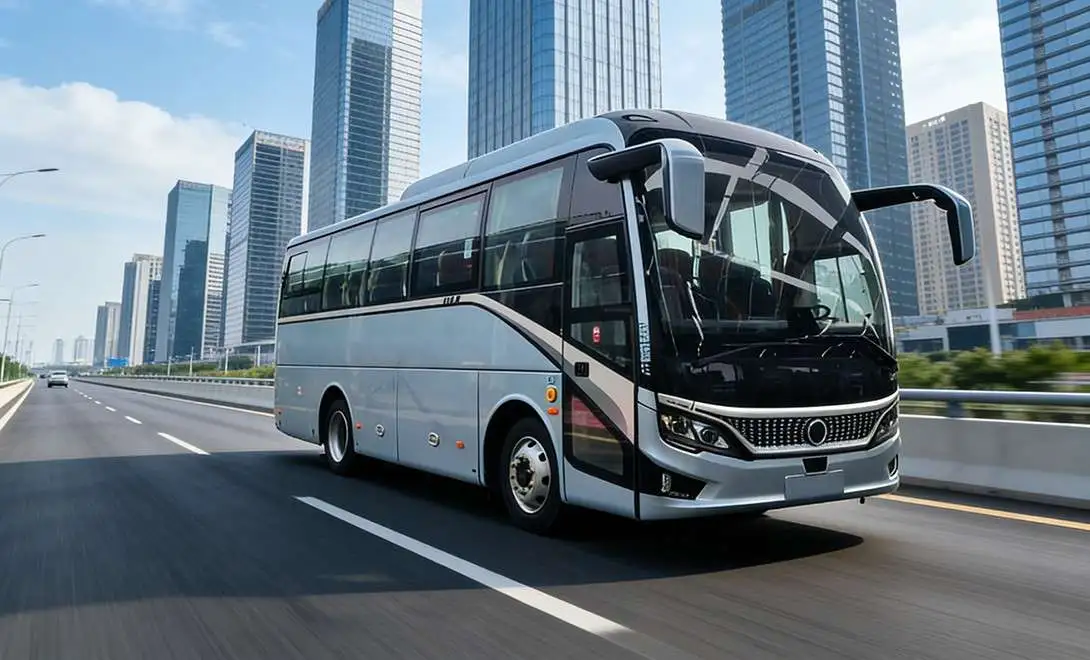
To fully understand the financial investment, you need to look past the price tag. The prices of buying something are only the beginning of an investment that will last for years and years, until it is sold.
Initial Purchase Price and Financing Structures
Since 2020, the difference in the initial costs of electric and gasoline buses has shrunk a great deal. A standard 8m diesel bus costs between $85,000 and $110,000, while an 8m Electric Bus costs between $180,000 and $240,000, based on the size of the batteries and the devices that are installed. But this comparison changes a lot when you look at the rewards that are offered. Under current U.S. law, federal tax credits give up to $40,000 per electric bus.
California, New York, and Washington also have state-level schemes that offer extra rebates running from $15,000 to $50,000.The financing options for converting fleets to electric vehicles have come a long way. A lot of producers now work with specialized banks that offer payment plans that work with practical savings. We've seen clients get lease deals where the monthly payments are about the same as diesel versions, even after taking into account the saves on fuel and upkeep. When you buy more than ten units at once, you can usually get an extra 8–12% off the price. This means that mid-sized owners can afford to make fleet-wide changes.
Operating Expenses: Energy Efficiency Breakdown
The obvious benefit of electric buses can be seen in places where energy costs are high. Diesel fuel costs an average of $3.85 per gallon in big U.S. cities right now, and a normal 8-meter diesel bus uses about 0.28 liters of fuel per kilometer when traveling between cities and suburbs. This comes out to about $0.45 per kilometer just for gas.Electric cars use about 0.95 kWh per kilometer on average, and industrial users with off-peak charging deals can get energy for about $0.12 per kWh.
This means that the cost of energy is about $0.11 per kilometer, which is 75% less than diesel. Fleet owners who drive each car 60,000 kilometers a year save about $20,400 a year on energy costs per bus. Putting in place infrastructure for charging batteries costs money at first, but Level 2 business chargers ($4,000 to $8,000 to install) or DC fast chargers ($25,000 to $40,000) can serve multiple cars, so the costs of the infrastructure are spread out over the fleet.
Maintenance Requirements and Service Intervals
Diesel engines have about 60% more working parts than electric powertrains. This is because electric powertrains don't need parts like oil filters, fuel injectors, turbochargers, and exhaust systems. Electric buses usually need repair every 8,000 kilometers, while gas buses only need it every 5,000 kilometers. Electric buses have average annual maintenance costs of $0.08 per kilometer, while diesel buses have average annual maintenance costs of $0.22 per kilometer.
Electric buses with regenerative stopping systems have brake pads that last 40–60% longer, so they only need to be replaced every 70,000 kilometers instead of every 30,000 kilometers. Transmissions don't need to be serviced anymore, and battery cooling systems don't need to have oil changed as often. Maintenance savings usually hit $85,000 to $105,000 per car over a ten-year period of operation. Warranty coverage has changed over time to meet the needs of fleets. For example, most modern electric bus warranties cover the engine for 5 to 8 years and the batteries for 8 years or 250,000 kilometers, with capacity retention levels of 70 to 80%.
Performance and Environmental Impact Considerations
In addition to financial measures, operational skills decide how well a fleet transition goes. Daily schedule dependability and service quality are both affected by how well things work in the real world under different situations.
Driving Range and Operational Flexibility
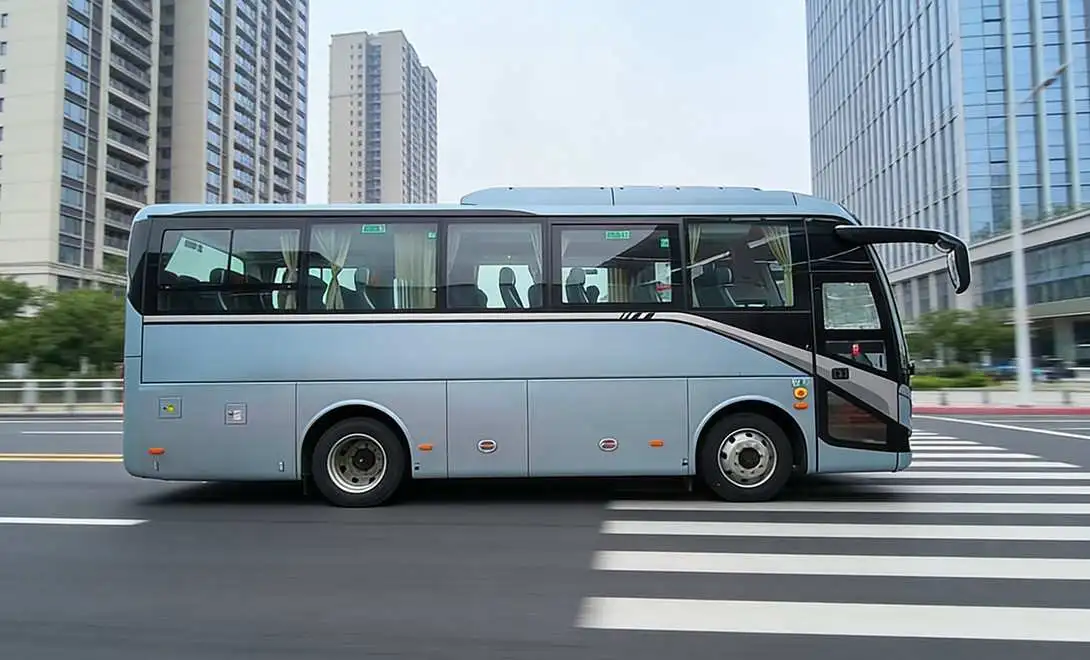
These days, 8m Electric Buses with 150-180 kWh battery packs can go 180 to 250 kilometers on a single charge in normal city driving circumstances. This capacity is enough for most bus and regional transit lines to run without needing to be charged in the middle of the day. Extreme temperatures have an effect on performance. For example, operating in cold weather may cut range by 15–25% because of the need to heat up, and operating in hot conditions will lower battery efficiency by 8–12%. The landscape of the path is very important. Hills can cut range by 20% compared to flat routes, but regenerative braking can help balance out the energy used for climbing.
Diesel buses still have longer ranges for long trips; they can usually go 600 to 800 kilometers on a tank. However, 8-meter buses are mostly used for fixed-route service, where regular travel lets charge schedules be very accurate. With fast-charging, the battery can now be charged to 80% in 60 to 90 minutes, which means that service days can be stretched or new routes can be added without warning. Fleet managers say that range worry goes away when charging infrastructure is planned well. Most operations charge overnight, when power rates drop to $0.08 to $0.10 per kWh.
Environmental Benefits and Regulatory Compliance
There are more environmental reasons for going electric than just lowering emissions. Zero tailpipe emissions get rid of local air pollutants like carbon monoxide, nitrogen oxides, and particulate matter. These are very important in cities where buses run close to household areas and walking areas. Life-cycle research that takes into account how the electricity is made shows that electric buses emit 40–60% less greenhouse gases than diesel buses, even when they are powered by energy from a mixed grid.
More and more regulations are favoring zero-emission cars. Under California's Advanced Clean Trucks rule, 40% of all new buses sold must be zero-emission by 2024, and that number will rise to 100% by 2036. Washington, Oregon, and a number of East Coast states are also passing similar laws. Through 2026, federal infrastructure law sets aside $5.5 billion for low- and zero-emission school and transit cars.
By proactively electrifying their fleets, operators can get ahead of compliance dates and take advantage of available incentive funds before the program is fully utilized.ESG performance has become more important as a buying factor because of corporate environmental reporting. The use of electric buses shows real progress toward carbon neutrality goals, as each one cuts about 35 to 40 tons of CO2 yearly compared to gasoline buses. This real effect improves the image of the company and how stakeholders see it. This is especially helpful for publicly traded companies and government agencies that are getting more attention over the environment.
Comparison of Leading Electric Bus Models in 2026
In order to choose the right car, you need to know how different models fit with practical needs. The market has grown up enough to offer a wide range of choices at different price points and performance levels.
Manufacturer Capabilities and Support Infrastructure
The best makers are very good at battery technology, improving range, and setting up networks to help customers after the sale. BYD's 8m Electric Bus has blade battery technology, which makes the batteries more stable at high temperatures and lasts for more than 3,000 charge cycles. Their service network in North America includes 25 sites, so parts can be sent to big cities within 48 hours. Proterra's ZX5 model focuses on fast charging, with a 20-minute return time for 80% capacity. This makes it perfect for routes that need to be charged in the middle of the day.
New Chinese providers, like Yutong and King Long, offer prices that are 15–20% lower than well-known names while still meeting U.S. standards. Federal Safety Standards for Motor Vehicles. But procurement managers should check to see if parts inventory is easy to get and if expert training is available in the areas they serve. To deal with these issues, JCM uses all-encompassing localization plans, sets up regional technology centers, and keeps spare parts on hand so that repair needs can be met quickly.
We work directly with fleet operators to create vehicle specs, such as battery capacity, seating arrangements, mobility features, and climate control systems, so that every unit perfectly fits the needs of its operators. With ISO 9001 and TS16949 certification, our factories in Xiamen are experts at making electric buses. They guarantee quality that meets international standards for buying things. Being able to offer OEM and ODM services lets clients set specific needs, such as charge interface standards or telematics connection with fleet management systems that are already in place.
Technical Specifications and Suitability Analysis
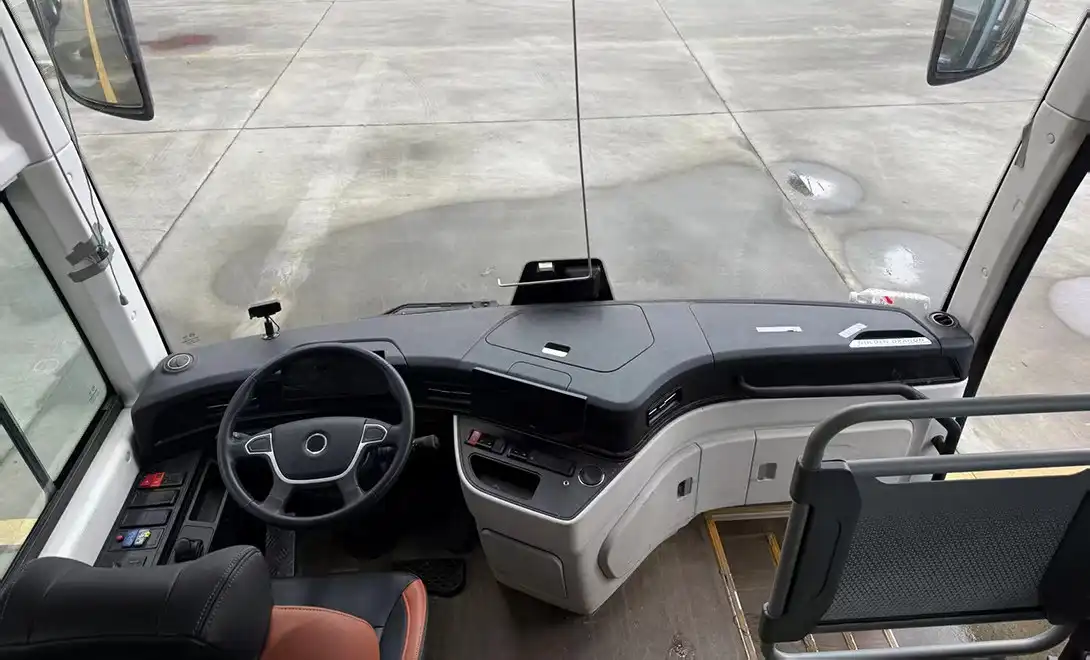
The main difference between specifications is the battery size. Entry-level models with 120–140 kWh packs are priced between $165,000 and $200,000 and are good for shorter urban trips of less than 150 kilometers per day. Prices range from $195,000 to $225,000 for mid-range models with 160 to 180 kWh batteries that can handle 200 to 250 km trips. Prices range from $230,000 to $260,000 for high-end models with 200 kWh or more of capacity that are used in difficult situations and need a range of 280 kilometers or more.
Charging works with different types in different ways. The Combined charge System (CCS1) has become the standard for DC fast charge in North America. It can handle power levels from 50kW to 150kW. Before making any purchases, fleet infrastructure planning should make sure that the charging protocols for vehicles will work together. Overnight Level 2 charging is done by onboard chargers with power ratings of 15 to 20 kW. Standard industrial electricity service can refill the batteries in 8 to 10 hours.
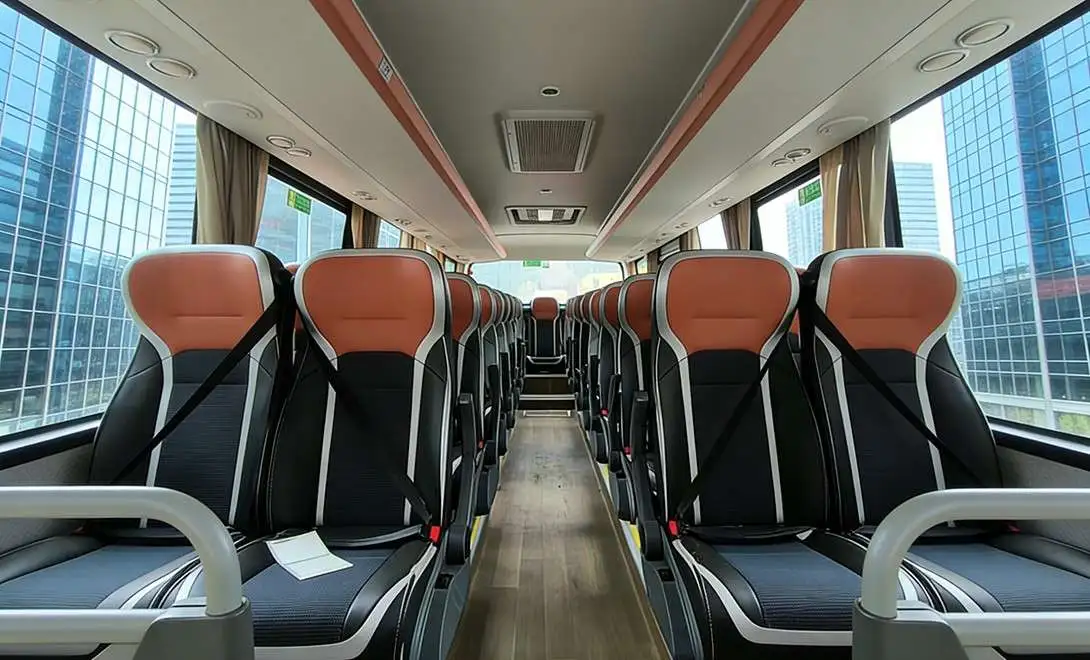
8-meter buses can hold anywhere from 22 to 35 people, based on how they are configured. Electric models can hold as many people as diesel models. Depending on where the battery is placed, the weight is distributed differently. In general, a lower center of gravity makes the vehicle easier to control. This feature makes the vehicle safer in bad weather and lowers the risk of rolling over compared to older models.
Procurement Guidance for B2B Buyers
For strategic buying to work, you need to look at more than just cost when making decisions. Long-term business success depends on having the right relationship with your suppliers.
Evaluating Total Cost of Ownership Metrics
To get an exact TCO, you have to project operational parameters over the projected lifetime of the car, which for 8m Electric Buses is usually 12 to 15 years. Annual miles, local energy rates, repair labor costs, and estimates about the car's remaining value are some of the most important factors. Sensitivity analysis helps find cost drivers. For example, if diesel prices go up by 20%, break-even points move forward by 12 to 18 months. If you need to change your batteries before year ten, the payback times are longer.
We suggest that fleet managers make thorough operating models that include their exact route profiles, energy rates, and maintenance skills. Optimal implementation strategies can be found by comparing different situations, such as partial fleet electrification vs. full conversion, lease vs. buy structures, and infrastructure phasing methods. Our engineering team offers free TCO modeling services, using your business data to make personalized forecasts that help the board make decisions.
Supply Chain Considerations and Delivery Planning
When you buy something from another country, things like wait times, shipping processes, and import compliance become more complicated. Standard production times are 90 to 120 days from the time of the buy order until the product leaves the plant. For trans-Pacific shipping, ocean freight adds an extra 30 to 45 days. Delivery takes an extra 15 to 25 days because of clearing customs and finishing preparations. Realistic planning spans of six to seven months from placing an order to putting it into operation keep schedules from getting thrown off.
The rules for importing batteries need extra care. Because lithium-ion batteries are considered dangerous materials, they need to be shipped in special containers and with special paperwork. The buying team doesn't have to worry about these logistics issues when they work with skilled sellers. We take care of all the paperwork needed to clear customs for exports, such as business bills, packing lists, certificates of origin, and safety data sheets.Structures for warranties should cover more than just basic parts.
They should also cover promises for battery performance. Standard battery guarantees now say that the battery will keep at least 70% of its original power after eight years or 250,000 kilometers, whichever comes first. Before choosing a provider, make sure you understand how to file a warranty claim, including how long you have to wait for an answer and how parts will be replaced. Our guarantee terms include sending out new batteries ahead of time to keep downtime to a minimum, and sending back broken units freight-prepaid so that they can be analyzed.
Future Outlook and Investment Viability
As technology improves and policies back up electric buses, the market continues to move in a positive direction. Knowing about these trends helps owners plan their long-term fleet strategies and decide when to buy things.
Technology Evolution and Cost Trajectories
A recent study of the industry says that battery prices have dropped 89% since 2010, from $1,200 per kWh to about $132 per kWh in 2024. This trend keeps going down, and by 2026, it's expected to be $90 per kWh, which is the point at which the price of an 8m Electric Bus will be the same as a gas-powered car without any incentives. When solid-state batteries go into mass production in 2027 or 2028, they will have a 40% higher energy density, which will increase range while lowering weight and charge times.
Public-private partnerships and utility reward programs are speeding up the installation of charging facilities. Many electric companies now offer business EV charging rates with big off-peak discounts, some as low as $0.06 per kWh. This is because they know that fleet charging helps control the grid's load by spreading it out. Newer models have features called "vehicle-to-grid" (V2G) that let buses send saved energy back to facilities during times of high demand. This could create new income streams that make operations even more cost-effective.
Strategic Implementation Approaches
Phased electrification lets businesses improve their operations while keeping track of how much cash they use. A lot of successful transitions start with converting 15 to 25 percent of the fleet. They focus on routes that have good features, like regular daily mileage, easy access to charging stations, and public exposure for messages about sustainability. During the testing phase, practical assumptions are tested, process changes are found, and organizational trust is built before the system is rolled out to more users.
The most value comes from manufacturer relationships that go beyond simple buying. Collaborations allow for customization that fits specific business needs, early access to new technologies, and adaptable support as teams grow. Our method focuses on long-term relationships over one-time sales. This is shown by the fact that we offer ongoing technical support, review operating efficiency, and send out advance notices when new, relevant innovations come out of our R&D pipeline.
We have specialized teams that help with localization efforts and set up full production lines for clients who want to use regional manufacturing strategies. This includes choosing the right tools, making sure the process works best, setting up a quality control system, and training programs for technicians. These are all part of complete solutions that help clients become independent in their manufacturing while still meeting quality standards. Our customization services for battery assembly lines are very useful because they let us build facilities with 100 MWh of yearly capacity that are scaled to meet regional demand predictions.
Conclusion
The economic case for 8m Electric Buses has hit a strong turning point where the benefits of owning them over time outweigh the higher prices of buying them. Electrification is not only better for the environment, but it is also good for business. Compared to diesel, it saves 75% of energy, costs more than $85,000 per car in upkeep over ten years, and technology keeps getting better. Careful TCO modeling based on specific operational factors, strong supplier partnerships that ensure parts are available and expert support, and strategy execution planning that builds up an organization's skills over time are all necessary for successful procurement. There is still time to get a lot of incentive funds, but it is getting harder to get as programs get closer to their allocation limits. This means that fleet owners who are thinking ahead should make decisions soon.
FAQ
How long does charging take for an 8m electric bus?
Charging time varies on how much power the charger has and how much power the battery has. Overnight Level 2 charging at 15-20kW usually takes 8–10 hours to fully charge a 160 kWh battery that is only 20% full. This is perfect for fleet companies that have designated overnight parking. DC fast charging at 100–150kW can add 80% of a battery's capacity in 60–90 minutes, which can be useful for midday top-ups or sudden range increases.
What is the expected battery lifespan compared to engine longevity?
Modern lithium iron phosphate batteries keep 70–80% of their full power after 3,000–4,000 charge cycles, which is about 8–12 years of normal transit service cycles. This is the same as or longer than the normal time between rebuilds for diesel engines, which is 8 to 10 years or 400,000 to 500,000 kilometers. The price of replacing a battery has gone down to $250 to $350 per kWh, which means that replacing them eventually is still within the budget for the whole duration.
What financing options exist for bulk electric bus purchases?
Specialized lenders now offer different types of fleet electrification financing options, such as operational leases with buyout options, capital leases where payments are based on operational savings, and municipal bond financing for government agencies. Low-interest loans for zero-emission transit projects are available from the federal government through the Department of Transportation. Several states also have rolling loan funds that support building up and buying electric car infrastructure.
Partner with a Leading Electric Bus Manufacturer for Your Fleet Transition
Electrifying a fleet is a difficult task that needs technical know-how, accurate financial planning, and strong supply partnerships. JCM has a wide range of complete options for buying managers and fleet owners who need to make this change. Our ability to make customized 8m Electric Buses lets us precisely match the specifications to your practical needs. This includes choosing the right battery size, charging system compatibility, seating arrangements, and accessibility features that are specific to your service profile.In addition to providing vehicles, we also offer full lifetime support, which includes planning for infrastructure, training programs for technicians, and ongoing technical advice.
Our world service network makes sure that parts are always available and that repair needs are met quickly, both of which are important for keeping schedules. Our engineering teams provide thorough TCO analyses, operational modeling, and implementation roadmaps that are tailored to your particular needs, whether you're looking at initial pilot projects or planning to convert your whole fleet. Get in touch with our expert team at info@jcm-star.com to talk about how our 8m electric bus provider skills and attitude to the whole industry chain can help you reach your sustainable fleet goals.
References
1. BloombergNEF. (2024). "Electric Vehicle Battery Pack Prices Fall to Record Low." Annual Battery Price Survey Report.
2. American Public Transportation Association. (2023). "Zero-Emission Bus Implementation Guide for Transit Agencies." APTA Standards Development Program.
3. National Renewable Energy Laboratory. (2024). "Total Cost of Ownership for Electric versus Diesel Transit Buses." U.S. Department of Energy Technical Report.
4. International Council on Clean Transportation. (2023). "Electric Bus Technology and Operations: State of the Practice." ICCT Working Paper Series.
5. U.S. Environmental Protection Agency. (2024). "Clean School Bus Program: Implementation and Impact Assessment." EPA Office of Transportation and Air Quality.
6. Society of Automotive Engineers International. (2023). "Charging Infrastructure Standards for Commercial Electric Vehicles." SAE J3105 Technical Information Report.

Based on your vehicle requirements, we will quickly match the most suitable specifications and provide a competitive quote.
_1755581003287.webp)
Global Customized


_1756108840480.webp)
_1755854765757.webp)