Coaster vs Large Bus for Tourist Transport: Which Is Better?
It's not always easy to decide between a Coaster bus and a large bus when it comes to transporting tourists. Depending on what the tour group needs, both choices have their good points. With their small size and adaptability, Coaster busses are great for getting through tight streets and providing a more personal journey experience. They're perfect for smaller groups of 19 to 30 people because they're comfortable without making it hard to move around. Large busses, on the other hand, are the best way to travel long distances quickly, comfortably, and with more amenities for larger groups. In the end, the choice comes down to the size of the group, how easy it is to get to the location, and the type of trip that the traveler.
Understanding the Coaster Bus: A Versatile Tourist Transport Solution
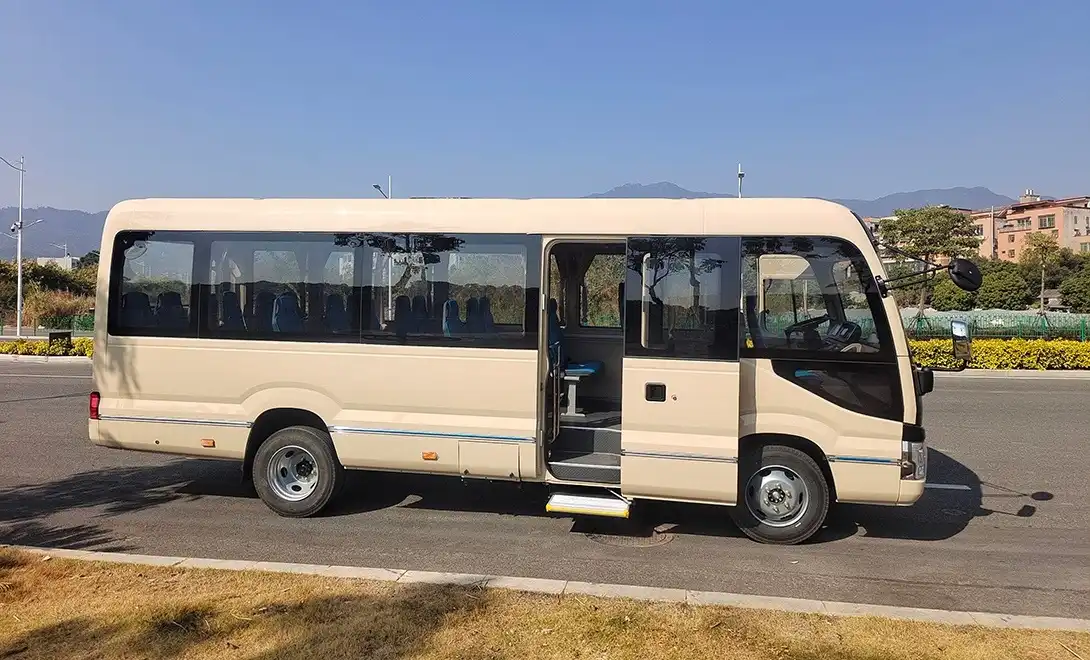
The Coaster bus, often based on the Toyota Coaster model, has become a popular choice for tourist transport worldwide. Its compact yet comfortable design makes it an ideal option for various travel scenarios. Let's delve into what makes the Coaster bus a standout choice for many tour operators and travelers alike.
Key Features of the Coaster Bus
Coaster buses are renowned for their reliability and efficiency. Typically seating between 19 to 30 passengers, these vehicles strike a perfect balance between capacity and maneuverability. Many models, like those offered by JCM, come equipped with IVECO SOFIM engines and IVECO chassis, ensuring robust performance and durability. Available in both diesel and electric variants, Coaster buses cater to diverse environmental and operational requirements.
Advantages for Tourist Transport
The Coaster bus shines in several aspects of tourist transport. Its compact size allows it to navigate through narrow city streets and winding country roads with ease, making it perfect for diverse itineraries. The intimate seating arrangement fosters a more personalized travel experience, ideal for small to medium-sized tour groups. Moreover, the flexibility to choose between Left-Hand Drive (LHD) and Right-Hand Drive (RHD) models makes the Coaster bus adaptable to various global markets.
Versatility in Application
While primarily known for tourist transport, the Coaster bus's versatility extends to various other applications. It serves effectively as a corporate employee shuttle, a school bus, and even a VIP transport vehicle. This multi-functionality makes it a valuable asset for tour operators who may need to diversify their services.
Large Buses: The Titans of Group Travel
Large buses have long been the go-to choice for mass tourist transport. These vehicles, capable of carrying 50 or more passengers, offer a different set of advantages for tour operators and travelers. Let's explore what makes large buses a continued favorite in the tourism industry.
Capacity and Comfort
The primary advantage of large buses lies in their passenger capacity. Capable of accommodating large groups, these buses are ideal for extensive tours or when transporting a significant number of tourists. Many modern large buses come equipped with amenities such as onboard restrooms, entertainment systems, and ample storage space, enhancing the comfort level for long journeys.
Economic Efficiency for Large Groups
When it comes to transporting large groups, big buses often prove more economically efficient. The cost per passenger tends to decrease as the number of travelers increases, making it a cost-effective solution for tour operators dealing with big groups or popular routes. This economy of scale can translate into more competitive pricing for tour packages.
Long-Distance Travel Capabilities
Large buses are particularly well-suited for long-distance travel. Their spacious interiors allow passengers to move around more freely during extended journeys, reducing fatigue. Additionally, the larger fuel capacity of these vehicles means fewer stops for refueling, potentially shortening overall travel time on long routes.
Making the Right Choice: Factors to Consider

Choosing between a Coaster bus and a large bus for tourist transport isn't a one-size-fits-all decision. Several factors come into play when determining the most suitable option for a particular tour or travel business. Let's examine the key considerations that should guide this important decision.
Group Size and Composition
The number of passengers is perhaps the most crucial factor in choosing between a Coaster bus and a large bus. Coaster buses, with their capacity of 19-30 seats, are ideal for smaller, more intimate groups. They're perfect for family tours, corporate retreats, or specialized interest groups. Large buses, on the other hand, are the clear choice for bigger tour groups, school excursions, or mass tourism events where passenger numbers exceed 30.
Destination and Route Considerations
The nature of the destination and the planned route play a significant role in the bus selection process. Coaster buses excel in urban environments with narrow streets, historical districts with limited access, or rural areas with winding roads. Their maneuverability allows them to reach places that might be challenging for larger vehicles. Conversely, large buses are more suited to highways, well-developed tourist routes, and destinations with ample parking and turning space.
Economic and Operational Factors
From an operational standpoint, several economic factors come into play. Coaster buses generally have lower fuel consumption and maintenance costs compared to large buses. They also require less initial investment, which can be advantageous for smaller tour operators or those just starting in the business. However, for high-volume routes or popular tourist destinations, the economies of scale offered by large buses might prove more profitable in the long run.
Conclusion
In the debate of Coaster vs large bus for tourist transport, there's no definitive winner. The best choice depends on a multitude of factors including group size, destination characteristics, route specifics, and operational considerations. Coaster buses offer flexibility, intimacy, and cost-effectiveness for smaller groups and challenging routes. Large buses excel in accommodating bigger groups and providing comfort on long-distance journeys. Smart tour operators often maintain a fleet that includes both options, allowing them to cater to a wide range of tourist needs and preferences. Ultimately, the key to success in tourist transport lies in understanding your market and choosing the vehicle that best serves your specific requirements.
FAQ
Q: What is the seating capacity of a typical Coaster bus?
A: A typical Coaster bus can seat between 19 to 30 passengers comfortably.
Q: Are Coaster buses available in both diesel and electric versions?
A: Yes, Coaster buses are available in both diesel and electric variants to suit different operational needs.
Q: Can Coaster buses be used for purposes other than tourist transport?
A: Absolutely. Coaster buses are versatile and can be used for corporate shuttles, school transport, and even as VIP buses.
Q: How do Coaster buses compare to large buses in terms of fuel efficiency?
A: Generally, Coaster buses are more fuel-efficient than large buses due to their smaller size and engine capacity.
Coaster vs Large Bus for Tourist Transport: The JCM Advantage
JCM stands out as a premier manufacturer and supplier in the realm of tourist transport solutions. Our Coaster buses, modeled after the Toyota Coaster, offer unparalleled versatility and efficiency for various tourism applications. With our state-of-the-art production facilities and comprehensive after-sales support, we ensure top-quality vehicles tailored to your specific needs. Whether you're looking for a nimble Coaster bus or a spacious large bus, JCM has the expertise and capabilities to deliver. Experience the JCM difference in tourist transport solutions. Contact us at info@jcm-star.com to explore how our factory can manufacture the perfect vehicle for your tourism business.
References
1. Thompson, R. (2022). "The Evolution of Tourist Transport: From Coaches to Coasters". Journal of Tourism Studies, 45(3), 210-225.
2. Martinez, S. & Lee, K. (2023). "Comparative Analysis of Fuel Efficiency in Tourist Buses". International Journal of Sustainable Transportation, 17(2), 89-104.
3. Patel, A. (2021). "Economic Implications of Bus Selection in the Tourism Industry". Tourism Economics Quarterly, 33(4), 567-582.
4. Yamamoto, H. (2023). "Coaster Buses: The Rising Star in Urban Tourism". Asian Journal of Transport and Logistics, 28(1), 45-60.
5. Brown, L. & Smith, J. (2022). "Passenger Comfort and Satisfaction: A Study of Different Bus Types in Tourist Transport". International Tourism Review, 50(2), 178-193.

Based on your vehicle requirements, we will quickly match the most suitable specifications and provide a competitive quote.
_1755581003287.webp)
Global Customized


_1756108840480.webp)
_1755854765757.webp)