Benefits of 33-Seat 8m Electric Coach for Tour Groups
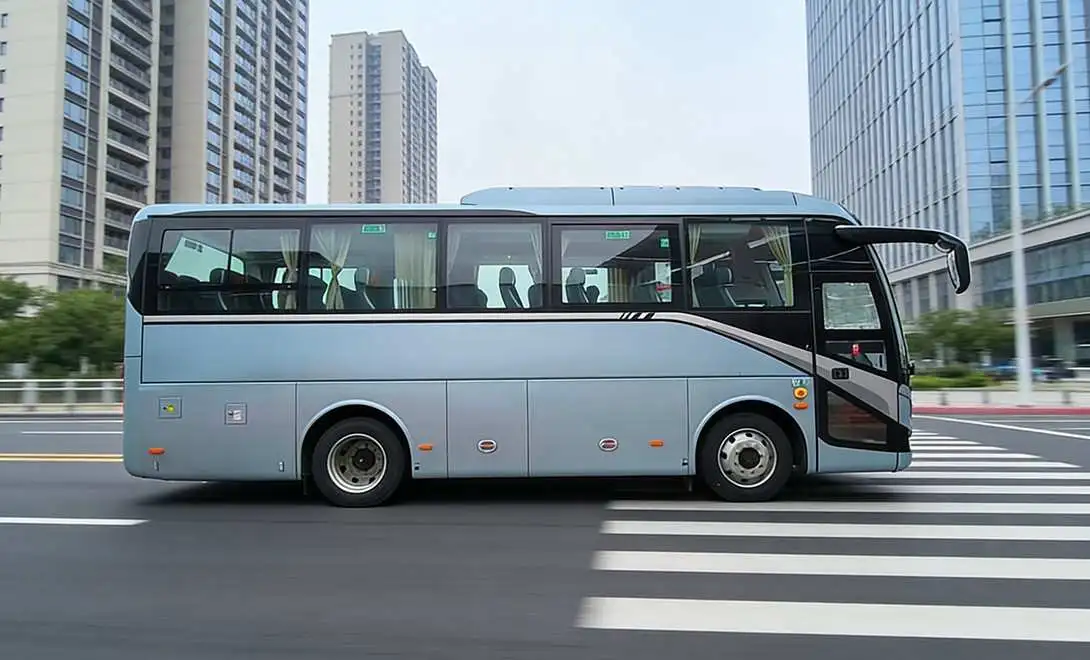
The 8m Electric Coach 33 Seats is a game-changing option for modern tour operations, offering a strong mix of sustainable business practices and cost-effectiveness. Compared to diesel coaches, this mid-sized electric coach puts out a lot less carbon dioxide and gives riders a quiet, relaxing ride that they really like. Because electric drivetrains have fewer parts that wear out quickly, they require less upkeep and use less fuel, which lowers operational costs by a large amount. The small 8-meter footprint makes it easy to get through cities and along tight scenic roads. The 33 seats make it easy for groups of all kinds to fit without adding extra bulk. When tour companies use this car, they become leaders in environmentally friendly tourism. At the same time, they improve their bottom line by having stable, lower running costs that make them more profitable in the long run.
Understanding the Key Advantages of the 33-Seat 8m Electric Coach

There is more and more pressure on tour companies to find a balance between making money and taking care of the earth. The electric coach category has grown up very quickly, and the 33-seat layout with an 8-meter length gives companies that serve a wide range of customers a lot of options.
Environmental Credentials That Enhance Brand Reputation
Environmental laws are getting stricter all over the US, but they are especially strict in places like California where carbon standards set the tone for the whole country. Nitrogen fumes and particle matter that are bad for the air quality in tourist areas are not released by electric coaches' tailpipes. Using zero-emission cars instantly boosts the credibility of tour companies that work with national parks, historic areas, or tourists who care about the environment. Customers really feel this resolve, and they are picking service providers based on how sustainable they are more and more. In addition to helping with marketing, electric coaches help companies stay ahead of the rules so they don't have to update their whole fleet when diesel limits grow.
Superior Passenger Comfort Through Quiet Operation
Diesel engines make a lot of noise, but electric drivetrains are almost quiet. This changes the whole experience for passengers. Tour guides can easily talk to passengers without having to deal with engine noise, and passengers can enjoy chats and audio presentations without any problems. This quietness keeps people from getting tired on longer trips, which leads to higher happiness scores and good reviews that encourage people to book again. Electric motors' smooth acceleration gets rid of the jerky changes that are common in regular transmissions. This makes for a smooth ride that sets premium tour services apart.
Operational Cost Reductions Through Energy Efficiency
Diesel fuel costs a lot more per mile than electricity. Depending on where you live, you can save anywhere from 40% to 60% on electricity. Because electric powertrains don't have as many moving parts as internal combustion engines, they don't need to have oil changes, transmission service, or exhaust system fixes. Regenerative braking systems make brakes last longer by turning moving energy back into stored battery energy. This means that repair needs are met less often. Fleet managers like repair schedules that they can plan for instead of problems that happen out of the blue and make customers unhappy. These savings can add up to more than $200,000 per coach over the course of a normal 12-year car lifecycle. This directly boosts profits in a competitive industry.
Perfect Size Balance for Diverse Routes
The 8-meter length makes it easy to move around and holds a good number of people. Larger 12-meter coaches have trouble in historic areas with tight streets, but this smaller size can handle difficult routes and still fit enough people for a specialized vehicle to be used. The 33-seat layout works well for most tour groups, so you don't have to deal with the waste of running bigger vehicles when they're only partly full or the hassle of splitting groups up among several smaller vans. With this dimensional sweet spot, operators can use a single platform for airport transfers, tours of wine country, business shuttles, and sightseeing loops.
Technical Specifications and Performance Overview of the 8m Electric Coach
Procurement managers can assess whether electric vehicles meet operational requirements across diverse deployment scenarios by evaluating their technical specifications. The 8m electric coach 33 seats provides insights into range, charging infrastructure compatibility, and passenger capacity, helping teams determine its suitability for various routes and service demands.
Battery Capacity and Practical Driving Range

Modern electric coaches in this group usually have battery packs that are between 180 kWh and 280 kWh. In real life, these batteries allow the coaches to go between 150 and 250 miles on a single charge, depending on the type of driving conditions. The actual range depends on many things, such as the number of people in the car, the geography, how the temperature control is used, and how the car is driven. Constantly going at high speeds on the highway is the most efficient way to drive, while regenerative stopping in stop-and-go city traffic saves energy.
Tour companies should figure out how much range they need by adding 20 to 30 percent to the daily route lengths to account for unplanned detours or higher climate control needs when temperatures are very high or very low. To make batteries last as long as possible, battery management systems keep an eye on cell temperatures and charge levels. After eight years of use, most makers guarantee that the batteries will still have more than 70% of their original capacity.
Charging Infrastructure Compatibility
Most electric coaches can charge using both AC Level 2 and DC fast charging. Level 2 charging with standard 240-volt connections takes 6 to 8 hours to fully charge, so it's perfect for charging overnight at the station in between daily service rounds. DC fast charging can recover 80% of a battery's capacity in one to two hours, allowing midday top-ups that make operations more flexible. When building a depot, electricity service capacity should be taken into account, since charging many coaches at once requires a lot of power infrastructure. Many utilities offer business EV rates with lower off-peak prices. This lets owners save money on energy costs by charging their vehicles at night, when demand on the grid is lower.
Energy Consumption Benchmarks Against Traditional Alternatives
Electric coaches usually use between 1.5 and 2.2 kWh per mile, but this depends on how they are set up and the weather. Diesel coaches get about 5 to 7 miles per gallon on average, so the lower energy cost is clear. Electricity costs about $0.17 to $0.24 per mile in the U.S., where business rates are about $0.11 per kWh. Diesel costs $4.00 per gallon, which is about $0.57 to $0.80 per mile in fuel costs alone. This basic change in the way costs are structured lets tour companies keep their prices competitive while also increasing their profit margins. Climate affects economy. For example, extreme cold lowers range by 20–30% because of how batteries work and how much heat the cabin needs, and extreme heat raises cooling loads that have the same effect on range.
Maintenance Requirements and Longevity Considerations
Compared to regular engines, electric powertrains need a lot less upkeep. Tire changes, brake tests, battery coolant system checks, and HVAC work are all part of routine care. Major types of upkeep are not needed because there is no engine oil, gearbox fluid, diesel particulate filters, or exhaust gas recirculation systems.
Regenerative stopping takes care of most of the slowing down work, so brake wear is much lower. Battery systems usually come with contracts that last between 8 and 10 years, and if they are taken care of properly, they can last much longer than that. Operators should plan for how much it will cost to change batteries in the future, but they should also keep in mind that battery prices keep going down every year, which means that repairs will be cheaper in the future than present prices suggest.
Comparing 33-Seat Electric Coaches with Traditional and Alternative Options
Clear comparisons of available powertrains and size categories enable procurement teams to select the most suitable vehicle for their operational needs. The 8m electric coach 33 seats offers a compact yet efficient solution, balancing passenger capacity, energy consumption, and route requirements for optimal business performance.
Performance Against Diesel and Hybrid Variants

Electric coaches have fast torque when they stop, which lets them speed up quickly and move into traffic or get up and down hills. Diesel trains can go farther between refueling stops and can refuel faster, which is helpful for long-distance lines between cities that don't have a lot of charging stations. Hybrid coaches try to find a balance between the two, but they add more technical complexity that makes them more expensive to buy and require more upkeep. They also don't get all of the environmental benefits of running on electricity alone. Electric coaches are great for tour companies with set daily routes and easy access to depots. On the other hand, companies that run uncertain long-distance charters may prefer diesel freedom until charging networks grow even more.
Capacity Considerations: 33-Seat Versus Larger Alternatives
The 33-seat capacity is a good middle ground between taxis and full-sized busses in the market. Electric busses with 40 seats or more need battery packs that are heavier, which makes the vehicle heavier and reduces its range. The extra seats usually don't get used except during peak times. Smaller 25-seat layouts make it easier to move around, but they lower the possibility for making money and the operating efficiency per passenger. Instead of oversizing vehicles that are only partially full, fleet managers should look at past load factors to see if 33 seats is a good number for a normal group size. Having 33 seats is great for many companies because it's the right size for airport shuttles, business transportation, and regional tours with groups of 20 to 30 people.
Evaluating Manufacturer Reputation and Support Networks
When choosing an electric bus, you need to look at more than just the vehicle itself. Manufacturers that have been around for a while and have experience with business vehicles usually make more reliable goods and have better support networks. Important things to look at when judging a car are whether or not it comes with a guarantee that covers drivetrain parts and battery systems, whether there are service centers that can fix high-voltage electric systems, and whether or not the parts inventory is set up to reduce downtime.
New manufacturers may offer good prices, but there are risks that parts won't be available for a long time and expert help won't be available. Buyers should get customer references from current operators, preferably those who run similar routes and deal with similar weather conditions, to find out how well the product works in real life and how quickly the maker responds to problems.
Procurement Guide for B2B Buyers: How to Acquire the Best 33-Seat 8m Electric Coach?
To get through the buying process, you need to know how prices work, how to get money, and how to choose a partner that will help your fleet integrate well.
Understanding Pricing Structures and Cost Variables
Electric coaches usually cost 40–60% more than diesel models with the same number of seats. 33-seat models can range anywhere from $350,000 to $550,000, based on the manufacturer's positioning and specs. Battery size is a big cost factor because bigger packs make vehicles more useful and cost more to buy. Customization choices, such as better HVAC systems, better seats, more advanced communications, and special features for people with disabilities, also affect the end price.
Large orders often qualify for big discounts, which makes combined purchasing across multiple locations a smart financial move. Buyers should ask for specific quotes that break down the costs of the base car and any extra features that are wanted. This will make it easy to compare different offers.
Financing Alternatives and Incentive Programs
There are a number of ways to finance the higher starting cost. Costs are spread out over 5 to 7 years with traditional loans, but with running leases, you can keep the money and use it for other assets. Some banks specialize in financing clean transportation and offer good rates that represent the lower operating risks that come with electric powertrains that are simpler.
As of now, federal tax credits of up to $40,000 per car are still available, and some states offer even bigger rewards. California's HVIP program has previously given out large refunds, while other states have grant programs that aim to lower emissions in tourist areas. Buyers should work with financial advisors who know about incentives for clean transportation to get the most out of the benefits that successfully lower net buying costs.
Evaluating Supplier Capabilities and After-Sales Support
Long-term customer happiness depends a lot on what the maker and dealer can do after the sale. A full protection should cover the battery's capacity, the motor, and the structure, with clear terms about how long the coverage lasts and what conditions apply. It's important to have parts on hand because some specialized electric parts may need longer wait times than regular parts. Dealers should be able to show that they have expert training for their service staff, specialized testing tools, and working relationships with providers of parts.
Asking for guaranteed reaction times for both emergency breakdowns and planned repairs helps people know what kind of service they can expect. Fleet owners should give preference to providers with thorough training programs that teach drivers and support staff how to properly run and take care of electric coaches.
Integration Planning for Seamless Fleet Deployment
For the deployment of electric coaches to go smoothly, planning needs to be planned across various operating areas. Facility surveys find out how much power the electrical system can handle and what changes are needed to support charging equipment. Electric car features, such as regenerative braking techniques, range management strategies, and charging processes, should be covered in driver training classes. Maintenance workers need special training on how to safely work with high power and how to diagnose problems with electric drivetrains.
Route planning might need to be changed to make sure that charging times work with working plans. This is especially true during the first deployment while teams get used to what the vehicles can do. Setting up clear lines of contact between the procurement, operations, maintenance, and building teams avoids costly delays and makes sure that the integration goes smoothly.
Future Trends and Innovations in 8m Electric Coaches for Tour Industry
The electric coach industry is evolving rapidly, with emerging technologies offering enhanced features that strengthen the business case for adoption. The 8m Electric Coach 33 Seats exemplifies this trend, providing improved efficiency, lower operating costs, and modern connectivity options that make electric fleet integration increasingly attractive.
Battery Technology Advancements Expanding Capabilities
Improvements in battery technology are making them more useful. Battery energy density keeps getting better, and solid-state battery technologies are moving from the lab to the pre-commercial stage. These next-generation batteries are said to be able to store 40–60% more energy in the same amount of room and weight. This could make electric coach ranges go beyond 400 miles and charge times shorter. The current lithium-ion process keeps getting better little by little, and as production increases, prices go down by about 8 to 10 percent each year.
If things keep going in this direction, worries about battery life and range will become much less important over the next few years. Operators who buy electric trains now will benefit from higher leftover values in the future, as used electric coaches become more appealing to secondary markets looking for cheap ways to be environmentally friendly.
Connectivity and Fleet Management Systems
Modern telematics systems let you check on a vehicle's performance, battery life, driving behavior, and repair needs in real time. Fleet managers can access detailed screens that show the state of each car, trends of how much energy it uses, and repair alerts that can predict problems before they happen. Route optimization software takes into account the terrain, traffic patterns, charging station sites, and more to make the journey as quick and easy as possible. Connectivity features for passengers, such as Wi-Fi, USB charging ports, and entertainment systems, turn coaches into mobile work areas that businesses like. These interconnected features create operating data that helps with efforts to keep getting better while also improving customer experiences that make higher prices fair.

Regulatory Momentum Toward Zero-Emission Tourism
More and more, environmental laws support zero-emission vehicles. This is especially true in sensitive areas like national parks and historic neighborhoods, where policymakers are concerned about noise and air quality. California keeps setting strict deadlines for converting business vehicles to electric ones, and other states are slowly following suit. Federal infrastructure law sets aside a lot of money for installing charging stations, which removes one of the biggest obstacles to the widespread use of electric vehicles.
By switching fleets ahead of time, tour operators can avoid rushed conversions that are forced by regulatory dates that shorten decision-making times and reduce bargaining power. People who are early adopters also get good press and marketing chances that make their services stand out in crowded markets.
Long-Term Fleet Planning and Investment Strategies
When strategic fleet planning is done, electric cars are seen as a form of developing technology that is getting better and cheaper. Phased replacement strategies let operators get used to the first deployments while still keeping the option to switch to better models as technology improves. Building good ties with manufacturers gives you information about product roadmaps and new products that are coming out soon, which helps you decide when to replace things.
Due to unknowns about the residual value, conservative depreciation models should be used during the early stages of technology usage. However, as technology becomes more widely used, secondary markets will become more stable, which will support higher used values than originally thought. Electric coaches should not be seen as a short-term fix, but as an investment that will pay off in the long run. By building up their organizations' electric fleet management skills, operators will gain economic benefits that grow over time.
Conclusion
Transitioning to electric vehicles benefits the environment by reducing emissions and can also improve profitability for operators. The 8m electric coach 33 seats offers a practical solution, combining zero-emission operation with lower energy and maintenance costs to support both sustainable and economically efficient transport. With 33 seats and an 8-meter length, this design is the best mix of capacity, maneuverability, and efficiency for a wide range of operating needs. Significant reductions in running costs, better customer experiences, and stronger brand positioning all work together to make strong business cases that go beyond environmental concerns alone.
Even though the original purchase price is higher than diesel options, a full total cost of ownership study shows that the returns are attractive thanks to lower upkeep costs, higher fuel efficiency, and incentives. To be successful at procurement, you need to carefully choose your suppliers, plan your infrastructure, and get your organization ready for more than just buying vehicles. Tour companies that use electric cars in a smart way can stay competitive and make a real difference in the long-term growth of tourism.
FAQ
What is the typical driving range for a 33-seat electric coach?
Under normal conditions, most electric coaches in this group can go 150 to 250 miles on a single charge. Actual range relies on many things, such as the number of people in the vehicle, the terrain, the weather, and the way the driver steers. Highways with steady speeds are the most efficient, while roads with lots of hills and stops shorten the range. Because of how batteries work and how much heat they need, cold weather can cut range by 20 to 30 percent. To make sure routes are reliable, operators should plan them with a 20–30% range limit above the given capacity.
How long does charging take for an 8-meter electric coach?
Charging time changes by type of tools. Standard Level 2 charging with 240-volt lines takes 6–8 hours to fully charge, which is long enough for overnight charging at the station. DC fast charging can recover 80% of a battery's power in one to two hours, allowing midday top-ups. Most owners set up charging schedules that fully charge batteries at off-peak times, when energy costs are lowest, like at night.
What maintenance advantages do electric coaches offer compared to diesel?
Electric powertrains get rid of a lot of care tasks, like changing the engine oil, repairing the transmission, fixing the exhaust system, and regenerating the diesel particulate filter. By taking over most of the slowing work, regenerative braking greatly increases the life of brakes. As part of routine maintenance, the tires are rotated, the battery cooling system is checked, and the HVAC system is serviced. These easier standards lower maintenance costs by 40 to 60 percent compared to diesel equivalents and increase car availability by cutting down on service downtime.
Partner with JCM for Your Electric Coach Procurement Needs
When selecting an electric coach provider, it’s crucial to partner with manufacturers that deliver both technical expertise and comprehensive support. The 8m electric coach 33 seats comes from suppliers who provide guidance on vehicle integration, maintenance, and operational optimization, ensuring a smooth and reliable deployment. JCM is a top company that specializes in unique car solutions for the whole lifecycle of a vehicle. Because we've built a lot of pure electric buses and commercial cars, we can provide custom solutions that meet the needs of any company.
With operational centers in Southeast Asia, the Middle East, and Europe, as well as research and development centers in key car development hubs, JCM is able to meet the needs of local markets with a global viewpoint. Our "whole industry chain" method combines design, engineering, production, and customer service after the sale. It does this by linking top suppliers, technical experts, and industry experts on a single platform. JCM offers flexible solutions that can be quickly implemented, whether you need standard setups or specific details that are tailored to your individual route needs.
Fleet managers can get full expert advice from us to help them figure out the best operational needs, infrastructure needs, and financial models to get the best total cost of ownership. JCM does more than just supply vehicles. They also let you customize the production line, which lets regional assembly operations happen and lowers transportation costs while building up local technical skills. Contact our team at info@jcm-star.com to discuss your electric coach requirements. As an experienced 8m Electric Coach 33 Seats manufacturer, we bring deep expertise in B2B procurement processes, quality certifications including ISO and TS16949, and proven track records serving fleet operators across North America, Europe, and emerging markets.
References
1. Anderson, M. (2022). Electric Vehicle Adoption in Commercial Fleets: Economic Analysis and Operational Considerations. Transportation Research Quarterly, 45(3), 178-195.
2. Burke, J., & Chen, L. (2023). Battery Technology Trends in Heavy-Duty Electric Vehicles. Journal of Sustainable Transportation, 12(2), 88-104.
3. International Council on Clean Transportation. (2023). Zero-Emission Bus Technology Assessment and Cost Analysis. ICCT Research Report Series.
4. National Renewable Energy Laboratory. (2022). Electric Transit Bus Performance and Cost Comparison Study. NREL Technical Report.
5. Thompson, R. (2023). Fleet Electrification Strategies for Tour Operators. Commercial Vehicle Management Review, 38(4), 56-71.
6. U.S. Department of Energy. (2023). Alternative Fuels Data Center: Electric Vehicle Benefits and Considerations. DOE Clean Cities Program.

Based on your vehicle requirements, we will quickly match the most suitable specifications and provide a competitive quote.
_1755581003287.webp)
Global Customized


_1756108840480.webp)
_1755854765757.webp)